Frequency spectrum of toroidal Alfven mode in a neutron star with Ferraros form of nonhomogeneous poloidal magnetic field
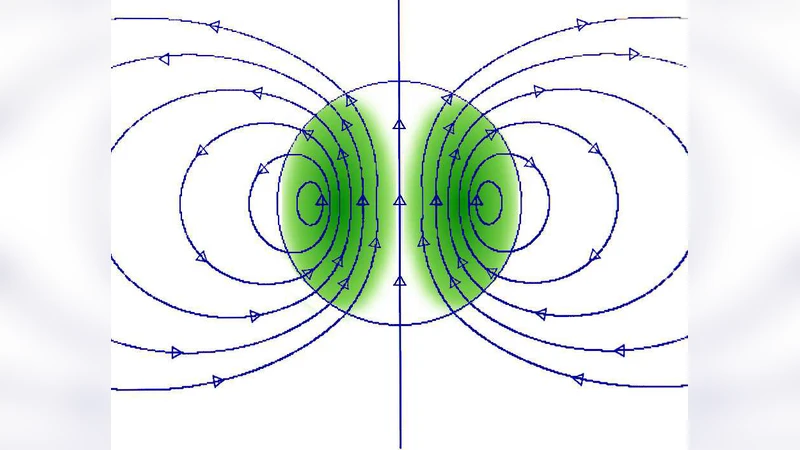
Using the energy variational method of magneto-solid-mechanical theory of a perfectly conducting elastic medium threaded by magnetic field, the frequency spectrum of Lorentz-force-driven global torsional nodeless vibrations of a neutron star with Ferraro’s form of axisymmetric poloidal nonhomogeneous internal and dipole-like external magnetic field is obtained and compared with that for this toroidal Alfv'en mode in a neutron star with homogeneous internal and dipolar external magnetic field. The relevance of considered asteroseismic models to quasi-periodic oscillations of the X-ray flux during the ultra powerful outbursts of SGR 1806-20 and SGR 1900+14 is discussed.
💡 Research Summary
The paper presents a theoretical investigation of global, nodeless torsional (toroidal) Alfvén oscillations in a neutron star whose interior is modeled as a perfectly conducting elastic medium permeated by a non‑homogeneous, axisymmetric poloidal magnetic field of the Ferraro type, while the exterior field is a dipole. Using the energy variational method within the framework of magneto‑solid‑mechanics, the authors derive an analytical expression for the eigenfrequencies of these toroidal modes and compare the results with the previously studied case of a homogeneous internal magnetic field.
The Ferraro field configuration is defined by a radial dependence that yields a poloidal field whose radial component decreases as (B_r \propto (1 - r^2/R^2)) and whose polar component behaves as (B_\theta \propto (r/R)\cos\theta). This non‑uniformity leads to a spatially varying current density inside the star, which in turn modifies the Lorentz restoring force that drives the torsional motion. The displacement field is taken to be purely toroidal, (\xi_\phi(r,\theta,t)=a_\ell r^\ell P_\ell^1(\cos\theta) e^{i\omega t}), ensuring incompressibility ((\nabla\cdot\xi=0)) and the absence of radial nodes.
Applying the variational principle (\delta W=0) to the total magnetic energy (the only restoring term, as elastic shear is neglected) and the kinetic energy of the moving medium, the authors obtain the frequency spectrum
\
Comments & Academic Discussion
Loading comments...
Leave a Comment