CO emission and variable CH and CH+ absorption towards HD34078: evidence for a nascent bow shock ?
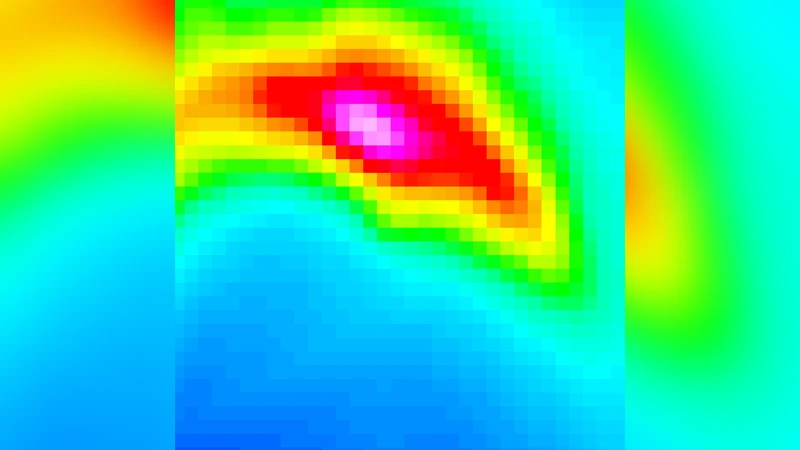
The runaway star HD34078, initially selected to investigate small scale structure in a foreground diffuse cloud has been shown to be surrounded by highly excited H2. We first search for an association between the foreground cloud and HD34078. Second, we extend previous investigations of temporal absorption line variations (CH, CH+, H2) in order to better characterize them. We have mapped the CO(2-1) emission at 12 arcsec resolution around HD34078’s position, using the 30 m IRAM antenna. The follow-up of CH and CH+ absorption lines has been extended over 5 more years. In parallel, CH absorption towards the reddened star Zeta Per have been monitored to check the homogeneity of our measurements. Three more FUSE spectra have been obtained to search for N(H2) variations. CO observations show a pronounced maximum near HD34078’s position, clearly indicating that the star and diffuse cloud are associated. The optical spectra confirm the reality of strong, rapid and correlated CH and CH+ fluctuations. On the other hand, N(H2, J=0) has varied by less than 5 % over 4 years. We also discard N(CH) variations towards Zeta Per at scales less than 20 AU. Observational constraints from this work and from 24 micron dust emission appear to be consistent with H2 excitation but inconsistent with steady-state bow shock models and rather suggest that the shell of compressed gas surrounding HD34078, is seen at an early stage of the interaction. The CH and CH+ time variations as well as their large abundances are likely due to chemical structure in the shocked gas layer located at the stellar wind/ambient cloud interface. Finally, the lack of variations for both N(H2, J=0) towards HD34078 and N(CH) towards Zeta Per suggests that quiescent molecular gas is not subject to pronounced small-scale structure.
💡 Research Summary
The paper investigates the physical and chemical relationship between the runaway O‑type star HD 34078 and a foreground diffuse molecular cloud, and it follows up on previously reported temporal variations in several absorption lines. Using the IRAM 30 m telescope, the authors mapped CO (2‑1) emission around the star with 12″ resolution. The CO map shows a pronounced intensity peak that coincides with the position of HD 34078, providing strong evidence that the star is embedded in, or at least passing through, the same molecular material that produces the observed absorption features. This spatial association is a crucial first step, confirming that the star’s wind can directly interact with the cloud.
High‑resolution optical spectra of the CH and CH⁺ λ4300 and λ4232 lines have been obtained over a ten‑year baseline, extending the time series by an additional five years. Both species display rapid, large‑amplitude fluctuations (up to ~10 % changes in equivalent width over a few weeks) that are tightly correlated in time. The authors also monitored CH absorption toward the reddened star ζ Per, a line of sight that should be unaffected by the HD 34078 environment, and found no significant variations at spatial scales smaller than ~20 AU. This control experiment demonstrates that the observed CH/CH⁺ variability is intrinsic to the HD 34078 sight line rather than an instrumental artifact.
In parallel, three new far‑ultraviolet spectra from the FUSE satellite were acquired to track the column density of molecular hydrogen. While the high‑J (J ≥ 3) levels remain highly excited, the column density of the lowest rotational level, N(H₂, J = 0), varies by less than 5 % over a four‑year interval. This stability contrasts sharply with the volatile behavior of CH and CH⁺, indicating that the bulk of the quiescent molecular gas is not subject to the same small‑scale structure or rapid changes.
The authors combine these observational constraints with archival 24 µm dust emission data. The dust morphology and temperature, together with the CO distribution, are compatible with a scenario in which the stellar wind is compressing the ambient cloud, but they are inconsistent with a steady‑state bow‑shock model that would predict a well‑developed, symmetric shell and a different temperature profile. Instead, the data favor a “nascent bow shock” interpretation: the wind has begun to pile up gas at the wind–cloud interface, forming a thin, compressed layer that has not yet reached equilibrium. In this early‑stage shock, the chemistry is dominated by rapid formation of CH⁺ (through endothermic reactions enabled by the elevated temperature and turbulence) and subsequent production of CH via ion–molecule pathways. The large abundances and swift temporal changes of CH and CH⁺ are thus naturally explained as signatures of the chemically active, shocked gas layer.
The lack of measurable variation in N(H₂, J = 0) toward HD 34078 and in N(CH) toward ζ Per suggests that the underlying diffuse molecular medium is relatively homogeneous on scales of tens of AU. Consequently, the small‑scale structure observed in CH and CH⁺ is not a generic property of diffuse clouds but is instead induced locally by the interaction with the stellar wind.
In summary, the study provides compelling multi‑wavelength evidence that HD 34078 is physically associated with a foreground diffuse cloud and that its high‑velocity wind is currently driving an early‑stage bow‑shock into that material. The resulting thin, compressed layer exhibits pronounced chemical activity, manifested as rapid, correlated variations in CH and CH⁺ absorption, while the bulk molecular gas remains stable. These findings have broader implications for our understanding of how massive star winds sculpt and chemically enrich the interstellar medium, highlighting the importance of time‑domain spectroscopy in probing dynamic star‑cloud interactions.
Comments & Academic Discussion
Loading comments...
Leave a Comment