Optical and X-ray Observations of M31N 2007-12b: An Extragalactic Recurrent Nova with a Detected Progenitor?
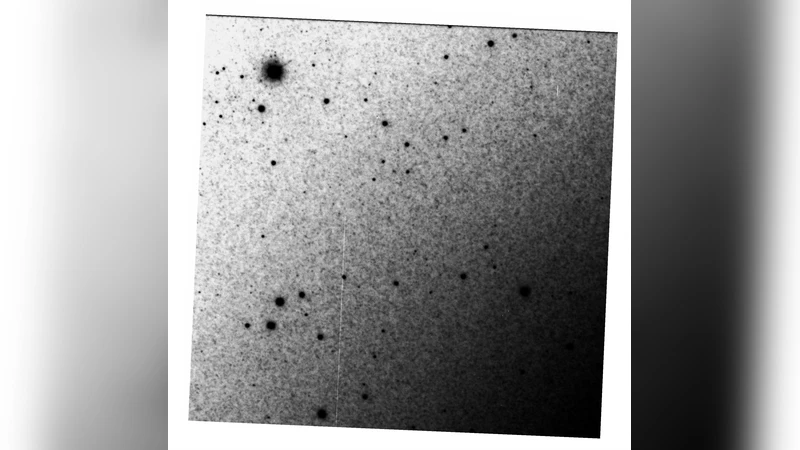
We report combined optical and X-ray observations of nova M31N 2007-12b. Optical spectroscopy obtained 5 days after the 2007 December outburst shows evidence of very high ejection velocities (FWHM H$\alpha \simeq 4500$ km s$^{-1}$). In addition, Swift X-ray data show that M31N 2007-12b is associated with a Super-Soft Source (SSS) which appeared between 21 and 35 days post-outburst and turned off between then and day 169. Our analysis implies that $M_{\rm WD} \ga 1.3 $M$_{\odot}$ in this system. The optical light curve, spectrum and X-ray behaviour are consistent with those of a recurrent nova. Hubble Space Telescope observations of the pre-outburst location of M31N 2007-12b reveal the presence of a coincident stellar source with magnitude and color very similar to the Galactic recurrent nova RS Ophiuchi at quiescence, where the red giant secondary dominates the emission. We believe that this is the first occasion on which a nova progenitor system has been identified in M31. However, the greatest similarities of outburst optical spectrum and SSS behaviour are with the supposed Galactic recurrent nova V2491 Cygni. A previously implied association of M31N 2007-12b with nova M31N 1969-08a is shown to be erroneous and this has important lessons for future searches for recurrent novae in extragalactic systems. Overall, we show that suitable complementary X-ray and optical observations can be used not only to identify recurrent nova candidates in M31, but also to determine subtypes and important physical parameters of these systems. Prospects are therefore good for extending studies of recurrent novae into the Local Group with the potential to explore in more detail such important topics as their proposed link to Type Ia Supernovae.
💡 Research Summary
The authors present a comprehensive multi‑wavelength study of the nova M31N 2007‑12b, combining optical spectroscopy, photometry, and Swift X‑ray observations to assess its nature and physical parameters. Optical spectra obtained five days after the outburst reveal extremely broad Balmer emission lines (FWHM Hα ≈ 4500 km s⁻¹, Hβ ≈ 4300 km s⁻¹) and strong high‑excitation features (He II, N III), indicative of a very fast ejecta typical of recurrent novae (RNe). The optical light curve is also “fast”, with t₂ ≈ 6 days and t₃ ≈ 12 days, reaching a peak V magnitude of ≈ 17.5.
Swift/XRT monitoring shows that a supersoft source (SSS) emerges between days 21 and 35 post‑outburst, reaches a peak luminosity of ∼10³⁶ erg s⁻¹, and fades away by day ≈ 169. The timing of SSS turn‑on and turn‑off constrains the white dwarf (WD) mass and the thickness of the hydrogen‑rich envelope. By comparing the observed SSS evolution with theoretical models, the authors infer a WD mass of at least 1.3 M☉ and an envelope mass of order 10⁻⁶ M☉, both consistent with the high‑mass, short‑recurrence‑time regime expected for RNe.
A crucial part of the study is the identification of a pre‑outburst counterpart in archival Hubble Space Telescope ACS images. Within 0.2″ of the nova position, a source with V ≈ 23.5 mag and (V–I) ≈ 1.8 mag is found. Its colour and luminosity match those of the Galactic recurrent nova RS Oph in quiescence, where a red‑giant secondary dominates the optical emission. This represents the first direct detection of a nova progenitor system in M31, providing strong evidence that M31N 2007‑12b belongs to the red‑giant‑secondary subclass of RNe.
The paper also revisits a previously suggested association between M31N 2007‑12b and the historic nova M31N 1969‑08a. By re‑examining the astrometric uncertainties and the temporal gap, the authors demonstrate that the earlier claim was erroneous, underscoring the importance of precise positional matching and simultaneous multi‑band monitoring when searching for recurrent novae in external galaxies.
Overall, the study showcases how coordinated optical spectroscopy, rapid‑cadence photometry, and timely X‑ray observations can not only flag recurrent‑nova candidates in M31 but also discriminate among RN sub‑types and extract key physical parameters such as WD mass, envelope mass, and companion type. The authors argue that extending this approach throughout the Local Group will enable statistically robust estimates of RN rates, improve our understanding of their role as potential progenitors of Type Ia supernovae, and refine models of binary evolution leading to thermonuclear explosions.
Comments & Academic Discussion
Loading comments...
Leave a Comment