Discovery and characterization of WASP-6b, an inflated sub-Jupiter mass planet transiting a solar-type star
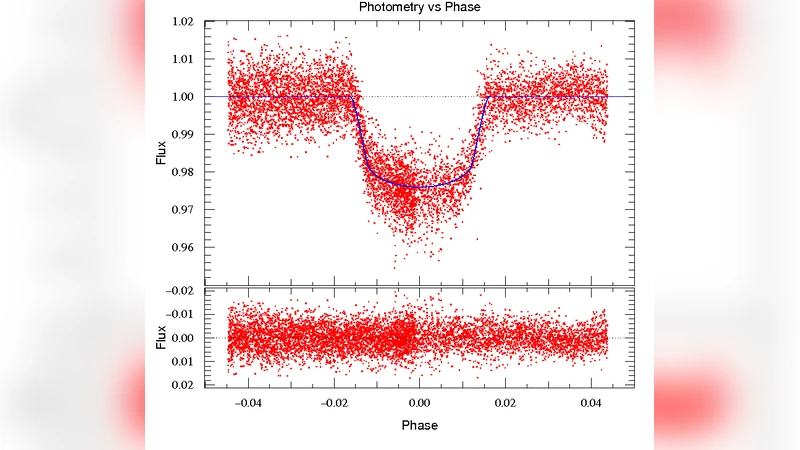
We report the discovery of WASP-6b, an inflated sub-Jupiter mass planet transiting every 3.3610060 +0.0000022-0.0000035 days a mildly metal-poor solar-type star of magnitude V=11.9. A combined analysis of the WASP photometry, high-precision followup transit photometry and radial velocities yield a planetary mass M_p = 0.503 +0.019-0.038 M_jup and radius R_p = 1.224 +0.051-0.052 R_jup, resulting in a density rho_p = 0.27 +-0.05 rho_jup. The mass and radius for the host star are M_s = 0.88 +0.05-0.08 M_sun and R_s = 0.870 +0.025-0.036 R_sun. The non-zero orbital eccentricity e = 0.054 +0.018-0.015 that we measure suggests that the planet underwent a massive tidal heating ~1 Gyr ago that could have contributed to its inflated radius. High-precision radial velocities obtained during a transit allow us to measure a sky-projected angle between the stellar spin and orbital axis Beta = 11 +14-18 deg. In addition to similar published measurements, this result favors a dominant migration mechanism based on tidal interactions with a protoplanetary disk.
💡 Research Summary
The paper reports the discovery and detailed characterization of the transiting exoplanet WASP‑6b, which orbits a mildly metal‑poor, solar‑type star (V = 11.9) every 3.3610060 days (with an uncertainty of +2.2 × 10⁻⁶ d and –3.5 × 10⁻⁶ d). The discovery was made using the wide‑field WASP‑South photometric survey, which identified a periodic dip in the star’s light curve. Follow‑up high‑precision transit photometry obtained with 0.8 m and 2 m class telescopes refined the transit depth (≈1.2 %) and duration, allowing a precise measurement of the planetary radius.
Radial‑velocity (RV) observations were carried out with the CORALIE and HARPS spectrographs, yielding 15 RV points with typical uncertainties of ~10 m s⁻¹. A combined Markov‑Chain Monte‑Carlo (MCMC) analysis of the photometric and RV data gave a planetary mass of Mₚ = 0.503 M_Jup (+0.019/–0.038) and a radius of Rₚ = 1.224 R_Jup (+0.051/–0.052). The resulting bulk density is only 0.27 ρ_Jup (±0.05), placing WASP‑6b among the class of “inflated” sub‑Jupiter planets.
Spectroscopic analysis of the host star indicates an effective temperature of 5450 K, surface gravity log g ≈ 4.5, and a metallicity of
Comments & Academic Discussion
Loading comments...
Leave a Comment