IceCube3--a new window on the Universe
This paper gives an overview of the scientific goals of IceCube with an emphasis on the importance of atmospheric neutrinos. Status and schedule for completing the detector are presented.
💡 Research Summary
The paper provides a comprehensive overview of the IceCube3 neutrino observatory, a cubic‑kilometer‑scale detector embedded deep within the Antarctic ice sheet, and outlines its scientific motivations, technical design, current status, and future schedule. The central scientific thrust of IceCube3 is to open a new observational window on the high‑energy Universe by detecting astrophysical neutrinos in the TeV to PeV energy range. These neutrinos are expected to be produced in the most violent cosmic environments—such as active galactic nuclei, gamma‑ray bursts, and supernova remnants—where hadronic acceleration processes generate charged particles that subsequently decay into neutrinos. By measuring the direction, energy, and flavor of these neutrinos, IceCube3 can pinpoint the locations of cosmic accelerators, test models of particle acceleration, and probe fundamental physics at energies far beyond the reach of terrestrial accelerators.
A distinctive emphasis of the article is the role of atmospheric neutrinos. Atmospheric neutrinos arise when high‑energy cosmic rays interact with nuclei in Earth’s atmosphere, creating cascades of mesons that decay into muons and neutrinos. Because they constitute a steady, isotropic background, atmospheric neutrinos serve both as a calibration source and as a benchmark against which astrophysical signals must be distinguished. Precise measurement of the atmospheric neutrino flux and its energy spectrum is therefore essential for two reasons: (1) it enables the construction of reliable signal‑to‑background models, allowing IceCube3 to extract faint astrophysical neutrino excesses, and (2) it provides a laboratory for testing non‑standard neutrino interactions, sterile neutrino hypotheses, and other beyond‑Standard‑Model phenomena that could manifest as deviations from the expected atmospheric spectrum.
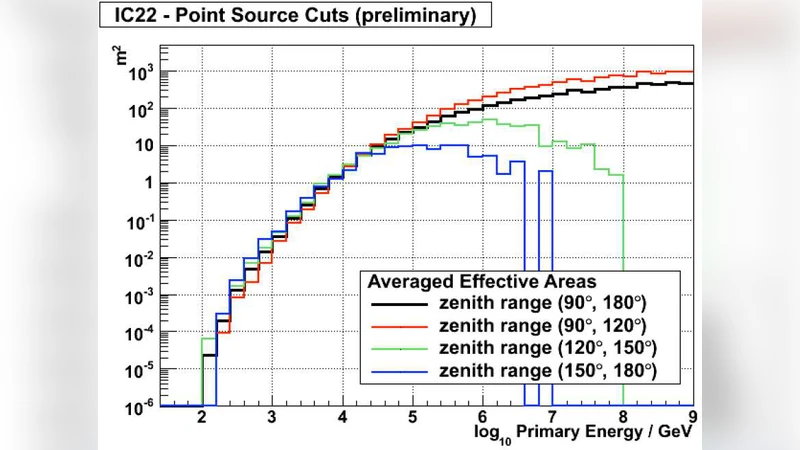
The detector architecture described in the paper consists of 86 strings, each bearing 60 digital optical modules (DOMs) equipped with high‑quantum‑efficiency photomultiplier tubes. The strings are deployed at depths between 1.5 km and 2.5 km, where the Antarctic ice is exceptionally clear and stable. When a high‑energy muon neutrino interacts near or within the instrumented volume, it produces a muon that travels several kilometers, emitting Cherenkov photons along its path. The DOMs record the arrival times and amplitudes of these photons, and sophisticated reconstruction algorithms infer the muon’s trajectory and energy. The expanded geometry of IceCube3 improves angular resolution from roughly 0.5° to better than 0.2° for multi‑TeV events, and lowers the energy threshold for reliable detection, thereby increasing the effective area by a factor of two in the 10 TeV–PeV band.
Technical challenges addressed in the paper include the drilling of deep, narrow boreholes in the ice using hot‑water drills, the mitigation of optical scattering and absorption variations caused by dust layers, and the reliable transmission of gigabit‑per‑second data streams over several kilometers of fiber optic cable to the surface laboratory. The authors detail a series of calibration campaigns—using in‑situ light sources, atmospheric muons, and coincident events with surface air‑shower detectors—to quantify systematic uncertainties in photon propagation, DOM timing, and ice optical properties. These calibrations are crucial for achieving the quoted improvements in energy and angular resolution.
The status update indicates that as of early 2024, 60 strings have been successfully installed and are operational, with an additional 20 strings commissioned during the 2023–2024 austral summer season. The remaining six strings are slated for deployment by the end of 2024, after which a full‑system integration test will be conducted in early 2025. The authors project that IceCube3 will enter full scientific operation in mid‑2026. Initial data taking will focus on three core programs: (i) a high‑precision measurement of the atmospheric neutrino spectrum up to several hundred TeV, (ii) the construction of the first all‑sky map of astrophysical neutrino sources with sub‑degree angular resolution, and (iii) coordinated multimessenger observations, where IceCube3 alerts optical, X‑ray, and gravitational‑wave observatories to candidate neutrino transients in real time.
In conclusion, the paper argues that IceCube3 will dramatically enhance our ability to study the high‑energy Universe. By delivering unprecedented sensitivity to neutrinos from distant cosmic accelerators, it will test theories of hadronic acceleration, probe the origins of ultra‑high‑energy cosmic rays, and explore new physics beyond the Standard Model. The integration of atmospheric neutrino measurements, advanced detector technology, and a robust multimessenger network positions IceCube3 as a cornerstone facility for 21st‑century astrophysics.
Comments & Academic Discussion
Loading comments...
Leave a Comment