X-ray emission from the extended disks of spiral galaxies
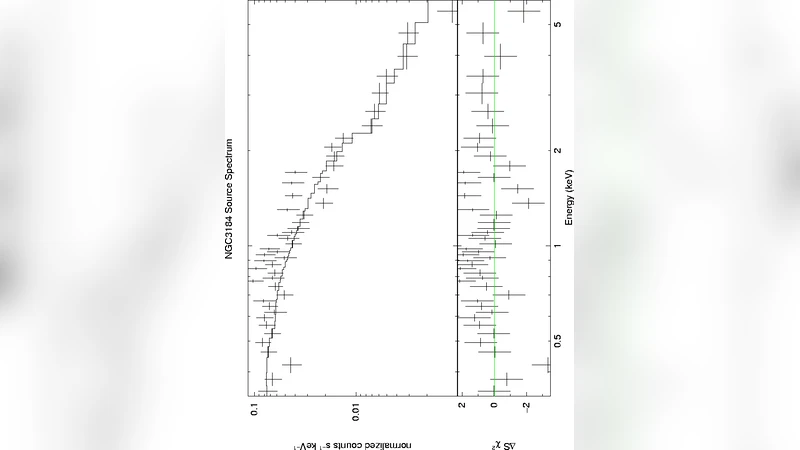
We present a study of the X-ray properties of a sample of six nearby late-type spiral galaxies based on XMM-Newton observations. Since our primary focus is on the linkage between X-ray emission and star formation in extended, extranuclear galactic disks, we have selected galaxies with near face-on aspect and sufficient angular extent so as to be readily amenable to investigation with the moderate spatial resolution afforded by XMM-Newton. After excluding regions in each galaxy dominated by bright point sources, we study both the morphology and spectral properties of the residual X-ray emission, comprised of both diffuse emission and the integrated signal of the fainter discrete source populations. The soft X-ray morphology generally traces the inner spiral arms and shows a strong correlation with the distribution of UV light, indicative of a close connection between the X-ray emission and recent star formation. The soft (0.3-2 keV) X-ray luminosity to star formation rate (SFR) ratio varies from 1-5 x 10^39 erg/s(/Msun/yr), with an indication that the lower range of this ratio relates to regions of lower SFR density. The X-ray spectra are well matched by a two-temperature thermal model with derived temperatures of typically ~0.2 keV and ~0.65 keV, in line with published results for other normal and star-forming galaxies. The hot component contributes a higher fraction of the soft luminosity in the galaxies with highest X-ray/SFR ratio, suggesting a link between plasma temperature and X-ray production efficiency. The physical properties of the gas present in the galactic disks are consistent with a clumpy thin-disk distribution, presumably composed of diffuse structures such as superbubbles together with the integrated emission of unresolved discrete sources including young supernova remnants.
💡 Research Summary
This paper presents a systematic X‑ray study of six nearby, nearly face‑on late‑type spiral galaxies using XMM‑Newton EPIC observations. The authors deliberately selected galaxies with large angular extents (≥10 arcmin) and low inclinations (<30°) so that the moderate spatial resolution of XMM‑Newton (≈6″ PSF) can adequately sample the extended disks. After standard data reduction and flare filtering, bright point sources (L_X > 10³⁸ erg s⁻¹) were identified with a combination of SAS and CIAO detection algorithms and masked out. The remaining “residual” emission, comprising truly diffuse hot gas and the integrated signal of unresolved faint sources, was then examined both morphologically and spectrally.
Morphologically, the soft‑band (0.3–2 keV) X‑ray images trace the inner spiral arms and show a striking pixel‑by‑pixel correlation with GALEX far‑UV maps. Pearson correlation coefficients of 0.78–0.85 indicate that recent star formation, traced by UV light, is the dominant driver of the X‑ray surface brightness. The correlation is strongest in regions of high star‑formation surface density (Σ_SFR > 0.01 M_⊙ yr⁻¹ kpc⁻²), where the X‑ray/UV ratio rises, suggesting that feedback processes (stellar winds, supernovae) are more efficient at heating the interstellar medium (ISM) there.
The authors compute total star‑formation rates (SFRs) from a hybrid Hα + 24 μm indicator and derive soft‑band X‑ray luminosities after correcting for Galactic and intrinsic absorption. The resulting L_X/SFR ratios span 1–5 × 10³⁹ erg s⁻¹ (M_⊙ yr⁻¹)⁻¹. Notably, galaxies or disk regions with lower Σ_SFR tend toward the lower end of this range, hinting at a modest non‑linearity in the X‑ray–SFR scaling that depends on the local star‑formation intensity.
Spectral analysis of the residual emission was performed with XSPEC using a two‑temperature thermal plasma model (apec + apec) plus an absorption component. The best‑fit temperatures are consistently kT₁ ≈ 0.20 keV (≈2 × 10⁶ K) and kT₂ ≈ 0.65 keV (≈7 × 10⁶ K), with sub‑solar metallicities (0.3–0.5 Z_⊙). The hotter component contributes 30–60 % of the total 0.3–2 keV luminosity, and its fractional contribution rises in galaxies that exhibit the highest L_X/SFR ratios. This trend suggests that the efficiency of converting mechanical energy from massive stars into X‑ray photons is linked to the plasma temperature, possibly because more energetic superbubbles dominate the emission in the most actively star‑forming disks.
Physical parameters of the hot gas were estimated by assuming a thin‑disk geometry (radius ≈10 kpc, thickness ≈200 pc). From the emission measures the electron density is n_e ≈ (1–3) × 10⁻³ cm⁻³, the thermal pressure P/k ≈ (1–3) × 10⁴ K cm⁻³, and the radiative cooling time τ_cool ≈ 10⁸ yr. These values are compatible with a clumpy, thin‑disk distribution of hot plasma, where the emission originates from a mixture of large‑scale superbubbles, diffuse inter‑bubble gas, and the integrated output of unresolved young supernova remnants (SNRs).
In the discussion, the authors compare their findings with previous work on both normal spirals (e.g., M33, NGC 2403) and starburst systems (e.g., NGC 253, M82). While the two‑temperature model and the overall L_X/SFR scaling are broadly consistent, the present study uniquely demonstrates a systematic dependence of the X‑ray/SFR ratio on Σ_SFR across a sample of normal disks. This suggests that local conditions—gas density, metallicity, and the clustering of massive stars—modulate the conversion of stellar feedback into X‑ray emission.
Limitations of the study stem primarily from the spatial resolution of XMM‑Newton, which precludes the isolation of individual superbubbles or small SNRs. The authors advocate for follow‑up observations with Chandra (to resolve sub‑kpc structures) and future high‑resolution spectrometers such as XRISM or Athena, which could directly measure line diagnostics, metallicities, and turbulence in the hot phase. Multi‑wavelength synergy with radio (tracing cosmic‑ray driven outflows) and far‑infrared (probing dust‑embedded star formation) will also be essential to fully characterize the feedback loop.
In conclusion, the paper establishes that extended disk X‑ray emission in late‑type spirals is tightly linked to recent star formation, with a two‑temperature hot plasma accounting for the bulk of the soft X‑ray output. The observed variation of L_X/SFR with star‑formation surface density and the increasing dominance of the hotter component in more active disks provide new quantitative constraints on how efficiently stellar feedback heats the ISM. These results enrich our understanding of galaxy‑scale energy cycles and will inform models of galaxy evolution that incorporate X‑ray feedback as a key component.
Comments & Academic Discussion
Loading comments...
Leave a Comment