YOHKOH remnants: partially occulted flares in hard X-rays
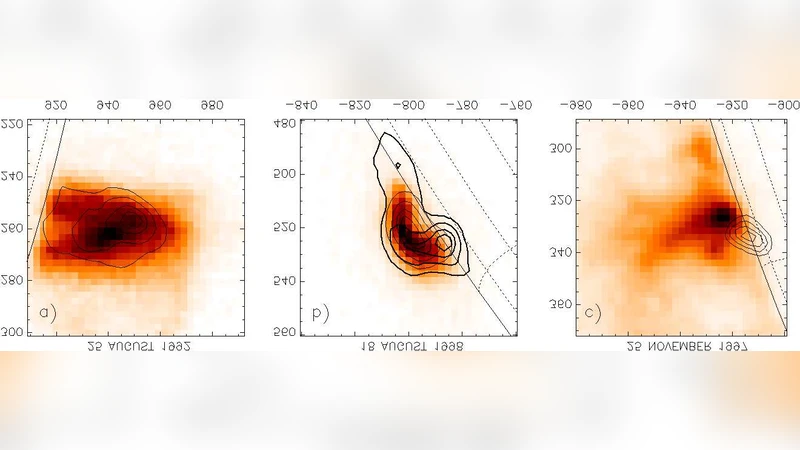
Flares being partially occulted by the solar limb, are the best reservoir of our knowledge about hard X-ray loop-top sources. Recently, the survey of partially occulted flares observed by the RHESSI has been published (Krucker & Lin 2008). The extensive YOHKOH database still awaits such activities. This work is an attempt to fill this gap. Among from 1286 flares in the YOHKOH Hard X-ray Telescope Flare Catalogue, for which the hard X-ray images had been enclosed, we identified 98 events that occurred behind the solar limb. We investigated their hard X-ray spectra and spatial structure. We found that in most cases the hard X-ray spectrum of partially occulted flares consists of two components, non-thermal and thermal, which are co-spatial. The photon energy spectra of the partially occulted flares are systematically steeper than spectra of the non-occulted flares. Such a difference we explain as a consequence of intrinsically dissimilar conditions ruling in coronal parts of flares, in comparison with the footpoints which usually dominate the hard X-ray emission of disk flares. At least two reasons of the difference should be taken into consideration: (1) stronger contamination of hard X-rays with emission of thermal plasma, (2) different mechanism in which non-thermal electrons radiate their energy. A schematic picture, in which thin-target mechanism is responsible for hard X-ray emission of loop-top sources and thick-target mechanism – for emission of footpoint sources, can be modified by the presence of some coronal thick-target sources. At least a part of them suggests a magnetic trapping. Investigated flares do not respond the global magnetic configuration of the solar corona. For their characteristics conclusive is rather the local magnetic configuration in which they were developed.
💡 Research Summary
**
The paper exploits the extensive YOHKOH Hard X‑ray Telescope (HXT) archive to study solar flares that are partially occulted by the solar limb. From the 1,286 flares for which HXT images are available, the authors identified 98 events whose footpoint sources are hidden behind the limb, leaving only the coronal (loop‑top) emission visible. This selection provides a clean view of the coronal hard X‑ray source, free from the bright footpoint contribution that dominates most disk flares.
For each occulted flare the authors performed a spectral decomposition using the four HXT energy channels (14–23 keV, 23–33 keV, 33–53 keV, 53–93 keV). The photon spectra were fitted with a two‑component model: an isothermal thermal component and a non‑thermal power‑law component (Φ(E) ∝ E^‑γ). The fitting shows that, in the majority of cases, the thermal and non‑thermal emissions are co‑spatial, both originating from the loop‑top region.
A key result is that the non‑thermal photon spectral indices (γ) of partially occulted flares are systematically larger (i.e., steeper spectra) than those of non‑occulted, disk flares. The average γ for the occulted sample is about 5.2 ± 0.8, compared with ≈3.5 ± 0.6 for typical on‑disk events. The authors attribute this difference to two main factors. First, the coronal plasma is hotter, so the thermal bremsstrahlung extends to higher energies and contaminates the non‑thermal part of the spectrum, artificially steepening the fitted power‑law. Second, the emission mechanism differs: loop‑top sources are best described by a thin‑target model, where accelerated electrons traverse a low‑density coronal plasma and lose only a fraction of their energy, producing a relatively soft X‑ray spectrum. In contrast, footpoint sources are thick‑target emitters; electrons are stopped in dense chromospheric material, yielding a harder spectrum.
Interestingly, a subset of the occulted flares exhibits signatures of a coronal thick‑target component. In these cases the loop‑top source shows a flatter spectrum than expected for pure thin‑target emission, suggesting that magnetic trapping retains electrons long enough for them to encounter a locally enhanced density. This “coronal thick‑target” behavior implies that some loop‑top sources can act as effective particle brakes, possibly due to magnetic mirroring or turbulence‑induced confinement.
The authors also examined the magnetic context by mapping flare locations onto a Potential Field Source Surface (PFSS) model. They found no systematic correlation with the global magnetic configuration; instead, the properties of each occulted flare appear to be governed by the local magnetic topology—complex, compact loop systems and current sheets that can host efficient particle acceleration and trapping.
In summary, the study fills a gap left by earlier RHESSI surveys by providing a statistically significant sample of partially occulted flares from the YOHKOH era. It confirms that coronal loop‑top sources emit both thermal and non‑thermal hard X‑rays from the same region, that their non‑thermal spectra are intrinsically steeper than footpoint‑dominated spectra, and that both thin‑target and, in some cases, coronal thick‑target mechanisms operate in the corona. The work underscores the importance of local magnetic geometry in shaping flare energetics and provides a valuable benchmark for future high‑resolution hard X‑ray missions such as FOXSI, STIX, and upcoming solar observatories.
Comments & Academic Discussion
Loading comments...
Leave a Comment