Near-infrared follow-up to the May 2008 activation of SGR 1627-41
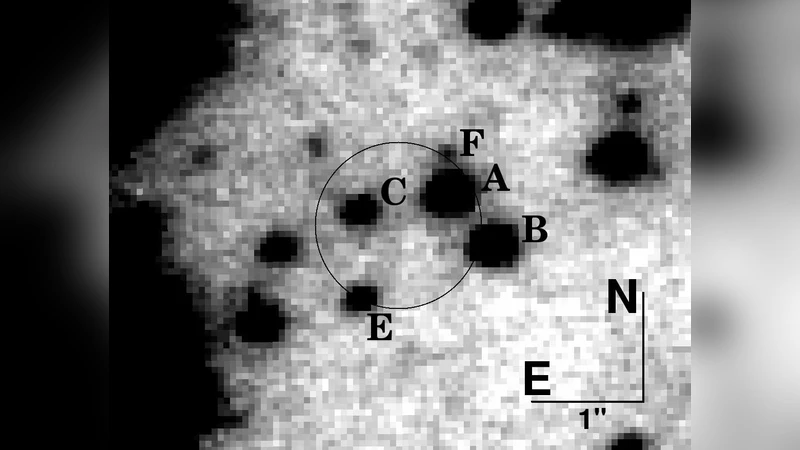
On 28 May 2008, the Swift satellite detected the first reactivation of SGR 1627-41 since its discovery in 1998. Following this event we began an observing campaign in near infrared wavelengths to search for a possible counterpart inside the error circle of this SGR, which is expected to show flaring activity simultaneous to the high energy flares or at least some variability as compared to the quiescent state. For the follow-up we used the 0.6m REM robotic telescope at La Silla Observatory, which allowed a fast response within 24 hours and, through director discretionary time, the 8.2m Very Large Telescope at Paranal Observatory. There, we observed with NACO to produce high angular resolution imaging with the aid of adaptive optics. These observations represent the fastest near infrared observations after an activation of this SGR and the deepest and highest spatial resolution observations of the Chandra error circle. 5 sources are detected in the immediate vicinity of the most precise X-ray localisation of this source. For 4 of them we do not detect variability, although the X-ray counterpart experimented a significant decay during our observation period. The 5th source is only detected in one epoch, where we have the best image quality, so no variability constrains can be imposed and remains as the only plausible counterpart. We can impose a limit of Ks > 21.6 magnitudes to any other counterpart candidate one week after the onset of the activity. Our adaptive optics imaging, with a resolution of 0.2" provides a reference frame for subsequent studies of future periods of activity.
💡 Research Summary
On 28 May 2008 the Swift satellite recorded the first re‑activation of the soft gamma‑ray repeater SGR 1627‑41 since its discovery in 1998. Recognising the rarity of such an event, the authors launched an immediate near‑infrared (NIR) follow‑up campaign to search for a counterpart that might flare simultaneously with the high‑energy bursts or at least show variability relative to quiescence. The first response was obtained with the 0.6 m REM robotic telescope at La Silla, which began imaging within 24 hours of the Swift trigger. Through director’s discretionary time, the team then secured observations with the 8.2 m Very Large Telescope (VLT) at Paranal, employing the NACO instrument and its adaptive‑optics (AO) system to achieve a spatial resolution of ≈0.2″. This combination of rapid response and high‑resolution imaging represents both the fastest NIR observations after an SGR activation and the deepest, most detailed view of the Chandra error circle to date.
Across five observing epochs the authors identified five point sources inside the most precise X‑ray localisation provided by Chandra. Four of these sources were detected in multiple epochs and displayed no measurable flux variation, despite a pronounced decay in the X‑ray afterglow during the same period. The lack of NIR variability in these four objects suggests that, for SGR 1627‑41, NIR emission is not tightly coupled to the X‑ray flare decay, or that any NIR component is below the detection threshold of the data.
The fifth source was only visible in the epoch with the best image quality (seeing ≈0.2″). It was not detected in the other epochs, precluding any assessment of variability. Nevertheless, its position is the closest to the Chandra centroid and its photometric properties differ from the other four candidates, making it the sole plausible counterpart at present. The authors therefore cannot rule out this source as the true NIR counterpart, but further observations during future outbursts will be required to confirm it.
In addition to source identification, the authors derived a limiting magnitude of Ks > 21.6 mag for any undetected counterpart one week after the onset of activity. This limit provides a quantitative benchmark for subsequent campaigns and demonstrates the depth achievable with AO‑assisted VLT imaging under good atmospheric conditions.
The high‑resolution AO images also furnish an astrometric reference frame that can be used to align future X‑ray positions (e.g., from Chandra or NICER) with sub‑arcsecond precision. Such a reference is essential for unambiguously associating NIR sources with high‑energy counterparts, especially in crowded Galactic plane fields where source confusion is severe.
Overall, the paper delivers a comprehensive dataset: rapid REM imaging, deep VLT/NACO AO imaging, and a thorough variability analysis of all candidates within the error circle. The findings highlight the challenges of detecting NIR counterparts to magnetar‑like objects, underscore the importance of immediate, high‑resolution follow‑up, and set a clear observational baseline for the next activation of SGR 1627‑41 or similar transient high‑energy sources.
Comments & Academic Discussion
Loading comments...
Leave a Comment