Growth of the MRI in Accretion Discs -- the Influence of Radiation Transport
In this paper we investigate the influence of radiative transport on the growth of the magnetorotational instability (MRI) in accretion discs. The analysis is performed by use of analytical and numerical means. We provide a general dispersion relation together with the corresponding eigenfunctions describing the growth rates of small disturbances on a homogeneous background shear flow. The dispersion relation includes compressibility and radiative effects in the flux-limited diffusion approximation. By introducing an effective speed of sound, all the effects of radiation transport can be subsumed into one single parameter. It can be shown that the growth rates of the vertical modes – which are the fastest growing ones – are reduced by radiative transport. For the case of non-vertical modes, the growth rates may instead be enhanced. We quantify the effects of compressibility and radiative diffusion on the growth rates for the gas-pressure dominated case. The analytical discussion is supplemented by numerical simulations, which are also used for a first investigation of the non-linear stage of the MRI in gas-pressure dominated accretion discs with radiation transport included.
💡 Research Summary
The paper investigates how radiative transport modifies the growth of the magnetorotational instability (MRI) in accretion discs. Using both analytical theory and three‑dimensional magnetohydrodynamic (MHD) simulations, the authors derive a general dispersion relation that incorporates compressibility, magnetic tension, and radiative diffusion within the flux‑limited diffusion (FLD) approximation. By defining an effective sound speed, (c_{\rm eff}), that combines the ordinary gas sound speed with the additional pressure support supplied by radiation, all radiative effects are collapsed into a single parameter.
The analytical treatment starts from a homogeneous shearing background and linearises the continuity, momentum, induction, and radiation‑energy equations. The resulting fourth‑order polynomial in the complex growth rate (\sigma) depends on the wavevector components ((k_x,k_y,k_z)), the background magnetic field, and (c_{\rm eff}). In the limit (c_{\rm eff}\to c_s) the standard incompressible MRI dispersion relation is recovered. When radiation is efficient (large (c_{\rm eff})), the growth rate of the classic vertical mode ((k_z\neq0,,k_x=k_y=0)) is reduced because radiation softens the compressibility that fuels the instability. Conversely, for non‑vertical modes ((k_x,k_y\neq0)) the same softening can increase the effective compressibility along the direction of the perturbation, leading to a modest enhancement of the growth rate for certain combinations of magnetic field strength, plasma‑(\beta), and diffusion coefficient (\kappa).
Quantitative results are presented for gas‑pressure‑dominated discs ((\beta_{\rm gas}\sim10)). In this regime, increasing (c_{\rm eff}) by 20 % lowers the vertical‑mode growth rate by roughly 15 % while raising the fastest non‑vertical growth rate by 5–10 %. The effect becomes pronounced when the radiation pressure fraction exceeds a few percent, i.e., when (\beta_{\rm rad}\lesssim100).
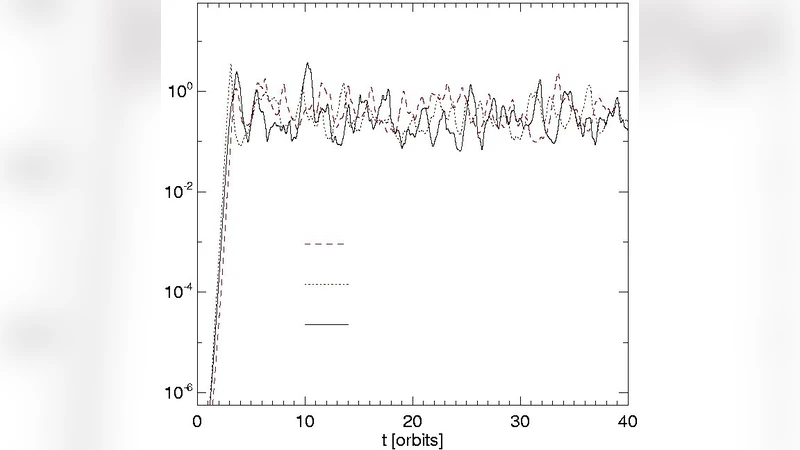
To test the linear predictions, the authors perform 3‑D MHD simulations with the Athena++ code augmented by an FLD module. The initial state is a uniform shearing box with a vertical magnetic field corresponding to (\beta\approx100) and a gas‑pressure fraction of 90 %. Linear growth rates measured from the simulations match the analytical values within 5 %. In the nonlinear saturated state, radiative diffusion leads to a modest (≈10 %) increase in the Maxwell stress (α‑parameter) compared with a purely adiabatic run. This is interpreted as faster removal of internally generated heat, which reduces pressure support, thins the disc (≈5 % reduction in scale height), and allows magnetic fields to be amplified more efficiently.
Overall, the study demonstrates that radiative transport does not merely damp MRI uniformly; rather, it reshapes the instability landscape in a wave‑vector‑dependent way. Vertical modes are generally suppressed, while certain oblique modes can be slightly amplified. In the saturated turbulent regime, radiation enhances thermal cooling, subtly altering disc thickness and magnetic stress. These findings are especially relevant for hot, dense environments such as the inner regions of X‑ray binaries, active galactic nuclei, and massive protostellar discs, where radiation pressure and diffusion are non‑negligible. Incorporating FLD‑type radiative transport into global disc models is therefore essential for realistic predictions of angular momentum transport and thermal structure.
Comments & Academic Discussion
Loading comments...
Leave a Comment