The Nordic Optical Telescope
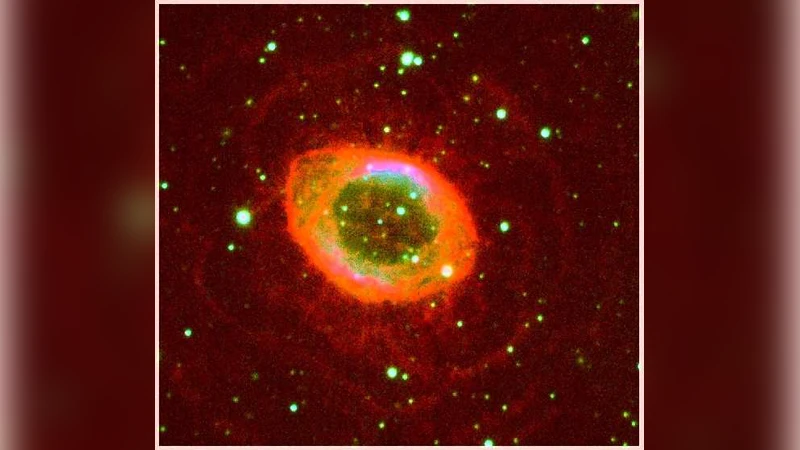
An overview of the Nordic Optical Telescope (NOT) is presented. Emphasis is on current capabilities of direct interest to the scientific user community, including instruments. Educational services and prospects and strategies for the future are discussed briefly as well.
💡 Research Summary
The Nordic Optical Telescope (NOT) is a 2.56‑meter class, f/11 Ritchey‑Chrétien reflector located at the Roque de los Muchachos Observatory on La Palma, Spain. Its high altitude (≈2,400 m) and excellent seeing conditions (median ≈0.6 arcsec) make it a premier facility for optical and near‑infrared astronomy in the 300 nm–2.5 µm wavelength range. The paper provides a comprehensive overview of the telescope’s current capabilities, focusing on the suite of instruments that are directly relevant to the scientific user community, as well as the educational services offered and the strategic outlook for future development.
Instruments and Performance
The primary workhorse is ALFOSC (the Andalucia Faint Object Spectrograph and Camera), a versatile imager and low‑resolution spectrograph offering 0.12 arcsec pixel⁻¹ sampling and spectral resolutions from R≈200 to 2,000 across the full optical band. NOTCam, the near‑infrared camera, delivers high‑quality J, H, and K imaging with 0.117 arcsec pixel⁻¹ and a 5σ point‑source sensitivity of ≈22 mag, enabling studies of embedded star‑forming regions and high‑redshift galaxies. The high‑precision fiber‑fed echelle spectrograph FIES provides R≈25,000–67,000, supporting radial‑velocity work at the 10 m s⁻¹ level, which is essential for exoplanet detection, stellar seismology, and detailed chemical abundance analyses. A multi‑object spectroscopy (MOS) mode and interchangeable slit mechanisms further increase observing efficiency for large surveys.
Observing Modes and User Support
NOT operates a hybrid model that combines classical (on‑site) observing with remote and queue‑scheduled modes. This flexibility accommodates users from Europe, North America, and Asia, allowing time‑critical programs and long‑term monitoring projects to be executed with minimal overhead. An automated data reduction pipeline processes raw frames through bias subtraction, flat‑fielding, distortion correction, and photometric calibration, delivering science‑ready products within hours of acquisition. Comprehensive user documentation, on‑site technical assistance, and a dedicated help‑desk ensure that both seasoned investigators and first‑time observers can exploit the facility efficiently.
Educational and Outreach Activities
Beyond research, NOT is heavily involved in education. It runs hands‑on observing schools for undergraduate and high‑school students, provides a publicly accessible archive of reduced data, and hosts the “Nordic Astronomy Camp,” which brings together young scientists from the Nordic countries for intensive training in data analysis and instrumentation. These programs not only foster the next generation of astronomers but also raise public awareness of the scientific value of ground‑based optical facilities.
Future Prospects and Strategic Directions
Looking ahead, the consortium plans to install an adaptive‑optics (AO) system that will push the delivered image quality to ≤0.1 arcsec in the near‑infrared, dramatically improving the telescope’s capability for high‑resolution imaging and diffraction‑limited spectroscopy. A next‑generation high‑resolution spectrograph, optimized for ultra‑stable radial‑velocity work, is under design, aiming for sub‑1 m s⁻¹ precision to remain competitive in exoplanet science. Upgrades to the control software, scheduling algorithms, and data‑management infrastructure are also slated, with the goal of increasing overall operational efficiency and reducing turnaround times for data products.
In summary, the NOT remains a highly productive, user‑friendly observatory that balances cutting‑edge scientific instrumentation with robust educational outreach. Its strategic investments in adaptive optics, advanced spectroscopy, and software automation are intended to preserve its relevance in an era dominated by larger telescopes and space‑based missions, ensuring that the Nordic Optical Telescope continues to make significant contributions to a broad range of astrophysical research topics.
Comments & Academic Discussion
Loading comments...
Leave a Comment