Numerical Simulations of Hot Halo Gas in Galaxy Mergers
Galaxy merger simulations have explored the behaviour of gas within the galactic disk, yet the dynamics of hot gas within the galaxy halo has been neglected. We report on the results of high-resolution hydrodynamic simulations of colliding galaxies with hot halo gas. We explore a range of mass ratios, gas fractions and orbital configurations to constrain the shocks and gas dynamics within the progenitor haloes. We find that : (i) A strong shock is produced in the galaxy haloes before the first passage, increasing the temperature of the gas by almost an order of magnitude to $T\sim 10^{6.3}$ K. (ii) The X-ray luminosity of the shock is strongly dependent on the gas fraction; it is $\gtrsim 10^{39}$ erg/s for halo gas fractions larger than 10%. (iii) The hot diffuse gas in the simulation produces X-ray luminosities as large as $10^{42}$ erg/s. This contributes to the total X-ray background in the Universe. (iv) We find an analytic fit to the maximum X-ray luminosity of the shock as a function of merger parameters. This fit can be used in semi-analytic recipes of galaxy formation to estimate the total X-ray emission from shocks in merging galaxies. (v) $\sim$ 10-20% of the initial gas mass is unbound from the galaxies for equal-mass mergers, while $3-5%$ of the gas mass is released for the 3:1 and 10:1 mergers. This unbound gas ends up far from the galaxy and can be a feasible mechanism to enrich the IGM with metals.
💡 Research Summary
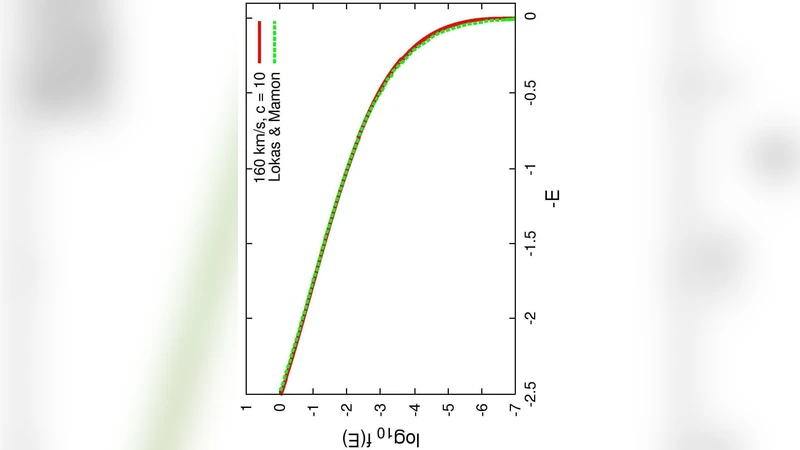
This paper addresses a long‑standing gap in galaxy merger studies: the dynamics of hot, low‑density gas that resides in the extended dark‑matter halo. While most numerical investigations have focused on the cold interstellar medium within galactic disks, the authors perform a suite of high‑resolution hydrodynamic simulations that explicitly include a hot halo component. They explore a matrix of merger configurations—mass ratios of 1:1, 3:1, and 10:1; halo gas fractions ranging from 5 % to 20 %; and a variety of orbital parameters (different pericentric distances, inclinations, and eccentricities). The initial conditions adopt an NFW dark‑matter profile and a β‑model for the gas, with temperatures of order 10⁵․⁵ K and densities appropriate for the circumgalactic medium.
The simulations reveal that, well before the first pericentric passage (typically 0.2–0.4 Gyr after the start), the two gaseous haloes collide head‑on, generating a strong, quasi‑planar shock. The Mach number of the shock lies between 2 and 3, and the post‑shock temperature rises by nearly an order of magnitude to ≈10⁶․³ K. This rapid heating is accompanied by a density increase of roughly a factor of ten, producing a pressure jump that drives a burst of thermal bremsstrahlung emission in the soft X‑ray band (0.5–2 keV). The peak X‑ray luminosity of the shock (L_X,shock) is highly sensitive to the halo gas fraction: for f_g ≥ 0.10 the shock luminosity exceeds 10³⁹ erg s⁻¹, and for f_g ≈ 0.20 it can reach 10⁴⁰ erg s⁻¹. These values are comparable to, or exceed, the X‑ray output of many observed merging systems, suggesting that halo‑shock emission should be detectable with current and upcoming X‑ray observatories.
After the shock, the merger proceeds to form a dense central gas disk while a substantial fraction of the hot halo gas expands outward. In equal‑mass mergers, 10–20 % of the initial halo gas attains velocities above the escape speed and is expelled into the intergalactic medium (IGM). In more unequal mergers (3:1 and 10:1) the expelled fraction drops to 3–5 %. The expelled gas retains temperatures of ∼10⁶ K and carries metals at roughly the same abundance as the pre‑merger halo, providing an efficient mechanism for enriching the IGM far from the host galaxies.
A key contribution of the work is an analytic fitting formula that captures the dependence of the maximum shock X‑ray luminosity on the merger parameters:
L_X,shock ≈ 10³⁹ erg s⁻¹ · (μ/1)⁻⁰·⁵ · (f_g/0.1)¹·² · (v_rel/300 km s⁻¹)²·⁵
where μ is the mass ratio (primary/secondary), f_g the halo gas fraction, and v_rel the initial relative velocity. This expression can be readily incorporated into semi‑analytic models of galaxy formation, allowing rapid estimates of the X‑ray contribution from merger‑driven shocks without the need for full hydrodynamic calculations.
Overall, the study demonstrates that hot halo gas is not a passive reservoir during galaxy collisions; it actively participates in shock heating, produces observable X‑ray signatures, and can launch a significant amount of metal‑rich material into the IGM. These findings have direct implications for interpreting X‑ray observations of interacting galaxies, for modeling the cosmic X‑ray background, and for understanding the metal enrichment history of the circum‑ and inter‑galactic media.
Comments & Academic Discussion
Loading comments...
Leave a Comment