The Abundance Inhomogeneity in the Northern Rim of the Cygnus Loop
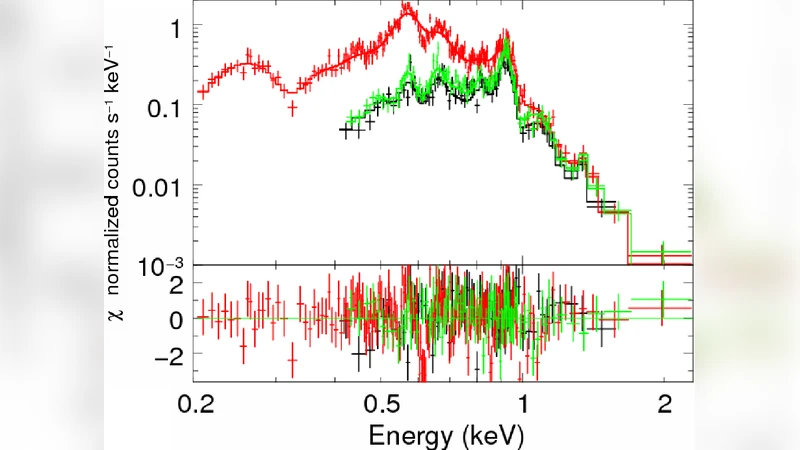
We observed the northern rim of the Cygnus Loop with the \textit{Suzaku} observatory in 5 pointings (P21-P25). From the spatially resolved analysis, all the spectra are well fitted by the single component of the non-equilibrium ionization plasma model. From the best-fit parameters, we found that the abundances of the heavy elements are significantly lower than the solar values except those at the outermost edge in P21 and P22. The origin of the depleted metal abundances is still unclear while such deficiencies have been reported from many other rim observations of the Loop. To explain these depletion at the rim regions, we considered the several possibilities. The effects of the resonance-line-scattering and the grain condensation lower the values of the abundances. However, these are not sufficient to account for the abundance depletion observed. We found that the abundances at the outermost edge in P21 and P22 are higher than those at the other regions. From the morphological point of view, it is reasonable to consider that this abundance inhomogeneity is derived from the breakout or the thinness of the cavity wall of the Loop.
💡 Research Summary
The authors present a detailed Suzaku X‑ray study of the northern rim of the Cygnus Loop supernova remnant, covering five distinct pointings (P21–P25). Each pointing was subdivided into small spatial regions, and the extracted spectra were fitted with a single‑component non‑equilibrium ionization (NEI) model (vnei in XSPEC). The fits yielded electron temperatures of 0.2–0.3 keV and ionization timescales of 10¹⁰–10¹¹ cm⁻³ s, indicating that the plasma is still far from collisional equilibrium.
A striking result is the systematic depletion of heavy‑element abundances across most of the rim. Oxygen, neon, magnesium, silicon, and iron are all measured at roughly 10–30 % of solar values, a finding that echoes earlier ROSAT, XMM‑Newton, and Chandra observations of other rim sections. However, the outermost edge of the rim in pointings P21 and P22 shows a markedly different chemical composition: O and Ne abundances rise to ≈50 % of solar, while Si and Fe also become relatively enhanced. This spatial inhomogeneity is statistically robust and suggests that the rim is not chemically uniform.
The authors explore two conventional mechanisms that could artificially lower apparent abundances. First, resonance‑line scattering can reduce the observed line flux of strong transitions (e.g., O VII, O VIII) when the optical depth is high. Monte‑Carlo simulations based on the measured τ and plasma density indicate that scattering can at most diminish line intensities by ~10–15 %, far short of the ~70 % depletion observed. Second, grain condensation could lock metals into dust, removing them from the X‑ray emitting gas. Yet the rim’s temperature (~0.2 keV) and ionization age are insufficient to promote substantial dust formation, and infrared data do not reveal the required dust mass. Consequently, neither effect can fully account for the observed metal deficiency.
To explain the anomalously high abundances at the outermost edge, the authors invoke structural asymmetries in the Cygnus Loop’s “cavity‑wall.” In the prevailing model, the progenitor star carved a low‑density cavity before exploding; the supernova shock then encountered a dense surrounding shell, producing the bright rim. The elevated abundances in P21 and P22 are interpreted as evidence that the cavity wall is locally thin or has ruptured, allowing the shock to break out into lower‑density interstellar material. In such breakout regions, the shocked plasma would contain a larger fraction of the original supernova ejecta, naturally yielding higher metal abundances. This scenario also implies that the explosion was intrinsically asymmetric and that the ambient interstellar medium is highly inhomogeneous.
Overall, the paper demonstrates that the metal depletion seen across most of the Cygnus Loop rim cannot be explained solely by line‑scattering or dust effects. Instead, the data point to genuine chemical variations driven by variations in the thickness or integrity of the cavity wall. The authors recommend future high‑resolution spectroscopic missions (e.g., XRISM, Athena) combined with multi‑wavelength imaging and three‑dimensional hydrodynamic simulations to map the full three‑dimensional structure of the rim and to quantify how shock‑cloud interactions shape the observed abundance patterns.
Comments & Academic Discussion
Loading comments...
Leave a Comment