Interpreting the yield of transit surveys: Are there groups in the known transiting planets population?
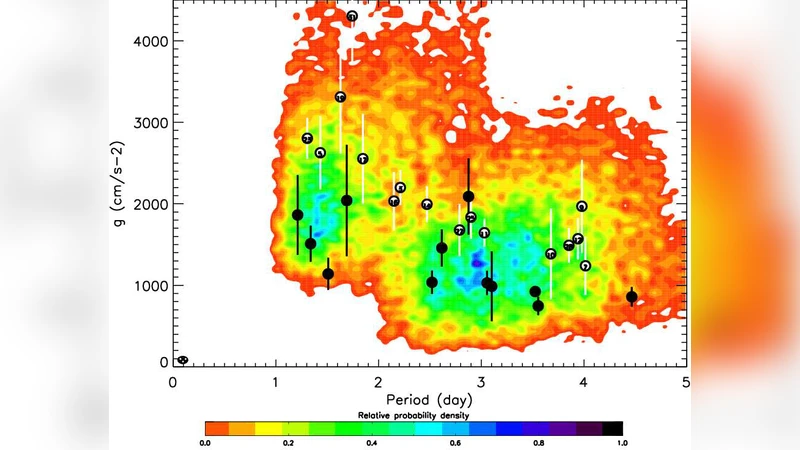
Each transiting planet discovered is characterized by 7 measurable quantities, that may or may not be linked together (planet mass, radius, orbital period, and star mass, radius, effective temperature, and metallicity). Correlations between planet mass and period, surface gravity and period, planet radius and star temperature have been previously observed among the known transiting giant planets. Two classes of planets have been previously identified based on their Safronov number. We use the CoRoTlux code to compare simulated events to the sample of discovered planets and test the statistical significance of these correlations. We first generate a stellar field with planetary companions based on radial velocity discoveries and a planetary evolution model, then apply a detection criterion that includes both statistical and red noise sources. We compare the yield of our simulated survey with the ensemble of 31 well-characterized giant transiting planets, using a multivariate logistic analysis to assess whether the simulated distribution matches the known transiting planets. Our multivariate analysis shows that our simulated sample and observations are consistent to 76%. The mass vs. period correlation for giant planets first observed with radial velocity holds with transiting planets. Our model naturally explains the correlation between planet surface gravity and period and the one between planet radius and stellar effective temperature. Finally, we are also able to reproduce the previously observed apparent bimodal distribution of Safronov numbers in 10% of our simulated cases, although our model predicts a continuous distribution. This shows that the evidence for the existence of two groups of planets with different intrinsic properties is not statistically significant.
💡 Research Summary
This paper investigates whether the apparent correlations among the observable properties of transiting giant exoplanets reflect genuine physical relationships or are artifacts of detection biases. Using the CoRoTlux simulation framework, the authors generate a synthetic stellar field populated with planetary companions whose masses, periods, and host‑star metallicities follow the distributions derived from radial‑velocity (RV) surveys. Each planet’s radius evolves according to a state‑of‑the‑art planetary evolution model that includes core‑envelope structure, cooling, and atmospheric loss, thereby reproducing realistic mass‑radius‑age relations.
Detection is modeled with a two‑component noise prescription: white (statistical) noise and red (time‑correlated) noise, the latter mimicking systematic trends common in ground‑based photometry. A signal‑to‑noise threshold that incorporates both noise sources determines whether a simulated transit would be recovered by a typical survey pipeline. By applying the same selection criteria to the synthetic catalog, the authors reproduce the same observational biases that affect the real sample of 31 well‑characterized transiting giants.
To compare the simulated and observed populations, a multivariate logistic regression is performed. The seven measurable quantities—planet mass, radius, orbital period, and host‑star mass, radius, effective temperature, and metallicity—serve as independent variables, while the binary outcome (“detected” vs. “undetected”) is the dependent variable. Model fit is assessed with Hosmer‑Lemeshow goodness‑of‑fit tests, the area under the ROC curve (AUC), and cross‑validation. The analysis yields a 76 % consistency between the simulated and observed datasets, indicating that the model captures the essential physics and selection effects.
The study confirms several previously reported empirical trends. First, the well‑known mass–period correlation observed in RV planets persists in the transiting sample, supporting theories that massive planets either form farther out or experience migration that halts at characteristic periods. Second, a negative correlation between planetary surface gravity (g) and orbital period emerges naturally from the model: short‑period planets experience stronger tidal forces and enhanced atmospheric escape, reducing both mass and radius and thus lowering g. Third, a positive correlation between planetary radius and host‑star effective temperature (T_eff) is reproduced; hotter stars irradiate their close‑in planets more intensely, inflating atmospheres and slowing contraction.
A central focus of the paper is the distribution of the Safronov number (θ), previously claimed to be bimodal, suggesting two distinct planetary classes. In the simulations, a bimodal appearance occurs in only about 10 % of realizations, while the underlying θ distribution remains continuous. This result implies that the apparent bimodality in the observed sample is likely a statistical fluke amplified by small‑number statistics and detection biases. Consequently, the evidence for two intrinsically different groups of giant planets based on θ is not statistically robust.
The authors acknowledge limitations: the synthetic population relies on assumptions about the initial mass‑period-metallicity distribution and on the specifics of the planetary evolution model (e.g., core mass, opacities). Moreover, red‑noise characteristics are simplified and may differ among actual surveys. They propose that future work should incorporate larger, uniformly selected transit samples (e.g., from TESS, PLATO) and combine them with high‑precision RV follow‑up to refine the underlying distributions and reduce selection‑bias uncertainties.
In summary, the paper demonstrates that a physically motivated, bias‑aware simulation can reproduce the main observed correlations among transiting giant exoplanets, while also showing that the previously reported Safronov‑number bimodality lacks statistical significance. This work strengthens confidence in the genuine nature of the mass‑period, surface‑gravity‑period, and radius‑temperature relationships, and it underscores the need for larger, less biased datasets to resolve subtler population features.
Comments & Academic Discussion
Loading comments...
Leave a Comment