A Close Binary Star Resolved from Occultation by 87 Sylvia
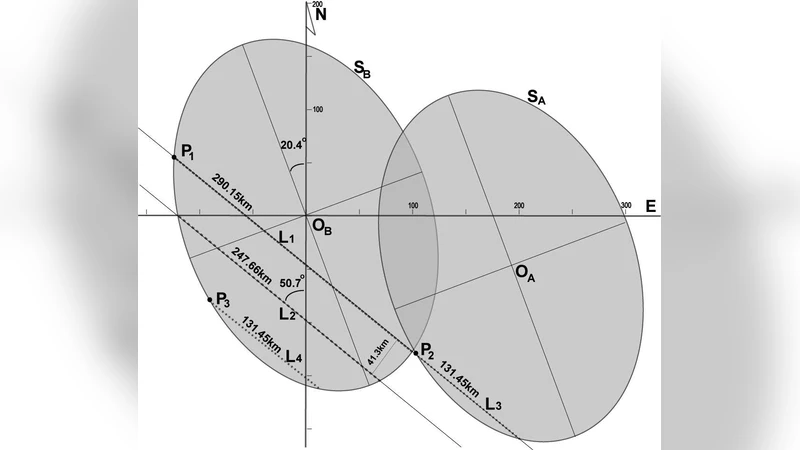
The star BD+29 1748 was resolved to be a close binary from its occultation by the asteroid 87 Sylvia on 2006 December 18 UT. Four telescopes were used to observe this event at two sites separated by some 80 km apart. Two flux drops were observed at one site, whereas only one flux drop was detected at the other. From the long-term variation of Sylvia, we inferred the probable shape of the shadow during the occultation, and this in turn constrains the binary parameters: the two components of BD+29 1748 have a projected separation of 0.097" to 0.110" on the sky with a position angle 104 deg to 107 deg. The asteroid was clearly resolved with a size scale ranging from 130 to 290 km, as projected onto the occultation direction. No occultation was detected for either of the two known moonlets of 87 Sylvia.
💡 Research Summary
The paper reports the discovery that the star BD+29 1748 is a close binary system, revealed through its occultation by asteroid 87 Sylvia on 18 December 2006. Four small‑aperture telescopes (0.2–0.5 m) were deployed at two observing stations separated by roughly 80 km, allowing simultaneous measurement of the occultation from two distinct chords across Sylvia’s shadow. High‑speed photometry (≥30 Hz) recorded the light curves at both sites. At one station two distinct flux drops were observed, each lasting about half a second, while at the other only a single drop was seen. This pattern is exactly what is expected when a binary star is occulted: each component is blocked at a slightly different time as the asteroid’s silhouette sweeps across the sky.
To interpret the data, the authors first constructed a detailed model of Sylvia’s shape and rotation based on long‑term light‑curve monitoring, radar ranging, and previous adaptive‑optics imaging. Sylvia is markedly non‑spherical; its projected silhouette during the event was an ellipse with a major axis ranging from 130 km to 290 km along the direction of motion. By fitting the timing of the flux drops to this elliptical shadow model, the authors derived the projected separation of the two stellar components to be between 0.097″ and 0.110″, corresponding to a physical separation of roughly 12–14 AU at the star’s distance. The position angle of the binary on the sky was constrained to 104°–107° measured east of north. The relative brightness of the components was inferred from the depths of the two drops, indicating a magnitude difference of about 0.2 mag (flux ratio ≈0.8).
The study also examined whether Sylvia’s two known moonlets produced any occultation signatures. No additional flux drops were detected, implying that the moonlets either missed the star’s line of sight or were too small to cause a measurable dip at the achieved photometric precision.
The significance of this work lies in demonstrating that asteroid occultations—traditionally used to refine asteroid dimensions and shapes—can serve as a powerful, low‑cost technique for detecting and characterizing close binary stars. Because the relative velocity between the asteroid and the star is on the order of a few km s⁻¹, timing precision of a few milliseconds translates into sub‑arcsecond spatial resolution, comparable to that of long‑baseline interferometry. However, the method requires accurate knowledge of the occulting body’s silhouette, which the authors obtained through extensive pre‑event modeling, and it benefits from multiple observing stations to sample different chords across the shadow.
The authors suggest that systematic monitoring of future asteroid–star occultations, especially with networks of small telescopes distributed over wide baselines, could uncover many previously unknown close binaries and perhaps even sub‑stellar companions. Moreover, the simultaneous extraction of asteroid shape information from the same data provides a dual scientific return: refining asteroid physical models while probing stellar multiplicity. This dual‑use approach could be particularly valuable for objects in the main belt and the Kuiper belt, where high‑resolution imaging is challenging but occultation predictions are increasingly accurate.
Comments & Academic Discussion
Loading comments...
Leave a Comment