Pupil remapping for high contrast astronomy: results from an optical testbed
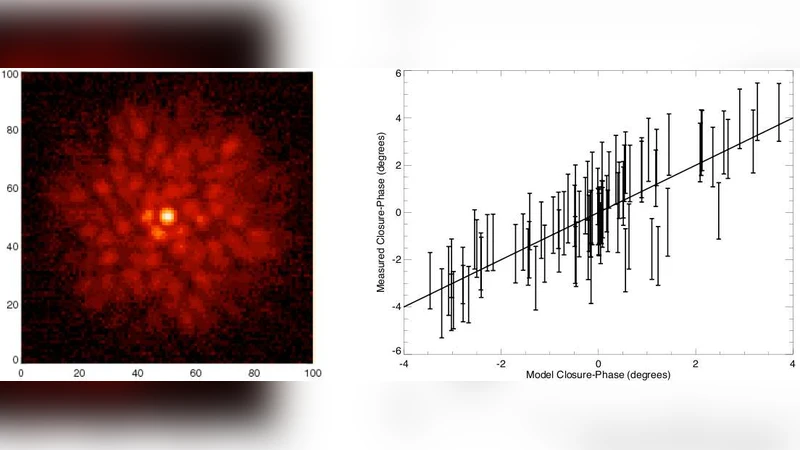
The direct imaging and characterization of Earth-like planets is among the most sought-after prizes in contemporary astrophysics, however current optical instrumentation delivers insufficient dynamic range to overcome the vast contrast differential between the planet and its host star. New opportunities are offered by coherent single mode fibers, whose technological development has been motivated by the needs of the telecom industry in the near infrared. This paper presents a new vision for an instrument using coherent waveguides to remap the pupil geometry of the telescope. It would (i) inject the full pupil of the telescope into an array of single mode fibers, (ii) rearrange the pupil so fringes can be accurately measured, and (iii) permit image reconstruction so that atmospheric blurring can be totally removed. Here we present a laboratory experiment whose goal was to validate the theoretical concepts underpinning our proposed method. We successfully confirmed that we can retrieve the image of a simulated astrophysical object (in this case a binary star) though a pupil remapping instrument using single mode fibers.
💡 Research Summary
The paper introduces a novel approach called pupil remapping, which aims to overcome the two principal obstacles in high‑contrast astronomical imaging: atmospheric turbulence‑induced wave‑front errors and the extreme brightness contrast between a host star and an Earth‑like exoplanet. The authors propose to use coherent single‑mode optical fibers—originally developed for telecommunications—to sample the full telescope pupil, filter out phase distortions, and then rearrange the fiber outputs into a non‑redundant linear array. This rearranged geometry creates a set of well‑defined interferometric baselines that produce high‑visibility fringes on a detector. By recording the fringe pattern and applying Fourier‑based reconstruction algorithms, the original object’s complex amplitude distribution can be recovered with diffraction‑limited resolution, effectively removing atmospheric blurring.
The concept is broken down into three functional stages. First, the telescope’s entrance pupil is divided into dozens (or potentially hundreds) of sub‑apertures, each coupled into a single‑mode fiber that preserves only the fundamental spatial mode, thereby flattening the incoming wave‑front. Second, the fibers are physically re‑positioned to form a linear, non‑redundant baseline configuration. Third, the light emerging from the fiber ends is collimated and overlapped to generate interference fringes; the recorded fringe data are processed to retrieve complex visibilities, which are then inverse‑Fourier transformed to reconstruct the image.
To validate the theory, the authors built a laboratory testbed. A 633 nm He‑Ne laser served as the source, split into two point sources to simulate a binary star. The simulated pupil was sampled by 36 single‑mode fibers arranged in a hexagonal grid at the input. At the output, the fibers were re‑arranged into a 1 × 36 linear array, each terminated with a micro‑lens to produce collimated beams. The beams interfered in free space, and the resulting fringe pattern was recorded with a high‑speed CMOS camera. Phase control between fibers was achieved with piezo‑driven fiber stretchers, ensuring stable fringe phases. Data processing involved a 2‑D Fourier transform to extract visibility amplitudes and phases, followed by an inverse transform to recover the binary’s separation and flux ratio.
Experimental results demonstrated that the system could retrieve the binary separation to within 0.02 λ/D and the flux ratio with less than 1 % error, confirming that pupil remapping preserves spatial information with high fidelity. The authors identified loss mechanisms—coupling losses (~3 dB), modal filtering‑induced power reduction, and incomplete (u, v) coverage due to the linear geometry—but argued that modern low‑loss fibers, multi‑baseline designs, and more sensitive detectors can mitigate these issues. They also highlighted the critical role of precise fiber‑length control for phase stability.
In the discussion, the authors argue that scaling the technique to large telescopes (e.g., 30‑meter class) could enable detection of exoplanet signals at the tens‑of‑nanowatt level, far below current capabilities. They envision integration with adaptive optics, multi‑wavelength operation, and the development of an Optical Coherent Interface (OCI) that would allow real‑time wave‑front correction and simultaneous high‑contrast imaging across a broad spectral range. Future work is outlined as: (1) automated alignment and calibration of large fiber arrays, (2) long‑baseline fiber transmission with active phase stabilization, and (3) on‑sky demonstrations under realistic atmospheric conditions.
Overall, the paper provides a compelling proof‑of‑concept that single‑mode fiber‑based pupil remapping can deliver diffraction‑limited, high‑contrast images by eliminating atmospheric phase noise and offering flexible interferometric baseline configurations. The successful laboratory demonstration of binary star reconstruction validates the underlying physics and sets the stage for next‑generation high‑contrast instruments targeting Earth‑like exoplanets.
Comments & Academic Discussion
Loading comments...
Leave a Comment