Galaxies in a Simulated $Lambda$CDM Universe II: Observable Properties and Constraints on Feedback
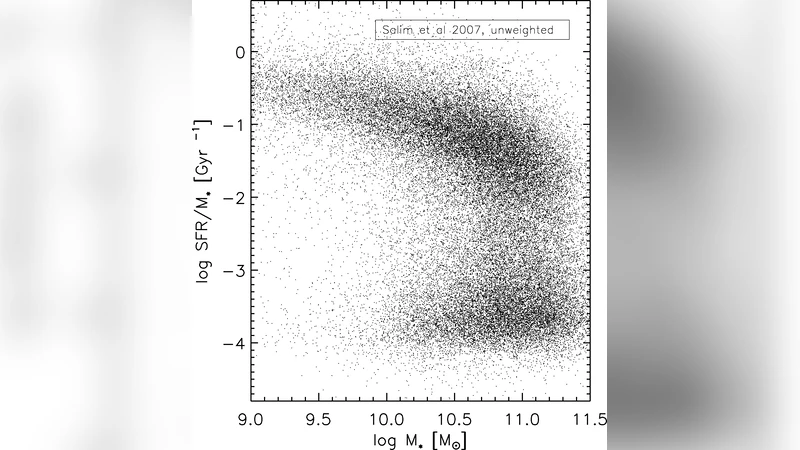
We compare the properties of galaxies that form in a cosmological simulation without strong feedback to observations at z=0. We confirm previous findings that models without strong feedback overproduce the observed galaxy baryonic mass function, especially at the low and high mass extremes. Through post-processing we investigate what kinds of feedback would be required to reproduce observed galaxy masses and star formation rates. To mimic an extreme form of “preventive” feedback (e.g., AGN radio mode) we remove all baryonic mass that was originally accreted via “hot mode” from shock-heated gas. This does not bring the high mass end of the galaxy mass function into agreement with observations because much of the stellar mass in these systems formed at high redshift from baryons that originally accreted via “cold mode” onto lower mass progenitors. An efficient “ejective” feedback mechanism, such as supernova driven winds, must reduce the masses of these progenitors. Feedback must also reduce the masses of lower mass z=0 galaxies, which assemble at lower redshifts and have much lower star formation rates. If we monotonically re-map galaxy masses to reproduce the observed mass function, but retain the simulation’s predicted star formation rates, we obtain fairly good agreement with the observed sequence of star-forming galaxies but fail to recover the observed population of passive, low star formation rate galaxies. Suppressing all hot mode accretion improves agreement for high mass galaxies but worsens the agreement at intermediate masses. Reproducing these z=0 observations requires a feedback mechanism that dramatically suppresses star formation in a fraction of galaxies, increasing with mass, while leaving star formation rates of other galaxies essentially unchanged.
💡 Research Summary
The paper investigates how a ΛCDM cosmological simulation that lacks strong feedback compares to observed galaxy properties at redshift zero. Using a simulation that tracks gas accretion through two channels—cold mode (direct, unshocked inflow) and hot mode (post‑shock cooling)—the authors find that, without effective feedback, the simulated galaxy baryonic mass function is dramatically over‑produced at both low (≈10⁹ M⊙) and high (≫10¹¹ M⊙) masses. The excess at the massive end persists even when all hot‑mode accretion is removed, because a substantial fraction of the stellar mass in today’s massive galaxies formed early from cold‑mode gas that first built up lower‑mass progenitors. Consequently, merely suppressing hot‑mode inflow (a proxy for “preventive” AGN radio‑mode feedback) cannot reconcile the high‑mass tail with observations.
To explore what feedback would be required, the authors apply two post‑processing experiments. The first mimics extreme preventive feedback by eliminating all baryons that ever entered a halo via hot mode. This reduces the masses of the most massive galaxies modestly but leaves the overall mass function too high, as the progenitor galaxies remain over‑massive. The second assumes an efficient ejective mechanism—such as supernova‑driven winds—that preferentially removes gas from low‑mass systems before they merge into larger halos. By re‑mapping galaxy masses to match the observed mass function while keeping the simulated star‑formation rates (SFRs) unchanged, the authors recover a realistic star‑forming main sequence but fail to produce the observed population of passive, low‑SFR galaxies.
The analysis shows that a successful feedback model must do more than uniformly lower galaxy masses. It must (1) strongly suppress star formation in a fraction of galaxies, with the suppressed fraction increasing with stellar mass, and (2) leave the SFRs of the remaining galaxies essentially unchanged. In practice this implies a combination of ejective feedback operating efficiently in low‑mass progenitors (to curb early stellar buildup) and preventive feedback that blocks later hot‑mode accretion onto massive halos. Only such a hybrid scheme can simultaneously reproduce the observed z = 0 baryonic mass function, the SFR–M* relation, and the existence of a substantial passive galaxy population. The paper thus highlights the necessity of mass‑dependent, dual‑mode feedback—ejective at early times and preventive at late times—to bring ΛCDM galaxy formation models into agreement with real‑world observations.
Comments & Academic Discussion
Loading comments...
Leave a Comment