Cyclic Variability of the Circumstellar Disc of the Be Star $zeta$ Tau. II. Testing the 2D Global Disc Oscillation Model
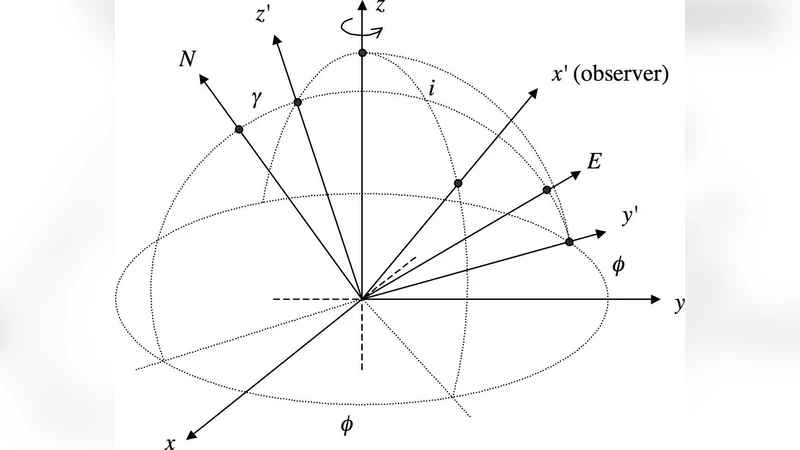
Aims. In this paper we model, in a self-consistent way, polarimetric, photometric, spectrophotometric and interferometric observations of the classical Be star $\zeta$ Tauri. Our primary goal is to conduct a critical quantitative test of the global oscillation scenario. Methods. We have carried out detailed three-dimensional, NLTE radiative transfer calculations using the radiative transfer code HDUST. For the input for the code we have used the most up-to-date research on Be stars to include a physically realistic description for the central star and the circumstellar disc. We adopt a rotationally deformed, gravity darkened central star, surrounded by a disc whose unperturbed state is given by a steady-state viscous decretion disc model. We further assume that disc is in vertical hydrostatic equilibrium. Results. By adopting a viscous decretion disc model for $\zeta$ Tauri and a rigorous solution of the radiative transfer, we have obtained a very good fit of the time-average properties of the disc. This provides strong theoretical evidence that the viscous decretion disc model is the mechanism responsible for disc formation. With the global oscillation model we have successfully fitted spatially resolved VLTI/AMBER observations and the temporal V/R variations of the H$\alpha$ and Br$\gamma$ lines. This result convincingly demonstrates that the oscillation pattern in the disc is a one-armed spiral. Possible model shortcomings, as well as suggestions for future improvements, are also discussed.
💡 Research Summary
The paper presents a comprehensive, self‑consistent modelling effort aimed at testing the global‑oscillation scenario for the classical Be star ζ Tau. The authors combine the most recent theoretical descriptions of a rapidly rotating, gravity‑darkened central star with a viscous decretion disc (VDD) that is assumed to be in vertical hydrostatic equilibrium. The unperturbed disc follows the steady‑state VDD solution, where the surface density declines with radius as ρ∝r⁻³·⁵ and the viscosity parameter α controls the mass‑loss rate from the star.
Radiative transfer is performed with the three‑dimensional, non‑local‑thermodynamic‑equilibrium (NLTE) Monte‑Carlo code HDUST. HDUST treats the full 3‑D geometry, anisotropic stellar illumination, and detailed atomic level populations, allowing the authors to compute synthetic polarisation, photometry, spectrophotometry, and interferometric observables simultaneously.
To address the well‑known V/R (violet‑to‑red) variability of the Hα and Brγ emission lines, the authors superimpose a one‑armed (m = 1) spiral density perturbation on the VDD, i.e., the global‑oscillation model. This perturbation creates a non‑axisymmetric density wave that precesses around the star, producing cyclic changes in the line profile asymmetry and a measurable shift in the photocentre that can be detected by VLTI/AMBER interferometry.
The modelling proceeds in two stages. First, a pure VDD model (without any perturbation) is fitted to time‑averaged observables: broadband photometry, linear polarisation, and the overall shape of the spectral energy distribution. The fit is excellent, providing strong evidence that the viscous decretion mechanism is responsible for disc formation in ζ Tau. Second, the one‑armed spiral is introduced, and the authors adjust its amplitude, pattern speed, and phase to reproduce the observed V/R cycles of Hα and Brγ, as well as the spatially resolved interferometric signatures. The resulting synthetic data match the observed V/R periods, the phase lag between different lines, and the asymmetric brightness distribution seen by AMBER.
The success of this combined approach demonstrates that (i) a steady‑state VDD can account for the bulk disc properties, and (ii) the global‑oscillation model, specifically a single‑armed spiral density wave, can explain the time‑dependent line‑profile variability and interferometric asymmetries. In other words, the disc of ζ Tau is best described as a viscous, nearly Keplerian structure that is periodically perturbed by a precessing m = 1 mode.
The authors also discuss limitations. The global‑oscillation model is implemented in a 2‑D framework, whereas real discs are fully three‑dimensional and may involve magnetic fields, non‑linear wave interactions, or episodic mass‑ejection events that are not captured. The viscosity parameter α is tuned to fit the data rather than derived from first principles, and the treatment of the disc’s outer boundary remains simplified. Future work is suggested to incorporate full 3‑D hydrodynamic simulations, magnetohydrodynamic effects, and longer‑term multi‑wavelength monitoring to refine the model.
In summary, this study provides a rigorous, multi‑technique validation of the viscous decretion disc paradigm and the one‑armed global oscillation hypothesis for ζ Tau. By simultaneously reproducing polarimetric, photometric, spectroscopic, and interferometric observations, the authors deliver compelling quantitative evidence that the observed V/R variability originates from a precessing spiral density wave within a viscous, near‑Keplerian Be‑star disc. This work sets a benchmark for future investigations of disc dynamics in other Be stars.
Comments & Academic Discussion
Loading comments...
Leave a Comment