Large scale dynamics in turbulent Rayleigh-Benard convection
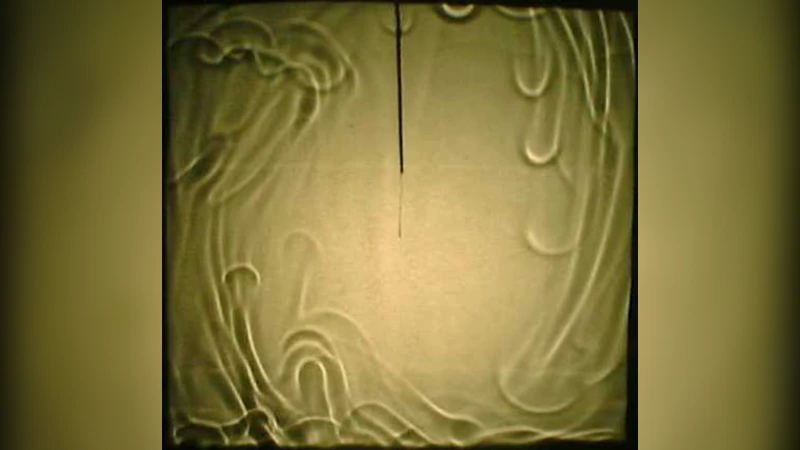
The progress in our understanding of several aspects of turbulent Rayleigh-Benard convection is reviewed. The focus is on the question of how the Nusselt number and the Reynolds number depend on the Rayleigh number Ra and the Prandtl number Pr, and on how the thicknesses of the thermal and the kinetic boundary layers scale with Ra and Pr. Non-Oberbeck-Boussinesq effects and the dynamics of the large-scale convection-roll are addressed as well. The review ends with a list of challenges for future research on the turbulent Rayleigh-Benard system.
💡 Research Summary
The paper provides a comprehensive review of turbulent Rayleigh‑Bénard (RB) convection, focusing on the scaling of global transport properties—namely the Nusselt number (Nu) for heat transfer and the Reynolds number (Re) for flow intensity—with the control parameters Rayleigh number (Ra) and Prandtl number (Pr). After a brief historical introduction that places RB convection in the context of geophysical, astrophysical, and engineering flows, the authors outline the limitations of the classical Oberbeck‑Boussinesq (OB) approximation and discuss when the assumption of constant material properties is justified.
Section II surveys early theoretical approaches, such as Malkus’ marginal‑stability theory (γ_Nu = 1/3) and Kraichnan‑Spiegel’s “ultimate” regime (γ_Nu = 1/2). The authors point out that these power‑law predictions, while elegant, fail to capture the observed Pr‑dependence and the delayed transition of boundary layers (BL) to turbulence, which only occurs at Ra ≈ 10¹⁴ in most experiments. The review then introduces the Grossmann‑Lohse (GL) framework, which splits the total kinetic (ε_u) and thermal (ε_θ) dissipation into bulk and BL contributions. Exact relations derived from the Boussinesq equations—ε_u = ν³ L⁻⁴ (Nu − 1) Ra Pr⁻² and ε_θ = κ Δ² L⁻² Nu—form the backbone of the model. By balancing the four possible bulk‑BL interaction regimes, the GL theory yields a set of piecewise power‑law expressions that successfully reproduce a vast body of experimental and numerical data across Ra ≈ 10⁶–10¹⁵ and Pr ≈ 10⁻²–10³.
Section III details the definition of the large‑scale circulation (LSC) or “wind of turbulence,” the dominant flow structure in a closed RB cell. The Reynolds number is based on a single characteristic velocity U of the LSC (Re = UL/ν). Various measurement techniques—temperature probes, particle‑image velocimetry, and pressure sensors—are compared, and the authors discuss the ongoing debate about whether the LSC is a direct continuation of low‑Ra cellular rolls or a distinct turbulent entity.
Section IV summarizes recent direct numerical simulations (DNS) that resolve both bulk turbulence and thin BLs. The simulations confirm the GL predictions for Nu(Ra,Pr) and Re(Ra,Pr) while revealing subtle deviations: at high Pr the thermal BL becomes extremely thin, leading to more frequent plume emission; at low Pr the kinetic BL transitions first, altering the scaling of Re. The authors also note the importance of resolving the plume‑BL interaction, as plumes detach from the thermal BL and feed the LSC.
Section V focuses on boundary‑layer scaling. The thermal BL thickness λ_θ ≈ L/(2Nu) and the kinetic BL thickness λ_u ≈ L/(2Re^½) are derived from the GL picture, with the recognition that plumes constitute a “BL‑like” region that must be treated separately. Visualizations (shadowgraph, liquid‑crystal streaks) illustrate plume morphology and their role in driving the LSC.
Section VI addresses non‑Oberbeck‑Boussinesq (Non‑OB) effects. When temperature differences become large, material properties (β, ν, κ) vary with temperature, breaking the symmetry of the problem. Experimental studies with helium, water, and high‑viscosity fluids quantify the resulting asymmetries in BL thickness and modest corrections to Nu and Re.
Section VII examines the dynamics of the LSC in detail: azimuthal oscillations, slow drift, abrupt reorientations, and eventual breakdown at extreme Ra. These phenomena are linked to plume emission statistics and BL stability, and stochastic models (e.g., Langevin equations) are presented as a framework for describing the observed random walk of the LSC orientation.
Finally, Section VIII outlines open challenges: (1) experimental access to the ultimate regime (Ra > 10¹⁵) to test the γ_Nu = 1/2 scaling, (2) systematic studies at extreme Pr (both very low and very high) to clarify BL transitions, (3) exploration of non‑standard cell geometries and multi‑cell interactions, (4) creation of high‑resolution, open‑access databases combining experiments and DNS, and (5) incorporation of Non‑OB physics into predictive models.
In summary, the review synthesizes decades of theoretical, experimental, and computational work into a coherent picture of turbulent RB convection, emphasizing the success of the GL unifying theory, the critical role of boundary‑layer and plume dynamics, and the rich, still‑unresolved behavior of the large‑scale circulation. It serves both as a state‑of‑the‑art reference and a roadmap for future investigations.
Comments & Academic Discussion
Loading comments...
Leave a Comment