Dynamics and length distribution of microtubules under force and confinement
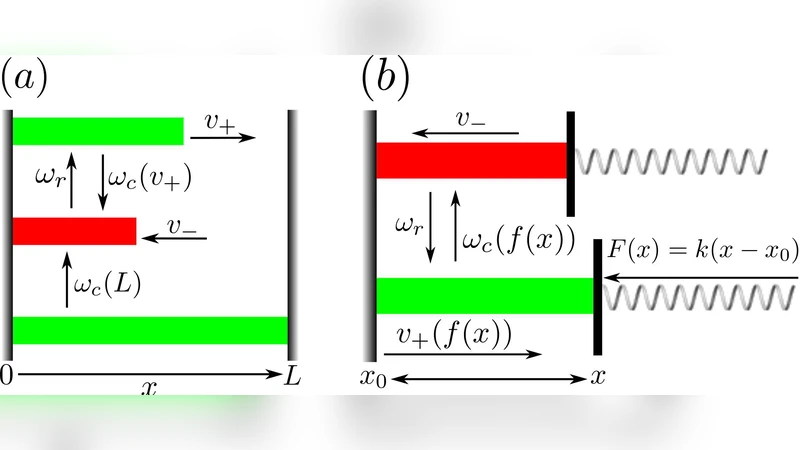
We investigate the microtubule polymerization dynamics with catastrophe and rescue events for three different confinement scenarios, which mimic typical cellular environments: (i) The microtubule is confined by rigid and fixed walls, (ii) it grows under constant force, and (iii) it grows against an elastic obstacle with a linearly increasing force. We use realistic catastrophe models and analyze the microtubule dynamics, the resulting microtubule length distributions, and force generation by stochastic and mean field calculations; in addition, we perform stochastic simulations. We also investigate the force dynamics if growth parameters are perturbed in dilution experiments. Finally, we show the robustness of our results against changes of catastrophe models and load distribution factors.
💡 Research Summary
This paper presents a comprehensive theoretical and computational study of microtubule (MT) dynamics under three prototypical confinement conditions that mimic common cellular environments: (i) rigid fixed walls, (ii) a constant external force, and (iii) an elastic obstacle that exerts a linearly increasing force as the MT grows. The authors incorporate realistic catastrophe models—both simple force‑dependent and more detailed GTP‑cap based descriptions—and treat rescue events explicitly. Growth and shrinkage velocities are assumed to follow an exponential force‑velocity relation, v₊(F)=v₊⁰ exp(−δF/kBT) for polymerization and v₋(F)=v₋⁰ exp(δF/kBT) for depolymerization, where δ is the load‑distribution factor. Catastrophe and rescue rates, r_c(F) and r_r(F), are also taken as functions of the applied load.
For the rigid‑wall scenario, the authors solve a master equation combined with a mean‑field approximation to obtain the steady‑state length distribution P(L) as a function of the distance d from the wall. They show that as d decreases, the distribution becomes increasingly skewed, and the mean length ⟨L⟩ settles slightly below d, reflecting the physical hindrance of the wall and the load‑induced increase in catastrophe probability.
In the constant‑force case, the system is characterized by a critical force F_c that separates two regimes. When the applied force F is below F_c, the MT reaches a stationary length distribution with a finite mean; when F exceeds F_c, the mean length diverges, indicating runaway growth or catastrophic shrinkage. The critical force is derived analytically and depends on the ratio of polymerization to depolymerization velocities and on the intrinsic catastrophe/rescue rates. This result provides a clear criterion for force‑generated stability of MTs in contexts such as motor‑driven tension or external mechanical load.
The elastic‑obstacle model introduces a force that grows linearly with MT displacement (F = k x). By embedding the time‑dependent force into the stochastic master equation, the authors identify a stable equilibrium length L_eq that satisfies the balance between load‑dependent growth, shrinkage, and the force feedback from the spring. Small spring constants k allow the MT to grow far before the force becomes limiting, whereas large k produce a rapid rise in load, boosting catastrophe frequency and truncating the equilibrium length. The analysis yields an explicit expression for L_eq in terms of k, the unloaded growth parameters, and the load‑distribution factor.
To test the dynamic response of these systems, the authors simulate dilution experiments where the tubulin concentration is abruptly reduced. This perturbation lowers the polymerization velocity v₊ and raises the catastrophe rate r_c. In the constant‑force setting, the MT force output drops sharply, while in the elastic‑obstacle case the equilibrium length shifts abruptly to a shorter value. These simulations illustrate how MT ensembles can quickly adapt their force‑generation capacity to sudden changes in the intracellular environment.
Robustness checks are performed by swapping the simple force‑dependent catastrophe model with a more elaborate GTP‑cap based model and by varying the load‑distribution factor δ over a wide range (0.2–0.8). The principal findings—existence of a critical force, the form of the steady‑state length distribution, and the scaling of L_eq with spring constant—remain essentially unchanged. This demonstrates that the conclusions are not artifacts of a particular kinetic prescription but reflect generic features of MT dynamics under load.
Overall, the paper integrates stochastic simulations, mean‑field theory, and analytical calculations to elucidate how microtubules generate and regulate force when constrained by physical boundaries, constant loads, or elastic resistance. The work provides quantitative predictions for the length distributions and force outputs that can be directly tested in vitro with optical traps or in vivo using fluorescence microscopy of MTs under mechanical perturbation. It also offers a framework for understanding how cells might exploit MT dynamics to sense mechanical cues, maintain structural integrity, and remodel the cytoskeleton in response to environmental changes.
Comments & Academic Discussion
Loading comments...
Leave a Comment