What does Maxwells demon want from life? When information becomes functional and physical
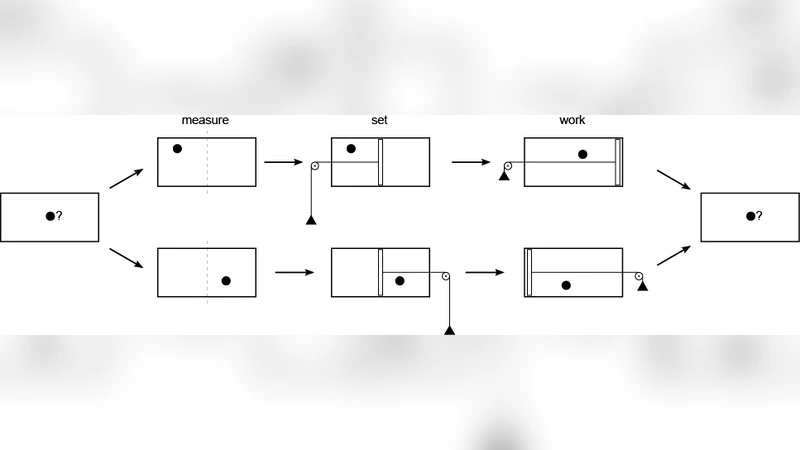
Szilard’s one-molecule engine is operated by a Maxwell’s demon attempting to convert heat to work. It is argued here that when using the demon to relate information to work (Landauer’s principle), the demon’s goal must be regarded as an implicit assumption that should not be taken for granted. Other demons than the standard one can be constructed depending on their assumed goal. When the demon is purely mechanical, the goal is instilled in it by its design. When the demon is regarded as “intelligent” (Maxwell) and “endowed with free will” (Thomson), it is not so clear whence he could acquire a specific goal. A solution is to subject the demon to evolution by natural selection, which in an extended form can provide the demon with a genuine goal for which work is necessary. This implies that the information the demon acquires and uses for operating the engine becomes functional for the demon, and thereby acquires a real physical status. Such information, called functional information, applies to all life and technology. It should be distinguished from the formal, causally ineffective information that can be defined, more arbitrarily, for any system. Information in general is not physical, only functional information is. A similar functional/formal distinction applies to close associates of information, in particular entropy, probability, and the second law of thermodynamics.
💡 Research Summary
The paper revisits the classic Maxwell‑demon thought experiment, focusing on the often‑overlooked assumption that the demon operates with a well‑defined goal. Using Szilard’s one‑molecule engine as a concrete example, the author shows that Landauer’s principle—linking information erasure to a minimum thermodynamic cost—implicitly presupposes a purpose for the demon’s actions. Two distinct categories of demons are distinguished. The first is a purely mechanical demon whose objective is built into its design: the geometry of a piston, the timing of a gate, or any engineered constraint that forces the device to perform a predetermined work extraction. In this case the information the demon gathers (e.g., the position of a molecule) is directly functional; it is required to achieve the engineered task, and therefore it acquires a genuine physical relevance.
The second category comprises “intelligent” demons, the original Maxwellian agents endowed with free will or reasoning ability. For such demons the source of a specific goal is ambiguous. The author proposes that natural selection provides a robust solution: a demon that has been subject to evolutionary pressures will possess a genuine, survival‑oriented goal (e.g., acquiring energy, reproducing). Information that this evolved demon collects and uses to manipulate its environment becomes functional information—information that is causally effective because it is instrumental for achieving a real, fitness‑related objective. This functional status elevates the information from a mere abstract quantity to a physically consequential entity.
The paper then extends the functional/formal dichotomy to related thermodynamic concepts. Formal entropy, probability, and the second law are defined purely statistically; they quantify the number of microstates or the likelihood of configurations without reference to any purpose. Consequently, they are “causally ineffective” in the sense that they do not, by themselves, generate work. By contrast, functional entropy measures the change in entropy that is directly tied to a goal‑directed process—such as a living cell lowering its internal entropy while synthesizing ATP to sustain metabolism. In this view, the second law remains universally valid, but its apparent “violation” by a Maxwell demon is resolved once one recognises that the demon’s information is functional and that the demon’s goal is supplied by evolution.
The central claim is that information is not inherently physical; only functional information is. Functional information is characterized by three criteria: (1) it is acquired by a system that has a well‑defined, goal‑oriented purpose; (2) it is employed to perform work that advances that purpose; and (3) it is subject to selection pressures that maintain its relevance. Formal information lacks at least one of these properties and therefore does not possess an intrinsic thermodynamic cost or benefit.
Implications of this framework are broad. In biology, DNA, neural codes, and behavioural strategies are all examples of functional information that have been shaped by evolution and that directly drive work‑performing processes. In technology, algorithms, control software, and engineered feedback loops become functional only when they are designed to achieve specific performance targets. The paper argues that recognizing the functional nature of information clarifies longstanding debates about the “physicality” of information, resolves apparent paradoxes in Maxwell‑demon scenarios, and provides a unified language for discussing information across living and artificial systems.