Centrality in Interconnected Multilayer Networks
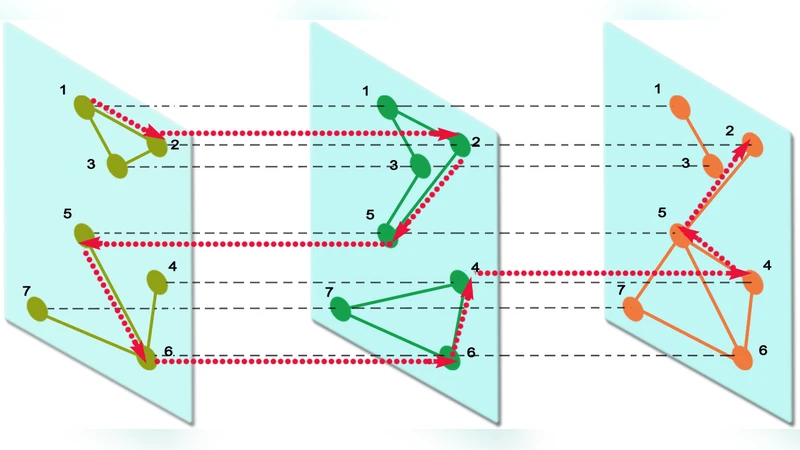
Real-world complex systems exhibit multiple levels of relationships. In many cases, they require to be modeled by interconnected multilayer networks, characterizing interactions on several levels simultaneously. It is of crucial importance in many fields, from economics to biology, from urban planning to social sciences, to identify the most (or the less) influent nodes in a network. However, defining the centrality of actors in an interconnected structure is not trivial. In this paper, we capitalize on the tensorial formalism, recently proposed to characterize and investigate this kind of complex topologies, to show how several centrality measures – well-known in the case of standard (“monoplex”) networks – can be extended naturally to the realm of interconnected multiplexes. We consider diagnostics widely used in different fields, e.g., computer science, biology, communication and social sciences, to cite only some of them. We show, both theoretically and numerically, that using the weighted monoplex obtained by aggregating the multilayer network leads, in general, to relevant differences in ranking the nodes by their importance.
💡 Research Summary
The paper addresses the problem of defining node importance in complex systems that are best represented as interconnected multilayer networks, where the same set of entities can interact on several distinct layers and where inter‑layer connections (with associated costs) exist. Traditional analyses that collapse such structures into a single weighted graph inevitably discard crucial information about inter‑layer coupling, leading to potentially misleading rankings of node centrality.
To overcome this limitation, the authors adopt the tensorial formalism introduced in earlier work (De Domenico et al., 2013). They represent intra‑layer adjacency by a second‑order tensor Wᵢⱼ(α) for each layer α, and inter‑layer connections by a second‑order tensor Cᵢⱼ(αβ). Both are combined into a fourth‑order multilayer adjacency tensor Mᵢαⱼβ, which can be thought of as a high‑dimensional matrix encoding every possible link between node i in layer α and node j in layer β. By contracting the layer indices with a unit tensor, one recovers the aggregated monoplex adjacency Gᵢⱼ, but the authors stress that this operation discards the inter‑layer structure.
Using this tensorial representation, the paper systematically extends a broad suite of centrality measures that are standard for monoplex graphs. Static, topology‑based indices such as degree, eigenvector centrality, clustering coefficient, and modularity are reformulated as tensor contractions or eigen‑problems involving Mᵢαⱼβ. For example, the multilayer degree of node i in layer α is kᵢα = Mᵢαⱼβ uⱼβ, where u is a tensor of ones; the overall degree is obtained by summing over α. Eigenvector centrality becomes the leading eigen‑tensor of M, naturally incorporating both intra‑ and inter‑layer links.
The authors then turn to dynamical centralities, focusing on discrete‑time random walks. They define a transition‑probability tensor Tᵢαⱼβ that includes the probability of moving within a layer as well as the probability of switching layers, the latter modulated by a cost parameter ω that can represent, for instance, travel time or social friction. The master equation pⱼβ(t+1)=Tᵢαⱼβ pᵢα(t) governs the evolution of the walker’s probability distribution. Its stationary solution Πᵢα gives the long‑run occupation probability of each node‑layer pair; summing over layers yields a multilayer occupation centrality Πᵢ. This measure reduces to the classic PageRank when inter‑layer connections are absent, but otherwise captures how inter‑layer coupling reshapes the flow of information or disease.
To validate the theoretical framework, the paper presents both analytical arguments and extensive numerical experiments. Synthetic three‑layer networks, real‑world social media data spanning multiple platforms, and urban transportation systems (subway, bus, bike‑share) are analyzed. In each case, rankings obtained from the aggregated monoplex are compared with those from the full tensorial approach. The differences are especially pronounced when inter‑layer links are asymmetric or when the cost ω varies widely across layers. For transportation, hubs that appear peripheral in the aggregated graph become central once the cost of switching between modes is accounted for. For epidemic simulations on social multilayer graphs, the tensor‑based random‑walk centrality correlates strongly with actual infection spread, whereas the aggregated measure fails to predict key spreaders.
The authors conclude that the tensorial formalism provides a mathematically rigorous, yet computationally tractable, way to extend virtually any monoplex network diagnostic to interconnected multilayer systems. By explicitly modeling inter‑layer transition costs, the approach yields more accurate assessments of node influence, which is critical for applications ranging from targeted immunization strategies to multimodal transportation planning and cross‑platform marketing. Future work is suggested on temporal‑multilayer tensors, non‑linear dynamics, and scalable parallel algorithms for massive multilayer datasets.
Comments & Academic Discussion
Loading comments...
Leave a Comment