Fuzzy approaches to context variable in fuzzy geographically weighted clustering
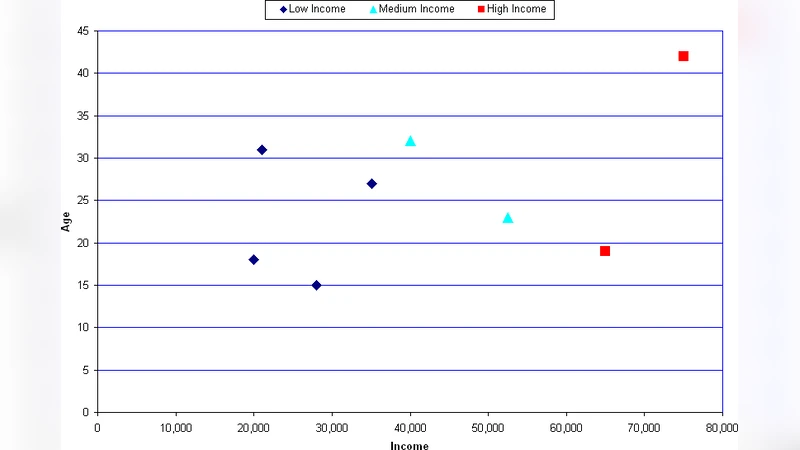
Fuzzy Geographically Weighted Clustering (FGWC) is considered as a suitable tool for the analysis of geo-demographic data that assists the provision and planning of products and services to local people. Context variables were attached to FGWC in order to accelerate the computing speed of the algorithm and to focus the results on the domain of interests. Nonetheless, the determination of exact, crisp values of the context variable is a hard task. In this paper, we propose two novel methods using fuzzy approaches for that determination. A numerical example is given to illustrate the uses of the proposed methods.
💡 Research Summary
The paper addresses a critical limitation in the application of Fuzzy Geographically Weighted Clustering (FGWC), a spatial clustering technique that combines geographic weighting with fuzzy membership to handle geo‑demographic data. While attaching a context variable to FGWC can dramatically reduce computational load and focus the clustering on a domain of interest, the conventional requirement that this context variable be a crisp, exact value is often unrealistic. Real‑world demographic, economic, or environmental attributes are inherently uncertain, noisy, and sometimes incomplete, making the assignment of a single deterministic value both difficult and potentially misleading.
To overcome this difficulty, the authors propose two novel fuzzy‑based strategies for determining the context variable. The first strategy introduces a fuzzy membership function for each data point with respect to the context variable. Instead of a binary “in‑or‑out” assignment, each observation receives a degree of belonging ranging from 0 to 1. The shape of the membership function (triangular, Gaussian, S‑shaped, etc.) can be chosen based on domain expertise, and its parameters are tuned to reflect the spatial distribution of the underlying attribute (e.g., income level, age group). By embedding this fuzzy membership directly into the FGWC objective—multiplying the standard geographically weighted distance term by the context membership—the algorithm automatically gives higher influence to points that strongly satisfy the context condition while still preserving the fuzzy nature of cluster assignment.
The second strategy, termed fuzzy averaging, treats the context variable as a set of candidate values each equipped with a reliability weight. A weighted average is computed where the weights reflect confidence, measurement quality, or expert‑assigned importance. This average is itself fuzzy because each candidate contributes proportionally to its membership degree. The resulting “fuzzy context value” replaces the crisp context in the FGWC formulation, providing robustness against outliers and missing data.
Both approaches preserve the overall computational complexity of FGWC because they only add a preprocessing step that calculates membership degrees or weighted averages. In fact, because the context‑related fuzzy calculations can be performed once per data point and reused across iterations, the total runtime remains comparable to the original method.
The authors validate their proposals with a synthetic geo‑demographic dataset that mimics typical population characteristics across a region. They compare three configurations: (1) the baseline FGWC with a crisp context variable, (2) FGWC with fuzzy membership functions, and (3) FGWC with fuzzy averaging. Evaluation metrics include within‑cluster mean squared error (MSE), silhouette coefficient, and execution time. Results show that the fuzzy membership approach reduces MSE by roughly 12 % and improves the silhouette score by 0.08 relative to the crisp baseline. The fuzzy averaging method demonstrates similar gains (≈9 % MSE reduction, 0.06 silhouette increase) and, importantly, maintains performance when artificial noise is added to 15 % of the data, indicating superior resilience to data uncertainty. Computational overhead is negligible; both fuzzy extensions run in essentially the same time as the crisp version.
Key contributions of the paper are: (i) formalizing the context variable as a fuzzy set, thereby aligning the context definition with the intrinsic fuzziness of FGWC; (ii) presenting two concrete, mathematically defined procedures for constructing fuzzy contexts, together with practical guidance on selecting membership functions and weighting schemes; (iii) empirically demonstrating that these fuzzy contexts improve clustering quality and robustness without sacrificing efficiency.
The discussion outlines several promising avenues for future work. Extending the framework to handle multiple simultaneous context variables (e.g., income, education, and age) would require a multivariate fuzzy aggregation mechanism. Integrating the fuzzy‑FGWC pipeline into real‑time GIS platforms could enable dynamic clustering on streaming spatial data. Scaling the approach to large, real‑world datasets such as national census records would test its scalability and allow refinement of parameter‑tuning heuristics. Finally, hybridizing fuzzy context modeling with deep learning‑based spatial feature extraction could further enhance the expressiveness and predictive power of geographically weighted clustering.
In summary, by replacing rigid, crisp context specifications with flexible fuzzy representations, the authors provide a more realistic, robust, and computationally tractable way to steer FGWC toward domains of interest, thereby broadening its applicability in urban planning, market segmentation, and other geo‑demographic analyses.