Attention for Fine-Grained Categorization
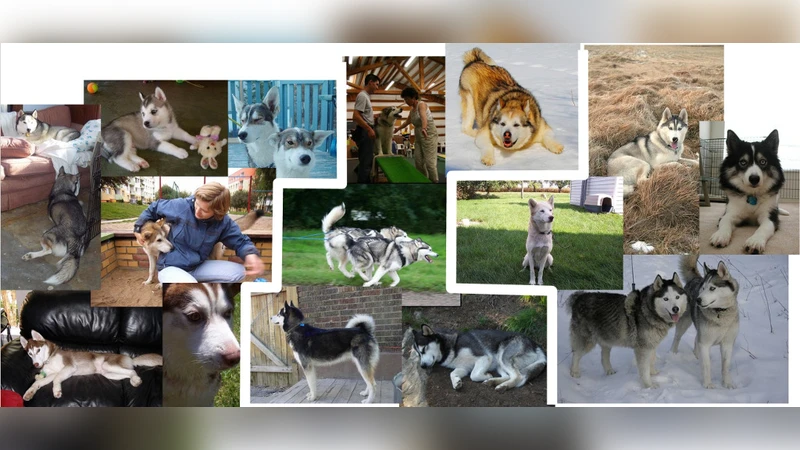
This paper presents experiments extending the work of Ba et al. (2014) on recurrent neural models for attention into less constrained visual environments, specifically fine-grained categorization on the Stanford Dogs data set. In this work we use an RNN of the same structure but substitute a more powerful visual network and perform large-scale pre-training of the visual network outside of the attention RNN. Most work in attention models to date focuses on tasks with toy or more constrained visual environments, whereas we present results for fine-grained categorization better than the state-of-the-art GoogLeNet classification model. We show that our model learns to direct high resolution attention to the most discriminative regions without any spatial supervision such as bounding boxes, and it is able to discriminate fine-grained dog breeds moderately well even when given only an initial low-resolution context image and narrow, inexpensive glimpses at faces and fur patterns. This and similar attention models have the major advantage of being trained end-to-end, as opposed to other current detection and recognition pipelines with hand-engineered components where information is lost. While our model is state-of-the-art, further work is needed to fully leverage the sequential input.
💡 Research Summary
This paper extends the recurrent visual‑attention framework originally introduced by Ba et al. (2014) to a challenging real‑world fine‑grained classification problem: recognizing 120 dog breeds in the Stanford Dogs dataset. While prior attention models have largely been evaluated on toy or highly constrained visual domains (e.g., MNIST, SVHN, simple shape detection), the authors demonstrate that a properly engineered attention system can thrive in a cluttered, highly variable environment with significant intra‑class similarity and inter‑class confusion.
The core architecture remains a double‑deck recurrent neural network (RNN) that processes a sequence of “glimpses”. At each time step n the model receives a location coordinate ℓₙ₋₁, extracts a multi‑resolution patch centered at that point, and feeds the patch through a visual feature extractor. The extracted feature vector is combined with the hidden state from the previous step to (i) predict the next location ℓₙ (via a policy‑gradient‑augmented back‑propagation update) and (ii) eventually produce a soft‑max classification score after N steps (N = 1–3 in the experiments).
Key innovations over the original Ba et al. model are:
-
Powerful visual core – The authors replace the shallow CNN used in the original work with a GoogLeNet (Inception) network pre‑trained on ImageNet. To accommodate the 96 × 96 glimpse size, they modify the first convolution stride from 2 to 1 and initially truncate the last two inception modules. Later experiments restore the full depth and retain stride‑1, yielding a substantial performance boost.
-
Multi‑scale glimpse design – Each glimpse consists of three concentric square patches (high, medium, low resolution) that are resized to 96 × 96 and concatenated side‑by‑side, mimicking a foveated visual system. The high‑resolution patch covers ¼ of the image’s short side, the medium patch twice that size, and the low‑resolution patch spans the full short side. This design allows the network to focus on fine details (e.g., dog faces, ear shapes) while still retaining contextual information.
-
Separate pre‑training of the visual core – The GoogLeNet visual core is trained outside the attention RNN on a “de‑duped” subset of ILSVRC 2012 (the Stanford Dogs images are removed). Multi‑head training is employed: three parallel towers (one per scale) share parameters but each connects to its own 1000‑way soft‑max head, ensuring that every scale learns discriminative features even if another scale dominates. After this stage the visual core’s weights are frozen during RNN training, demonstrating that the attention mechanism can leverage a fixed, generic visual feature extractor.
-
Vanilla RNN instead of LSTM – The recurrent part uses simple fully‑connected layers (4096 units each) rather than gated units, simplifying the architecture while still achieving strong results.
The experimental protocol follows standard practice for Stanford Dogs: 100 training images per breed (augmented by horizontal flips) and 8,580 test images, with no use of the provided bounding boxes either during training or testing. The model receives the full image (no cropping, resizing, or scaling) and a low‑resolution context patch randomly positioned during training (centered at inference). Hyper‑parameters are selected on an 80/20 split of the training set, then the full training set is used for final evaluation.
Results are reported as mean accuracy (mA). Several configurations are explored:
| Glimpse resolution(s) | # Glimpses | mA |
|---|---|---|
| High only | 1 | 43.5 |
| 2 | 48.3 | |
| 3 | 49.6 | |
| Medium only | 1 | 70.1 |
| 2 | 72.3 | |
| 3 | 72.8 | |
| Low only | 1 | 70.3 |
| 2 | 70.1 | |
| 3 | 70.7 | |
| High + Medium | 1 | 70.7 |
| 2 | 72.6 | |
| 3 | 72.7 | |
| High + Medium + Low (3‑resolution) | 1 | 76.3 |
| 2 | 76.5 | |
| 3 | 76.8 |
For comparison, prior state‑of‑the‑art methods that exploit tight ground‑truth bounding boxes achieve 38.0 % (Yang et al., 2012), 45.6 % (Chai et al., 2013), and 50.1 % (Gavves et al., 2013). A standard GoogLeNet trained on 96 × 96 crops reaches 58.8 %, while GoogLeNet on full 224 × 224 images reaches 75.5 %. Thus, the attention model with three resolutions and three glimpses surpasses the full‑resolution GoogLeNet baseline despite never seeing a bounding box and processing only a fraction of the pixels at high resolution.
The authors analyze why medium and low resolution patches dominate performance: the low‑resolution patch often contains enough contextual cues to locate the dog, while the medium resolution supplies sufficient detail for breed discrimination. Adding a high‑resolution glimpse yields modest gains, indicating that the model already learns to focus on discriminative regions (faces, ears, fur patterns) without explicit supervision.
In the discussion, the paper highlights several advantages of the attention approach:
- End‑to‑end learning – Unlike pipelines that separate proposal generation, feature extraction, and classification (e.g., R‑CNN, Deformable Part Models), the attention model jointly optimizes where to look and what to predict.
- Parameter efficiency – By processing only a few high‑resolution patches, computational cost is reduced relative to feeding the entire image at full resolution.
- No need for bounding‑box annotations – The model learns to localize implicitly, which is valuable for domains where precise annotations are expensive or unavailable.
Limitations are acknowledged: the number of glimpses and the set of resolutions are fixed; the recurrent unit is a simple RNN rather than a more expressive LSTM/GRU; and the visual core is frozen during attention training, potentially leaving performance on the table. The authors suggest future work on dynamic glimpse budgeting, longer glimpse sequences, reinforcement‑learning‑driven exploration policies, and integration of more sophisticated recurrent units.
In summary, this work demonstrates that a carefully designed visual‑attention RNN, powered by a pre‑trained deep CNN and multi‑scale foveated glimpses, can achieve state‑of‑the‑art fine‑grained classification on a challenging dataset without any explicit spatial supervision. It bridges the gap between attention research on toy problems and real‑world visual recognition, opening avenues for further exploration of attention mechanisms in complex vision tasks.
Comments & Academic Discussion
Loading comments...
Leave a Comment