An Analysis of Unsupervised Pre-training in Light of Recent Advances
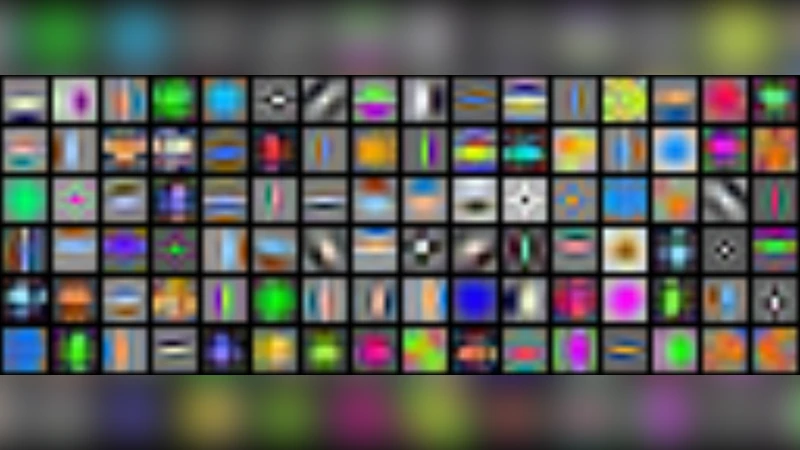
Convolutional neural networks perform well on object recognition because of a number of recent advances: rectified linear units (ReLUs), data augmentation, dropout, and large labelled datasets. Unsupervised data has been proposed as another way to improve performance. Unfortunately, unsupervised pre-training is not used by state-of-the-art methods leading to the following question: Is unsupervised pre-training still useful given recent advances? If so, when? We answer this in three parts: we 1) develop an unsupervised method that incorporates ReLUs and recent unsupervised regularization techniques, 2) analyze the benefits of unsupervised pre-training compared to data augmentation and dropout on CIFAR-10 while varying the ratio of unsupervised to supervised samples, 3) verify our findings on STL-10. We discover unsupervised pre-training, as expected, helps when the ratio of unsupervised to supervised samples is high, and surprisingly, hurts when the ratio is low. We also use unsupervised pre-training with additional color augmentation to achieve near state-of-the-art performance on STL-10.
💡 Research Summary
The paper investigates whether unsupervised pre‑training remains beneficial in the era of modern deep‑learning advances such as ReLU activations, extensive data augmentation, dropout, and large labeled datasets. The authors introduce a “Zero‑bias Convolutional Auto‑encoder” (Zero‑bias CAE) that incorporates two key ideas: (1) fixing all convolutional and deconvolutional biases to zero, and (2) using ReLU units in the encoder while keeping linear activations in the decoder. This design follows the insight of Memisevic et al. (2014) that ReLUs can form tight activation clusters without bias, eliminating the need for additional regularizers such as sparsity constraints.
Weight initialization is handled in two stages. For the first layer, filters are initialized with randomly sampled image patches, ensuring that ReLU inputs are likely positive. For deeper layers, weights are drawn from a Gaussian distribution and orthogonalized via singular‑value decomposition, with a 2‑D Hamming window applied to mitigate intensity buildup from overlapping patches. Training proceeds in two phases: an unsupervised phase that greedily learns each encoder‑decoder pair by minimizing mean‑squared reconstruction error, and a supervised fine‑tuning phase where decoders are discarded, a fully‑connected layer and softmax are added, and the network is trained on labeled data using stochastic gradient descent with momentum 0.9 and weight decay 1e‑5.
Experiments are conducted on CIFAR‑10 and STL‑10. For CIFAR‑10, the authors vary the ratio of unsupervised to supervised samples by fixing the unsupervised set (the full 50 k training images) and selecting 100, 500, 1 000, or 5 000 labeled examples per class, yielding ratios of 50:1, 10:1, 5:1, and 1:1. The network architecture mirrors Masci et al. (2011): three convolutional layers (96, 144, 192 filters), two 2×2 max‑pooling layers, a 300‑unit fully‑connected layer, and a softmax output. Baselines include a randomly‑initialized zero‑bias CNN, a zero‑bias CNN pre‑trained with the proposed CAE, and the earlier tanh‑based CAE from Masci et al. (2011). Additional regularization methods—data augmentation (translations and horizontal flips) and dropout—are evaluated both individually and in combination.
Results on CIFAR‑10 show a clear dependence on the unsupervised‑to‑supervised ratio. With a 50:1 ratio, unsupervised pre‑training alone yields a 4.09 % absolute improvement over the baseline CNN, outperforming data augmentation (2.67 %) and dropout (0.59 %). Combining pre‑training with either augmentation or dropout produces synergistic gains larger than the sum of individual effects. When all three regularizers are applied together, the accuracy increase reaches 15.86 %. As the ratio decreases, the advantage of pre‑training diminishes; at a 1:1 ratio the method actually hurts performance by about 0.5 %, indicating that when sufficient labeled data are available, the unsupervised initialization can introduce unnecessary bias and impede optimal supervised learning.
The STL‑10 experiments, designed explicitly for unsupervised learning, confirm the same trend. Using 5 k labeled images and 100 k unlabeled images (≈20:1 ratio), the zero‑bias CAE pre‑training alone improves accuracy by 3.87 %. Adding color‑based data augmentation further raises performance, achieving results close to the current state‑of‑the‑art on this benchmark. This demonstrates that the proposed architecture can effectively exploit large pools of unlabeled data to learn useful feature representations.
Overall, the paper makes three principal contributions: (1) a novel zero‑bias CAE that leverages ReLU activations to train deep convolutional auto‑encoders without sparsity constraints, achieving superior performance compared to earlier tanh‑based models; (2) a systematic empirical analysis showing that unsupervised pre‑training provides a strong regularization effect when unlabeled data vastly outnumber labeled examples, but becomes detrimental when labeled data are abundant; and (3) practical guidance for practitioners on when to employ unsupervised pre‑training, based on the relative cost of acquiring labeled versus unlabeled data. These insights help clarify the role of unsupervised learning in modern deep‑learning pipelines and suggest that, despite the dominance of purely supervised methods, unsupervised pre‑training remains a valuable tool in data‑scarce regimes.
Comments & Academic Discussion
Loading comments...
Leave a Comment