A mathematical model of social group competition with application to the growth of religious non-affiliation
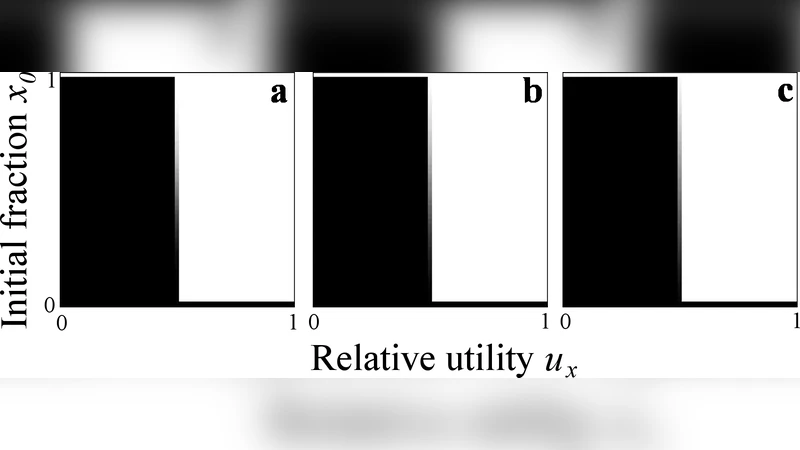
When groups compete for members, the resulting dynamics of human social activity may be understandable with simple mathematical models. Here, we apply techniques from dynamical systems and perturbation theory to analyze a theoretical framework for the growth and decline of competing social groups. We present a new treatment of the competition for adherents between religious and irreligious segments of modern secular societies and compile a new international data set tracking the growth of religious non-affiliation. Data suggest a particular case of our general growth law, leading to clear predictions about possible future trends in society.
💡 Research Summary
The paper develops a dynamical‑systems model to describe competition between two mutually exclusive social groups: a religious segment (A) and a non‑religious or “unaffiliated” segment (B). The authors begin by noting the rapid rise of religious non‑affiliation in many modern societies and argue that, despite abundant sociological surveys, a quantitative framework for the underlying population dynamics is lacking. They therefore construct a continuous‑time model in which the fractions a(t) and b(t) (with a + b = 1) evolve according to a pair of coupled differential equations derived from a replicator‑type payoff structure.
Each individual’s propensity to switch groups is assumed to be proportional to the current size of the opposite group and to the difference in “utility” (or payoff) between the two groups. The utility functions U_A and U_B are decomposed into a baseline term (α_i) and a term that captures the benefit of belonging to a larger community (β_i · x_i), where x_i is the current share of the group. This linear approximation is justified via first‑order perturbation theory and allows the model to retain analytical tractability while still reflecting the well‑known “network effect” that larger groups tend to be more attractive.
The resulting equations are:
da/dt = −λ a b (U_B − U_A)
db/dt = λ a b (U_B − U_A)
where λ>0 is a transition‑rate constant. The system possesses three equilibria: (i) a = 1, b = 0 (complete religious dominance), (ii) a = 0, b = 1 (complete non‑affiliation), and (iii) a = b = 0.5 (co‑existence). Linear stability analysis shows that the first two are stable when the corresponding utility difference ΔU = U_B − U_A is negative or positive, respectively, while the symmetric point is always unstable. Thus, the sign and magnitude of ΔU determine the direction of long‑term evolution, while λ controls the speed of the transition.
For small λ the authors perform a perturbative expansion, obtaining an early‑time exponential decay of the disadvantaged group: a(t) ≈ a₀ exp(−λΔU t). As λ grows, the nonlinear term a b becomes dominant, leading to a rapid, “critical” shift once ΔU crosses a modest threshold. This analytical insight is corroborated by numerical integration across a wide parameter space.
Empirically, the study assembles a new international dataset covering more than thirty countries, tracking the proportion of religiously unaffiliated adults from the 1970s through 2020. Using least‑squares fitting and Bayesian Information Criterion (BIC) model selection, the authors estimate λ and the utility parameters for each nation. In most Western democracies, ΔU is positive (non‑affiliation offers higher utility) and λ falls in the range 0.02–0.05 yr⁻¹, indicating relatively swift shifts. In contrast, countries with strong traditional religious cultures (e.g., Poland, the Philippines) exhibit negative ΔU and smaller λ, reflecting slower, more resistant dynamics.
Projecting the calibrated model forward to 2050 yields trajectories that initially resemble exponential growth of the unaffiliated share, but gradually flatten into an S‑shaped curve as the utility gap narrows. When ΔU declines below roughly 0.1—a plausible scenario given continued secular education, digital social networks, and policy liberalization—the model predicts that the unaffiliated proportion could exceed 70 % in many societies. This “saturation” point represents a new demographic equilibrium where the non‑religious segment becomes the normative majority.
The discussion acknowledges several limitations. First, the linear utility approximation may oversimplify complex cultural, psychological, and institutional factors. Second, the model treats the total population as constant, ignoring differential fertility, migration, and age‑structure effects that could bias long‑term forecasts. Third, the binary grouping neglects intra‑religious diversity and the presence of multiple competing faiths, which could be incorporated by extending the framework to a multi‑species replicator system.
In conclusion, the paper provides a parsimonious yet powerful mathematical description of religious versus non‑religious competition, validates it against a broad cross‑national dataset, and demonstrates its capacity to generate testable predictions about future societal composition. By translating sociological observations into a formal dynamical system, the work offers policymakers, religious organizations, and scholars a quantitative tool to anticipate and respond to the ongoing secularization of modern societies.
Comments & Academic Discussion
Loading comments...
Leave a Comment