Software for Wearable Devices: Challenges and Opportunities
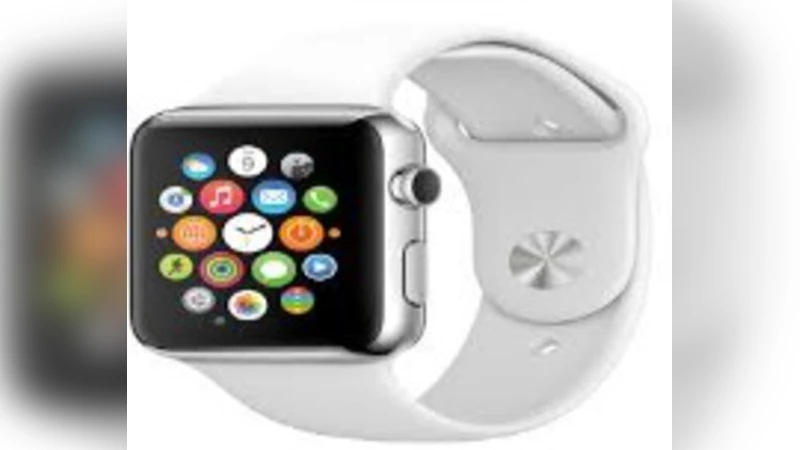
Wearable devices are a new form of mobile computer system that provides exclusive and user-personalized services. Wearable devices bring new issues and challenges to computer science and technology. This paper summarizes the development process and the categories of wearable devices. In addition, we present new key issues arising in aspects of wearable devices, including operating systems, database management system, network communication protocol, application development platform, privacy and security, energy consumption, human-computer interaction, software engineering, and big data.
💡 Research Summary
Wearable devices have emerged as a distinct class of mobile computing platforms that combine sensing, actuation, and personalized services in a form factor that is attached to the human body. This paper traces the evolution of wearables from early fitness trackers to modern smart watches, augmented‑reality headsets, and medical implants, and categorizes them into three broad domains: health‑care & fitness, entertainment & communication, and industrial & security. The authors argue that the unique constraints of wearables—tiny batteries, limited processing power, and continuous interaction with the user—create a set of software challenges that differ fundamentally from those of smartphones or laptops.
The first major challenge discussed is the operating system. Existing mobile OSes such as Android Wear, watchOS, and Tizen provide a starting point, but they must be stripped down to a micro‑kernel or modular architecture to meet strict memory and power budgets while still supporting real‑time sensor fusion, peripheral management, and secure boot. The paper highlights ongoing research into lightweight kernels, container‑based isolation, and dynamic module loading as ways to achieve both flexibility and efficiency.
Database management is the second focal point. Wearables generate high‑frequency time‑series data from accelerometers, heart‑rate monitors, GPS, and other sensors. Traditional relational databases are ill‑suited for this workload; instead, the authors propose specialized time‑series stores that employ compression, hierarchical indexing, and in‑memory buffering. They also discuss synchronization with cloud back‑ends, emphasizing eventual consistency models that tolerate intermittent connectivity while preserving data integrity.
Network communication protocols form the third pillar. Wearables must switch among Bluetooth Low Energy, NFC, Wi‑Fi, and emerging 5G links, balancing low power consumption against latency and bandwidth requirements. The paper suggests adaptive protocol stacks that can negotiate transmission parameters on the fly, incorporate forward error correction, and support seamless handover between radio technologies.
Application development platforms are examined next. Cross‑platform SDKs and UI toolkits (e.g., Flutter, React Native for wearables) lower entry barriers, yet they must expose low‑level sensor APIs, manage permission models, and provide real‑time feedback loops. The authors stress the importance of declarative UI paradigms that can automatically adjust to varying screen sizes and input modalities, thereby reducing development effort while preserving user experience.
Privacy and security receive a dedicated section because wearables collect highly sensitive biometric and location data. The paper reviews encryption of data at rest and in transit, hardware‑rooted trust anchors (TPM, Secure Enclave), and multi‑factor authentication schemes tailored to limited input capabilities. Threat models include side‑channel attacks, device theft, and malicious firmware updates; mitigation strategies involve secure boot, signed OTA packages, and runtime attestation.
Energy consumption is identified as the most restrictive factor. The authors analyze power‑aware scheduling, duty‑cycling of sensors, dynamic voltage and frequency scaling, and predictive energy models that anticipate usage patterns. They argue for co‑design of hardware and software, where the OS can request sensor sampling rates based on application context, and applications can voluntarily reduce processing when battery levels dip below thresholds.
Human‑computer interaction (HCI) is explored through the lens of multimodal interfaces. Wearables support gestures, voice commands, eye‑tracking, and haptic feedback. The paper proposes design guidelines that minimize cognitive load, respect ergonomic constraints, and provide consistent feedback across modalities. It also highlights the need for personalized interaction models that adapt to the user’s habits and physiological state.
From a software engineering perspective, the paper discusses the lifecycle of wearable software: continuous integration, over‑the‑air (OTA) updates, regression testing on constrained devices, and automated static analysis for security vulnerabilities. The authors note that traditional testing frameworks must be extended to simulate sensor streams and power‑state transitions, and that versioning strategies need to accommodate rollback capabilities in case of faulty updates.
Finally, the big‑data implications of widespread wearables are examined. The sheer volume of sensor streams demands edge‑computing preprocessing to filter, aggregate, and anonymize data before forwarding to cloud analytics pipelines. The authors outline a hybrid architecture where lightweight machine‑learning models run on the device for anomaly detection, while large‑scale pattern mining and predictive analytics occur in the cloud. They also discuss differential privacy techniques to protect individual identities while enabling population‑level insights.
In conclusion, the paper synthesizes these ten challenge areas—operating systems, database management, network protocols, development platforms, privacy & security, energy efficiency, HCI, software engineering, and big data—into a cohesive research agenda. It calls for interdisciplinary collaboration to develop standardized APIs, lightweight yet secure system components, and user‑centric design frameworks that together will unlock the full potential of wearable computing. Future work is suggested in areas such as co‑design of micro‑kernels with time‑series databases, energy‑aware cryptographic protocols, and adaptive multimodal interaction models that can evolve with the wearer’s context.
Comments & Academic Discussion
Loading comments...
Leave a Comment