Applications of UWB Technology
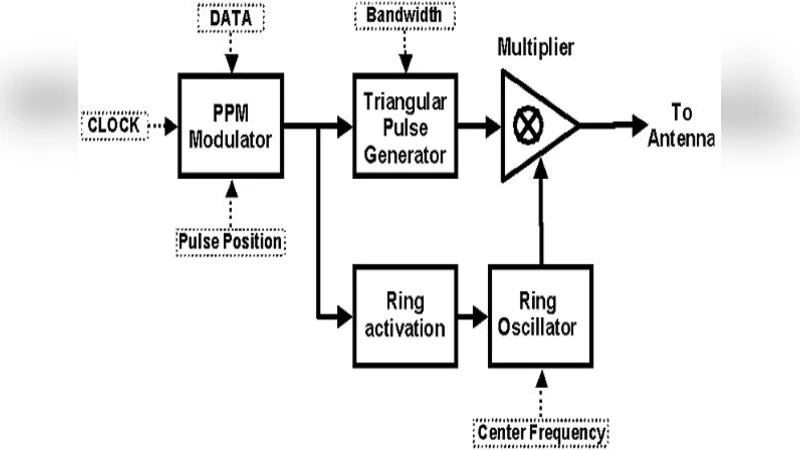
Recent advances in wideband impulse technology, low power communication along with unlicensed band have enabled ultra wide band (UWB) as a leading technology for future wireless applications. This paper outlines the applications of emerging UWB technology in a private and commercial sector. We further talk about UWB technology for a wireless body area network (WBAN).
💡 Research Summary
The paper provides a comprehensive overview of ultra‑wideband (UWB) technology, emphasizing its recent evolution driven by wideband impulse generation, low‑power operation, and the availability of unlicensed spectrum. It begins by describing the fundamental physical principles of UWB, highlighting the use of extremely short pulses that spread energy over a bandwidth of several gigahertz. This approach yields a low power spectral density, which satisfies regulatory limits while enabling data rates from hundreds of megabits to gigabits per second. The authors review the regulatory landscape, focusing on the FCC and ETSI allocations of the 3.1‑10.6 GHz band and the associated power constraints that shape system design.
The discussion then splits into private and commercial applications. In the private sector, UWB is presented as an enabling technology for high‑speed wireless LAN, precise indoor positioning, automotive radar, and security screening. The paper stresses that centimeter‑level accuracy in indoor localization can transform logistics, smart‑building management, and robotic navigation. In the commercial arena, UWB’s large bandwidth and minimal latency are argued to be ideal for wireless display interfaces, augmented and virtual reality streaming, and high‑availability backup links.
A dedicated section examines UWB for wireless body area networks (WBAN). Because the short‑duration pulses incur minimal tissue absorption, UWB can support continuous health monitoring, remote diagnostics, and drug‑delivery control with far lower power consumption than Bluetooth or Wi‑Fi. The authors compare energy efficiency, data throughput, and security attributes, concluding that UWB offers a compelling alternative for medical IoT devices.
Finally, the paper identifies current challenges: coexistence with other services, the complexity of designing broadband antennas, and the ongoing need for standardization. It proposes future research directions, including multi‑user access schemes, energy‑aware waveform optimization, and robust encryption/authentication protocols. The authors conclude that UWB’s unique combination of high bandwidth and low power positions it as a cornerstone technology for the next generation of wireless infrastructure, with broad implications across consumer, industrial, and healthcare domains.
Comments & Academic Discussion
Loading comments...
Leave a Comment