Now, Factuality and Conditio Humana
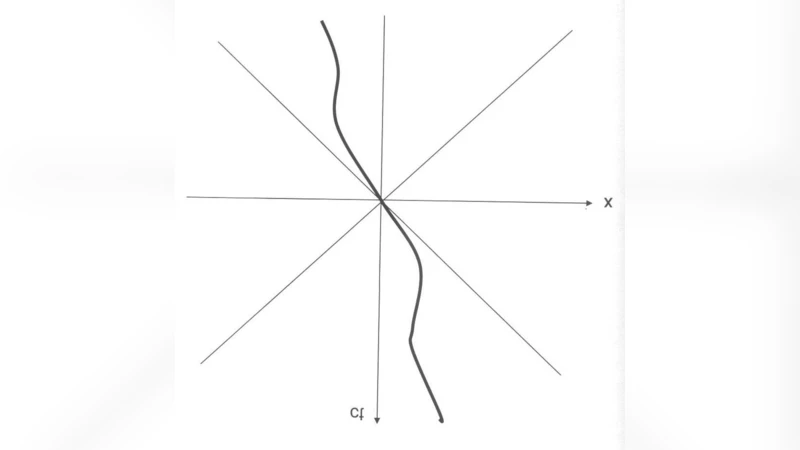
The relationship between inner and outer time is discussed. Inner time is intrinsically future directed and possesses the quality of a distinguished “now”. Both of these qualities get lost in the operationalized external physical time, which, advancing towards more fundamental physics, tends to become more similar to space and even fade away as a fundamental notion. However, inner time as a constitutive feature of human existence holds its place in the heart of quantum theory and thermodynamics.
💡 Research Summary
The paper sets out to contrast two fundamentally different conceptions of time: the “inner time” that structures human consciousness and the “outer time” that is employed by physical theory. In the introductory section the author outlines the philosophical background, noting that phenomenologists such as Husserl and Merleau‑Ponty have long emphasized the lived experience of a distinguished “now” and a forward‑directed flow. This lived time is not merely a mental illusion; neuro‑physiological studies show that the brain’s predictive coding mechanisms, especially in the prefrontal cortex, continuously generate future scenarios, while oscillatory phase‑reset events in EEG correspond to the felt moment of “now”.
The second part surveys the development of external time in physics. Newton’s absolute time is presented as a uniform parameter that underlies classical mechanics. Einstein’s special relativity dissolves the notion of a universal clock by unifying time with space into a four‑dimensional manifold, and general relativity further shows that gravitational fields warp this manifold, producing time dilation. Nevertheless, in all these formulations time remains a coordinate—an ordered parameter without an intrinsic “present”.
The third section turns to the frontier of fundamental physics, where attempts to quantize gravity (loop quantum gravity, string theory, and the Wheeler‑DeWitt equation) often lead to a picture in which the conventional time variable disappears or becomes indistinguishable from spatial degrees of freedom. The author argues that this trend reflects a methodological drive to treat time on the same footing as space, effectively “spatializing” it.
In the fourth section the paper argues that inner time re‑emerges as a crucial element in both quantum mechanics and thermodynamics. In quantum theory, the measurement process involves a non‑unitary collapse of the wavefunction, an event that is experienced by an observer as occurring at a specific “now”. Decoherence theory shows that the flow of information from system to environment is intrinsically time‑asymmetric, pointing toward the future. Thermodynamics supplies the macroscopic arrow of time through the second law: entropy increase distinguishes past from future and gives a physical grounding to the felt directionality of inner time.
The fifth section explores the ontological implications. If scientific discourse were to ignore the phenomenological features of inner time, concepts such as agency, moral responsibility, and personal identity would lose their grounding. The author stresses that while physics provides a mathematically elegant, continuous model of time, human beings interpret the world through a discrete, present‑oriented lens. Consequently, any future physical theory that aspires to be truly fundamental must reckon with the lived experience of “now” and the forward‑directed nature of consciousness.
The conclusion synthesizes the analysis, proposing that inner and outer time constitute a dual structure that bridges objective description and subjective experience. Even as external time becomes more space‑like in advanced theories, the inner time of human existence persists in the non‑reversible aspects of quantum measurement and entropy production. Recognizing this duality offers a richer, more integrated understanding of temporality and suggests a pathway toward a science that respects both the mathematical elegance of physics and the phenomenological reality of human life.