Quantifying individual performance in Cricket $-$ A network analysis of Batsmen and Bowlers
Quantifying individual performance in the game of Cricket is critical for team selection in International matches. The number runs scored by batsmen and wickets taken by bowlers serves as a natural way of quantifying the performance of a cricketer. Traditionally the batsmen and bowlers are rated on their batting or bowling average respectively. However in a game like Cricket it is always important the manner in which one scores the runs or claims a wicket. Scoring runs against a strong bowling line-up or delivering a brilliant performance against a team with strong batting line-up deserves more credit. A player’s average is not able to capture this aspect of the game. In this paper we present a refined method to quantify the `quality’ of runs scored by a batsman or wickets taken by a bowler. We explore the application of Social Network Analysis (SNA) to rate the players in a team performance. We generate directed and weighted network of batsmen-bowlers using the player-vs-player information available for Test cricket and ODI cricket. Additionally we generate network of batsmen and bowlers based on the dismissal record of batsmen in the history of cricket - Test (1877-2011) and ODI (1971-2011). Our results show that {\it M Muralitharan} is the most successful bowler in history of Cricket. Our approach could potentially be applied in domestic matches to judge a player’s performance which in turn pave the way for a balanced team selection for International matches.
💡 Research Summary
The paper tackles a fundamental problem in cricket analytics: how to measure a player’s true contribution beyond the crude batting‑average and bowling‑average statistics that dominate current selection criteria. The authors argue that these traditional metrics ignore the quality of opposition – scoring runs against a world‑class bowling attack or taking wickets of top‑order batsmen should be weighted more heavily than similar figures against weaker opponents. To address this, they construct directed, weighted networks that capture the player‑versus‑player interactions recorded in Test and One‑Day International (ODI) matches.
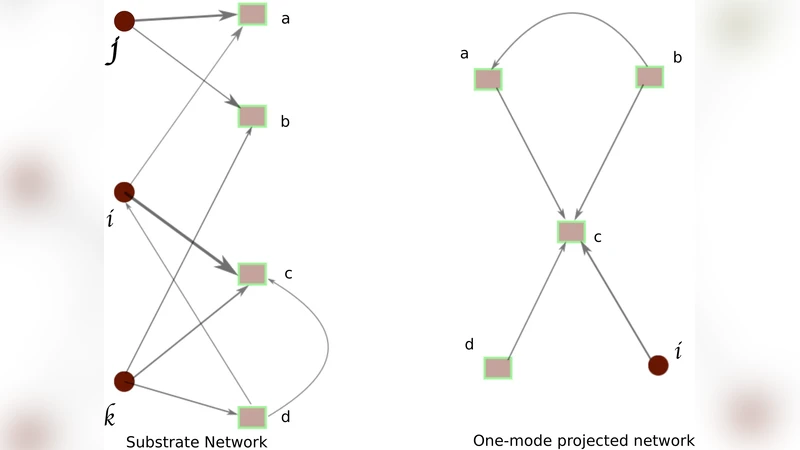
Two complementary data sources are used. First, match‑level data from every Test and ODI (1877‑2011 for Tests, 1971‑2011 for ODIs) provide a list of every ball where a specific batsman faced a specific bowler, the runs scored on that delivery, and whether the batsman was dismissed. From these events the authors create a bipartite graph: a directed edge from a batsman to a bowler carries a weight equal to the total runs the batsman accumulated against that bowler; a reverse edge from the bowler to the batsman carries a weight equal to the number of wickets the bowler claimed against that batsman. Second, a historical aggregate network is built by summing all such interactions over the entire recorded period, thereby smoothing short‑term fluctuations and highlighting long‑term “quality” relationships.
Network analysis techniques are then applied. Simple degree measures (in‑degree for bowlers, out‑degree for batsmen) give a raw count of distinct opponents faced or dismissed. More sophisticated centrality metrics – weighted PageRank, eigenvector centrality, and betweenness – incorporate the strength of each opponent. In the weighted PageRank formulation, a wicket taken against a highly‑ranked batsman contributes more to a bowler’s score, while runs scored against a highly‑ranked bowler boost a batsman’s score. This approach directly operationalises the notion of “quality” runs or wickets.
The empirical results are striking. Muttiah Muralitharan emerges as the most dominant bowler in the network, outranking even the best traditional bowling‑average leaders. His high centrality reflects a career in which he consistently dismissed top‑order batsmen from strong batting line‑ups across many nations. Conversely, several celebrated batsmen who sit high on the conventional batting‑average list (e.g., Sir Don Bradman, Sachin Tendulkar) occupy relatively modest positions in the network, indicating that a substantial portion of their runs came against less threatening bowling attacks. The analysis also uncovers clusters of players who frequently faced each other, revealing era‑specific or country‑specific interaction patterns that are invisible in aggregate statistics.
Beyond the descriptive findings, the authors discuss practical implications. In team selection, a network‑derived “quality” score could complement existing metrics, helping selectors avoid over‑valuing players who have padded their averages against weak opposition. The methodology is equally applicable to domestic leagues, youth tournaments, or franchise competitions where detailed ball‑by‑ball data are available. By feeding real‑time event streams into the network, a dynamic ranking system could be built to inform in‑match tactical decisions (e.g., which bowler to deploy against a particular batsman).
The paper acknowledges several limitations. Historical data quality varies; early Test matches lack the granular ball‑by‑ball detail that modern databases provide, potentially biasing the network toward recent players. The static nature of the constructed networks does not account for temporal decay – a player’s form changes over time, and a simple aggregation may over‑represent past performance. Parameter choices in the centrality algorithms (damping factor in PageRank, weighting schemes for runs vs. wickets) can affect rankings, suggesting a need for sensitivity analyses.
In conclusion, this study introduces a novel, network‑theoretic framework for quantifying individual cricket performance that explicitly incorporates opponent strength. By moving beyond raw averages to a relational view of player interactions, the authors provide a more nuanced, fair, and actionable assessment tool. Future work could integrate machine‑learning models to predict future performance based on network position, explore multi‑layer networks that combine batting, bowling, and fielding contributions, and test the approach in real‑time decision‑support systems for coaches and selectors.
Comments & Academic Discussion
Loading comments...
Leave a Comment