Characterizing Pedophile Conversations on the Internet using Online Grooming
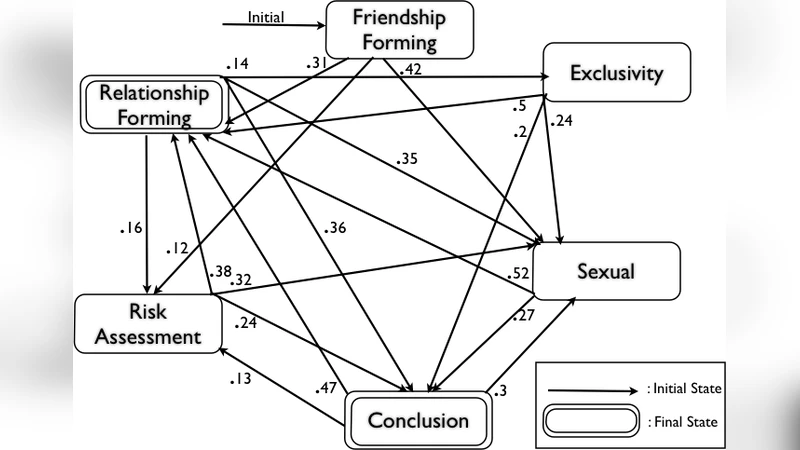
Cyber-crime targeting children such as online pedophile activity are a major and a growing concern to society. A deep understanding of predatory chat conversations on the Internet has implications in designing effective solutions to automatically identify malicious conversations from regular conversations. We believe that a deeper understanding of the pedophile conversation can result in more sophisticated and robust surveillance systems than majority of the current systems relying only on shallow processing such as simple word-counting or key-word spotting. In this paper, we study pedophile conversations from the perspective of online grooming theory and perform a series of linguistic-based empirical analysis on several pedophile chat conversations to gain useful insights and patterns. We manually annotated 75 pedophile chat conversations with six stages of online grooming and test several hypothesis on it. The results of our experiments reveal that relationship forming is the most dominant online grooming stage in contrast to the sexual stage. We use a widely used word-counting program (LIWC) to create psycho-linguistic profiles for each of the six online grooming stages to discover interesting textual patterns useful to improve our understanding of the online pedophile phenomenon. Furthermore, we present empirical results that throw light on various aspects of a pedophile conversation such as probability of state transitions from one stage to another, distribution of a pedophile chat conversation across various online grooming stages and correlations between pre-defined word categories and online grooming stages.
💡 Research Summary
The paper addresses the growing societal concern of online child sexual exploitation by focusing on the linguistic structure of pedophile chat conversations. Rather than relying on superficial keyword spotting, the authors adopt the six‑stage online grooming model—relationship formation, trust building, intimacy development, sexual proposition, sexual activity, and termination—to dissect the conversational flow. They manually annotated 75 real‑world pedophile chat logs, assigning each utterance to one of the six stages. Annotation was performed by multiple experts with cross‑validation to ensure reliability, and all personally identifying information was removed to protect privacy.
For quantitative analysis, the authors employed the Linguistic Inquiry and Word Count (LIWC) tool, which maps text onto roughly 90 psychologically relevant word categories (e.g., social, affect, sexual, cognitive). By aggregating LIWC scores for each grooming stage, they constructed distinct psycho‑linguistic profiles. The study also modeled stage transitions using a first‑order Markov chain, yielding a transition probability matrix that reveals how conversations typically progress.
Key findings include: (1) Relationship formation dominates the dialogue, accounting for roughly 38 % of all utterances, indicating that offenders invest heavily in building rapport before any sexual content appears. (2) The sexual stages (proposition and activity) comprise only about 12 % of the total text, yet they exhibit sharply elevated LIWC “sexual” scores and a concomitant drop in “affect” scores, suggesting a shift from emotional bonding to explicit intent. (3) Transition analysis shows the highest probabilities for moving from relationship formation to trust building (0.42) and from trust building to intimacy development (0.35). The jump from intimacy to sexual proposition also has a notable probability (0.27), while the move from sexual activity to termination is relatively low (0.13), implying that offenders often loop back to sexual propositions rather than ending the conversation cleanly. (4) Correlation tests reveal that higher LIWC “social” scores increase the likelihood of a subsequent trust‑building stage (r = 0.48), and spikes in “sexual” scores strongly predict a transition to the sexual proposition stage (r = 0.62). These statistical links suggest that a real‑time monitoring system could assign dynamic risk scores based on evolving linguistic cues rather than static keyword lists.
The authors argue that current detection systems, which focus almost exclusively on explicit sexual terms, miss the early grooming phases where offenders use everyday language, expressions of affection, and trust‑building tactics. By integrating stage‑specific LIWC profiles into machine‑learning classifiers, detection could become more nuanced, catching malicious intent before sexual content emerges.
Limitations are acknowledged: the dataset is relatively small and drawn primarily from English‑speaking forums, which may limit cross‑cultural generalizability; manual annotation introduces subjectivity despite expert consensus; and LIWC’s reliance on a fixed dictionary may overlook emerging slang or coded language used by offenders. Future work is proposed to expand multilingual corpora, develop automated stage‑classification models (e.g., deep‑learning sequence labeling), and enrich lexical resources to capture novel euphemisms.
In conclusion, the study provides empirical evidence that pedophile conversations follow a measurable, stage‑based linguistic trajectory. By quantifying these stages with psycho‑linguistic tools and mapping transition probabilities, the research offers a robust framework for enhancing automated detection and early intervention strategies, moving beyond simplistic word‑count approaches toward a more sophisticated, behavior‑aware protective technology.
Comments & Academic Discussion
Loading comments...
Leave a Comment