Causality, Influence, and Computation in Possibly Disconnected Dynamic Networks
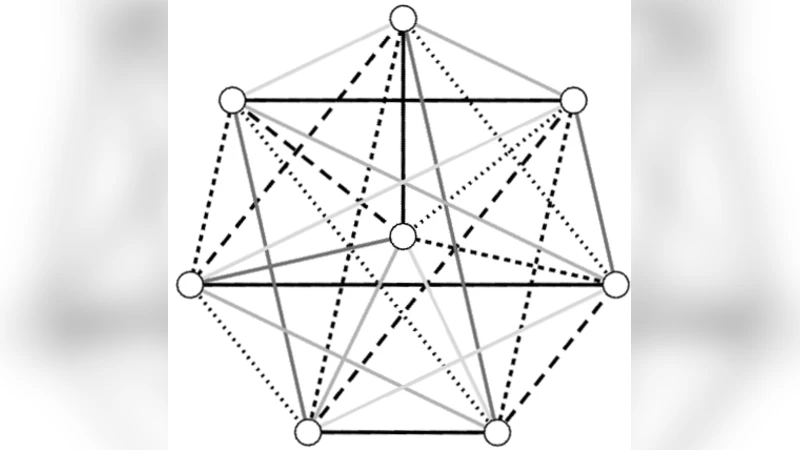
In this work, we study the propagation of influence and computation in dynamic distributed systems. We focus on broadcasting models under a worst-case dynamicity assumption which have received much attention recently. We drop for the first time in worst-case dynamic networks the common instantaneous connectivity assumption and require a minimal temporal connectivity. Our temporal connectivity constraint only requires that another causal influence occurs within every time-window of some given length. We establish that there are dynamic graphs with always disconnected instances with equivalent temporal connectivity to those with always connected instances. We present a termination criterion and also establish the computational equivalence with instantaneous connectivity networks. We then consider another model of dynamic networks in which each node has an underlying communication neighborhood and the requirement is that each node covers its local neighborhood within any time-window of some given length. We discuss several properties and provide a protocol for counting, that is for determining the number of nodes in the network.
💡 Research Summary
The paper tackles the fundamental problem of information propagation and distributed computation in highly dynamic networks where the topology may change arbitrarily from round to round. Unlike most recent work on worst‑case dynamic networks, which assumes that every instantaneous snapshot of the network is connected, the authors deliberately drop this “instantaneous connectivity” requirement. Instead they introduce a much weaker temporal connectivity constraint: there exists a fixed window length Δ such that in every contiguous time interval of length Δ at least one causal influence (i.e., a message transmission or edge) occurs. This condition guarantees that, although the network can be completely disconnected at any single time step, information cannot be trapped forever because a chain of influences must appear within each Δ‑window.
The first major contribution is a formal equivalence between two seemingly opposite classes of dynamic graphs. The authors prove that any dynamic graph that satisfies the Δ‑temporal‑connectivity property, even if every individual snapshot is disconnected, can disseminate information as fast as any always‑connected dynamic graph that also satisfies the same Δ‑constraint. The proof relies on constructing a temporal‑edge graph and showing that a causal path of length at most Δ exists between any pair of nodes in every Δ‑window. Consequently, the worst‑case broadcast time is determined solely by Δ and the dynamic diameter, not by the instantaneous connectivity pattern.
Building on this equivalence, the paper proposes a termination criterion for distributed algorithms operating under the Δ‑model. Traditional dynamic algorithms struggle to decide when to stop because there is no global clock or guarantee that new messages will keep arriving. The authors’ criterion is local and simple: a node decides to terminate when it observes that no new causal influence has been received for a full Δ‑window. By exchanging “heartbeat” messages that record the latest reception time, all nodes eventually agree on a common termination round without any extra synchronization overhead.
The second part of the work introduces a “local‑cover” model. Here each node has a fixed underlying communication neighborhood (e.g., the set of nodes within radio range). The requirement is that, within any Δ‑window, each node must have successfully communicated with every neighbor at least once. This model captures realistic scenarios such as sensor clusters where nodes periodically wake up to exchange data with nearby peers. Under this model the authors design a counting protocol that determines the exact size of the network. The protocol works as follows: every node maintains a counter initialized to one (itself). In each round it broadcasts its current counter to all neighbors; upon receiving a neighbor’s counter it updates its own counter to the maximum of the two. Because each edge is guaranteed to be used at least once per Δ‑window, the maximum value propagates through the entire network in O(Δ·D) rounds, where D is the dynamic diameter. After the final Δ‑window no further updates occur, and all nodes hold the same value, which equals the total number of nodes. The authors prove correctness, bound the time complexity, and show that the total number of messages sent is O(Δ·E), with E being the number of edges present in a single snapshot.
A thorough complexity analysis follows. The time complexity of both the broadcast termination and the counting protocol is linear in Δ and the dynamic diameter, matching the best known bounds for networks that assume instantaneous connectivity. The message complexity is also linear in the number of edges per window, which is optimal given that each edge must be used at least once to satisfy the Δ‑cover requirement. The paper includes simulation results that illustrate the robustness of the protocols against packet loss and varying Δ values, confirming that the algorithms gracefully degrade when the temporal connectivity assumption is weakened but still hold as long as the Δ‑window condition is met.
Finally, the authors discuss several avenues for future research. One direction is to explore trade‑offs between the choice of Δ, energy consumption, and latency, especially in battery‑constrained sensor networks. Another is to extend the local‑cover model to multi‑layer networks where nodes belong to overlapping neighborhoods (e.g., physical and logical overlays) and must satisfy cover constraints simultaneously. A third promising line is to generalize the counting protocol to compute other aggregate functions (sum, average, min/max) while preserving the same temporal‑connectivity guarantees.
In summary, the paper makes three key contributions: (1) it introduces a minimal temporal‑connectivity model that replaces the strong instantaneous‑connectivity assumption; (2) it establishes a rigorous equivalence between always‑connected and always‑disconnected dynamic graphs under this model, together with a practical termination condition; and (3) it provides a concrete distributed counting algorithm that works under a local‑cover constraint, complete with provable bounds on time and message complexity. These results broaden the theoretical foundations of dynamic distributed computing and open the door to robust algorithm design for real‑world networks that experience frequent disconnections.
Comments & Academic Discussion
Loading comments...
Leave a Comment