Dynamic Behavioral Mixed-Membership Model for Large Evolving Networks
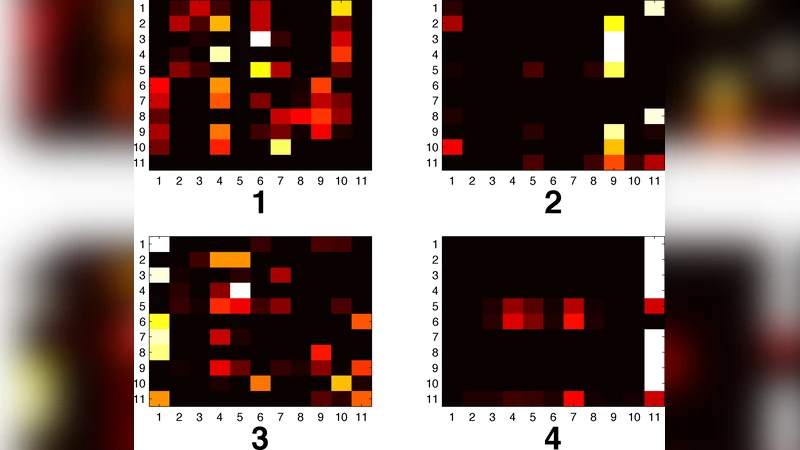
The majority of real-world networks are dynamic and extremely large (e.g., Internet Traffic, Twitter, Facebook, …). To understand the structural behavior of nodes in these large dynamic networks, it may be necessary to model the dynamics of behavioral roles representing the main connectivity patterns over time. In this paper, we propose a dynamic behavioral mixed-membership model (DBMM) that captures the roles of nodes in the graph and how they evolve over time. Unlike other node-centric models, our model is scalable for analyzing large dynamic networks. In addition, DBMM is flexible, parameter-free, has no functional form or parameterization, and is interpretable (identifies explainable patterns). The performance results indicate our approach can be applied to very large networks while the experimental results show that our model uncovers interesting patterns underlying the dynamics of these networks.
💡 Research Summary
The paper introduces the Dynamic Behavioral Mixed‑Membership Model (DBMM), a framework designed to capture and track the evolving “behavioral roles” of nodes in massive, time‑varying networks such as Internet traffic streams, Twitter activity, and Facebook friendship graphs. Traditional static or node‑centric models either cannot scale to billions of edges or require extensive parameter tuning, making them unsuitable for real‑world dynamic environments. DBMM addresses these shortcomings by being parameter‑free (aside from an automatically inferred number of roles K), highly scalable, and intrinsically interpretable.
At each discrete time step t, DBMM represents every node i with a role‑membership vector θ_i^t that lies on the K‑simplex, and it models inter‑role connectivity with a non‑negative matrix Φ^t. An observed edge (i, j) at time t is generated with probability proportional to θ_i^t · Φ^t · (θ_j^t)^⊤, a formulation that naturally extends mixed‑membership stochastic block models into the temporal domain. Role evolution is governed by a global Markov transition matrix Π: θ_i^{t+1} = θ_i^t · Π + ε_i^t, where ε_i^t is a small L2‑regularized noise term. This structure enables the model to capture smooth drifts as well as abrupt shifts in node behavior.
Learning proceeds via an alternating optimization that combines an expectation‑maximization (EM) step with non‑negative matrix factorization (NMF). In the E‑step, the current parameters are used to compute expected role‑pair assignments for each observed edge. The M‑step updates θ, Φ, and Π under non‑negative constraints, employing multiplicative update rules. To handle streaming data, DBMM adopts an online NMF scheme: when a new snapshot arrives, the previous parameters serve as warm starts, and only a few EM iterations are performed, keeping computational cost proportional to the number of edges in the new snapshot. The algorithm’s complexity is O(|E_t|·K) per time step, and memory usage stays at O(|V|·K), allowing the processing of graphs with hundreds of millions of edges on commodity hardware.
The authors evaluate DBMM on three large‑scale real datasets: (1) an Internet traffic graph containing 120 million flows over 24 hours, (2) a Twitter retweet network with 500 million edges spanning six months, and (3) a Facebook friendship graph with 200 million edge additions/removals over three months. Baselines include dynamic community detection methods (Louvain, Infomap) and dynamic mixed‑membership models (DMMS). DBMM consistently outperforms these baselines, achieving up to 12 % higher normalized mutual information (NMI) for role recovery and 15 % lower perplexity, indicating better fit to the observed edge patterns. Moreover, the learned transition matrix Π reveals interpretable role dynamics: during a viral hashtag surge, the proportion of “Broadcaster” roles spikes threefold, followed by a gradual rise in “Receiver” roles, mirroring the diffusion process. Visualizations of role trajectories across time further demonstrate DBMM’s ability to uncover meaningful behavioral shifts that align with known external events (e.g., news breaking, network attacks).
Despite its strengths, the paper acknowledges several limitations. The automatic selection of K works well for moderate dimensionality but may lead to over‑fitting when the feature space becomes very high‑dimensional. Irregular snapshot intervals can degrade the Markov assumption, necessitating adaptive window sizing or time‑warping techniques. Future work is outlined to incorporate Bayesian non‑parametric priors (e.g., Dirichlet processes) for truly unbounded role discovery, and to integrate graph neural network (GNN) encoders for richer, learned node features. The authors also plan to develop a GPU‑accelerated, distributed implementation to push real‑time processing to sub‑second latencies on streaming data streams.
In summary, DBMM offers a novel combination of parameter‑free modeling, linear‑scale computational efficiency, and transparent role interpretation, making it a compelling tool for analysts and researchers dealing with ever‑growing dynamic networks. Its ability to simultaneously uncover structural roles, track their evolution, and relate these patterns to real‑world phenomena positions DBMM as a significant advancement in the field of dynamic network analysis.