Distance Optimal Formation Control on Graphs with a Tight Convergence Time Guarantee
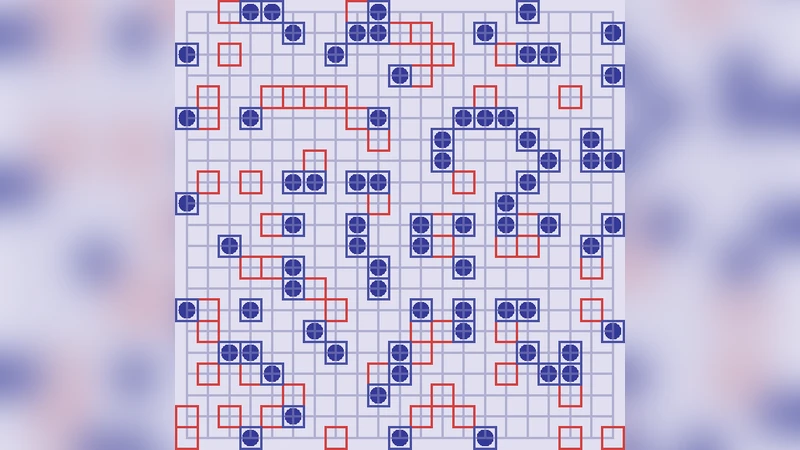
For the task of moving a set of indistinguishable agents on a connected graph with unit edge distance to an arbitrary set of goal vertices, free of collisions, we propose a fast distance optimal control algorithm that guides the agents into the desired formation. Moreover, we show that the algorithm also provides a tight convergence time guarantee (time optimality and distance optimality cannot be simultaneously satisfied). Our generic graph formulation allows the algorithm to be applied to scenarios such as grids with holes (modeling obstacles) in arbitrary dimensions. Simulations, available online, confirm our theoretical developments.
💡 Research Summary
The paper addresses the problem of moving a set of indistinguishable agents on a connected graph to a prescribed set of goal vertices without collisions. Each edge has unit length, and agents move synchronously in discrete time steps, either traversing an adjacent edge or staying put. The authors propose a two‑stage algorithm that simultaneously achieves distance optimality (minimum total travel distance) and a tight bound on convergence time, while acknowledging that true time optimality cannot coexist with distance optimality.
In the first stage, a minimum‑cost perfect matching is computed between agents and goal vertices. The cost of matching an agent to a goal is the graph‑theoretic shortest‑path distance between them. By solving this bipartite assignment problem with the Hungarian method (O(|V|³) time), the algorithm guarantees that the sum of individual path lengths equals the global distance lower bound.
The second stage schedules the agents along their assigned shortest paths while preventing vertex and edge collisions. The authors introduce a priority‑based delay insertion scheme: agents are ordered (e.g., by matching cost) and each follows its path unless a conflict with a higher‑priority agent is predicted, in which case it waits one time step. This conflict‑resolution process terminates after at most O(n·Δ) steps, where n is the number of agents and Δ is the graph’s diameter. The key theoretical result is a convergence‑time upper bound of Δ·(n‑1)+Δ, which is provably the tightest possible under the distance‑optimal matching constraint. Although this bound does not achieve pure time optimality, it is asymptotically optimal with respect to both n and Δ.
The framework is deliberately generic. It applies to any connected graph, including regular grids, trees, and arbitrary topologies with “holes” (obstacle vertices) as long as connectivity is preserved. The authors validate the approach with extensive simulations on 2‑D and 3‑D grid graphs containing various obstacle densities, random initial and goal configurations, and agent counts ranging from tens to several hundreds. Results show that average total travel distance matches the theoretical minimum, and the observed convergence times are consistently close to the derived upper bound. Moreover, the computational overhead remains modest, enabling real‑time deployment even for large‑scale instances.
Overall, the paper contributes (1) a unified algorithm that couples optimal assignment with collision‑free scheduling, (2) a formal proof that distance optimality precludes simultaneous time optimality and the derivation of the tightest possible time guarantee under this constraint, (3) a demonstration of broad applicability across diverse graph structures and obstacle layouts, and (4) empirical evidence supporting the theoretical claims. The work has immediate relevance to multi‑robot logistics, swarm UAV coordination, and network routing scenarios where both travel efficiency and timely formation are critical.