The Relationship Between Solar Radio and Hard X-ray Emission
This review discusses the complementary relationship between radio and hard X-ray observations of the Sun using primarily results from the era of the Reuven Ramaty High Energy Solar Spectroscopic Imager satellite. A primary focus of joint radio and hard X-ray studies of solar flares uses observations of nonthermal gyrosynchrotron emission at radio wavelengths and bremsstrahlung hard X-rays to study the properties of electrons accelerated in the main flare site, since it is well established that these two emissions show very similar temporal behavior. A quantitative prescription is given for comparing the electron energy distributions derived separately from the two wavelength ranges: this is an important application with the potential for measuring the magnetic field strength in the flaring region, and reveals significant differences between the electrons in different energy ranges. Examples of the use of simultaneous data from the two wavelength ranges to derive physical conditions are then discussed, including the case of microflares, and the comparison of images at radio and hard X-ray wavelengths is presented. There have been puzzling results obtained from observations of solar flares at millimeter and submillimeter wavelengths, and the comparison of these results with corresponding hard X-ray data is presented. Finally, the review discusses the association of hard X-ray releases with radio emission at decimeter and meter wavelengths, which is dominated by plasma emission (at lower frequencies) and electron cyclotron maser emission (at higher frequencies), both coherent emission mechanisms that require small numbers of energetic electrons. These comparisons show broad general associations but detailed correspondence remains more elusive.
💡 Research Summary
This review paper provides a comprehensive synthesis of the complementary relationship between solar radio and hard X‑ray (HXR) emissions, with a focus on results obtained during the Reuven Ramaty High Energy Solar Spectroscopic Imager (RHESSI) era. The authors begin by recalling the historical discovery that impulsive microwave bursts and hard X‑ray bursts are temporally coincident, a fact first noted in the late 1950s. They argue that this coincidence reflects a common population of non‑thermal electrons accelerated in the flare energy release region: electrons with energies above ~30 keV emit gyrosynchrotron radiation at microwave frequencies as they gyrate in coronal magnetic fields, and the same electrons produce bremsstrahlung HXR photons when they precipitate into the dense chromosphere.
The core of the paper is a quantitative framework that translates observed photon spectra into electron energy distributions, and then links those distributions to the radio flux produced by gyrosynchrotron emission. Starting from the Bethe‑Heitler bremsstrahlung cross‑section, the authors adopt the Hudson et al. (1978) formalism to express a power‑law photon spectrum Φ(ε)=A₀ ε⁻ᵞ as an electron flux spectrum d²N/(dE dt)=3.28 × 10³³ A₀ b(γ) E₀ (E/E₀)⁻(γ+1). The factor b(γ) (≈10–60 for typical photon indices γ = 3–6) encapsulates the integration over the cross‑section.
Two limiting cases for the HXR source are examined. In the thick‑target model, appropriate for footpoint sources, electrons lose all their energy in a high‑density chromospheric slab. By relating the electron flux to a volume density through the source area A_X and an assumed electron speed v (non‑relativistic approximation v≈0.036 c E₀^{0.5}), the authors derive a volume density spectrum d²N/(dE dV)=3.04 × 10²⁴ A₀ b(γ) E₀^{1.5} A_X⁻¹ (E/E₀)⁻(γ+1.5). Consequently, the electron energy index δ is steeper than the photon index by 1.5 (δ = γ + 1.5). In the thin‑target limit, relevant for coronal sources where electrons only slowly lose energy, the volume density becomes d²N/(dE dV)=7.9 × 10⁴¹ A₀ C(γ) n_i V_X E₀^{0.5} (E/E₀)⁻(γ−0.5), giving δ = γ − 0.5. These two regimes illustrate why radio‑derived electron spectra (which probe the total number of electrons in the coronal volume) can differ systematically from HXR‑derived spectra (which probe the flux of electrons precipitating into dense plasma).
The authors then discuss the gyrosynchrotron emission formalism, emphasizing that the radio flux scales as a high power of the magnetic field strength B (approximately B^{2.5–3.0}) and depends on the total number of non‑thermal electrons, their energy distribution, and the viewing angle. This strong B‑dependence means that regions of enhanced magnetic field appear disproportionately bright in microwave images, while HXR footpoints may be dimmer because magnetic mirroring can inhibit electron precipitation near strong fields.
Anisotropy and transport effects are examined in detail. Pitch‑angle anisotropy modifies both the intensity and polarization of the microwave emission, potentially leading to discrepancies between the inferred electron populations from radio and HXR data. Transport processes—such as Coulomb collisions, magnetic trapping, and possible re‑acceleration—alter the electron distribution as particles travel along flare loops, producing time‑dependent differences between the two diagnostics.
The paper proceeds to a series of case studies that illustrate the application of the quantitative framework. For the X4.8 flare SOL2002‑07‑23T00:35, simultaneous RHESSI HXR spectra and NoRH/OVSA microwave data are fitted, yielding a magnetic field of order 500 G in the coronal source and a total non‑thermal electron number of ~10³⁵. In the M6.8 flare SOL2003‑06‑17T22:55, the authors find a mismatch at high microwave frequencies (>30 GHz) where the observed flux exceeds the prediction from a simple gyrosynchrotron model, suggesting the presence of an additional high‑energy electron component or a different emission mechanism. Coronal HXR sources are also examined; their thin‑target nature leads to flatter electron spectra compared with footpoint sources, yet the spatial coincidence with microwave loops confirms that both diagnostics are probing the same magnetic structures.
The review also covers microflares, demonstrating that the same radio–HXR relationship holds down to events with total energies three orders of magnitude lower than major flares. In these cases, magnetic fields are weaker (≈50 G) and the total number of accelerated electrons is reduced, but the temporal correlation remains robust.
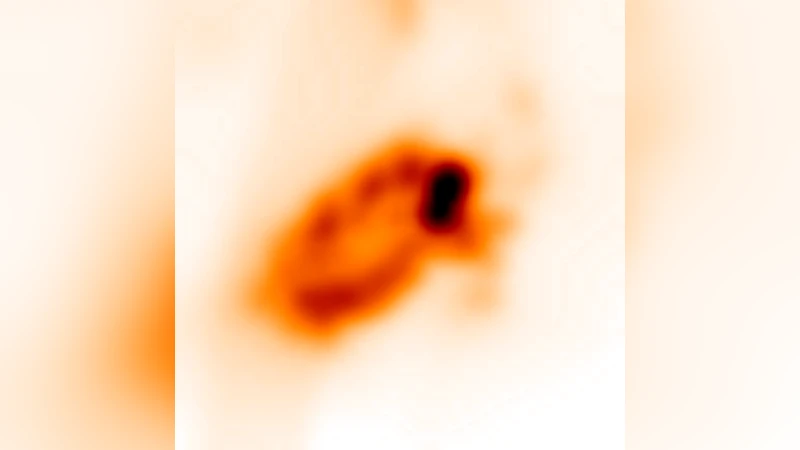
Morphological comparisons between microwave images and HXR maps reveal the classic picture: microwave emission outlines the coronal loop where electrons are trapped, while HXR emission marks the footpoints where electrons precipitate. High‑resolution imaging of the X1.5 flare SOL2002‑04‑21T01:51 confirms magnetic connectivity between the two wavelengths.
A particularly intriguing section addresses millimeter and sub‑millimeter observations. Several flares exhibit a rising spectrum at frequencies above 200 GHz, a behavior not reproduced by standard gyrosynchrotron theory. The authors discuss possible explanations, including synchrotron emission from ultra‑relativistic electrons (>1 MeV), coherent mechanisms, or contributions from thermal free‑free emission in dense footpoint sources.
The final part of the review focuses on decimetric and metric radio bursts, which are dominated by coherent plasma emission or electron cyclotron maser emission. Although these mechanisms require only a small fraction of the energetic electron population, statistical studies show a strong association with HXR bursts. The authors dissect the timing relationships for reverse‑drift bursts, type III bursts, and reverse‑drift bursts, and they discuss how these observations constrain the location of the acceleration site in the corona.
In summary, the paper establishes a rigorous, multi‑wavelength methodology for diagnosing flare electron acceleration, magnetic field strength, and energy transport. By integrating hard X‑ray spectroscopy with microwave imaging and spectroscopy, the authors demonstrate that discrepancies between the two diagnostics are not failures but rather valuable clues about anisotropy, transport, and the presence of additional high‑energy electron populations. The review highlights both the successes of the radio–HXR synergy and the open questions that remain, especially at sub‑millimeter wavelengths and in the interpretation of coherent low‑frequency bursts. This comprehensive synthesis provides a solid foundation for future observational campaigns and theoretical modeling aimed at unraveling the physics of solar flare energy release.
Comments & Academic Discussion
Loading comments...
Leave a Comment