Cosmic-ray physics with IceCube
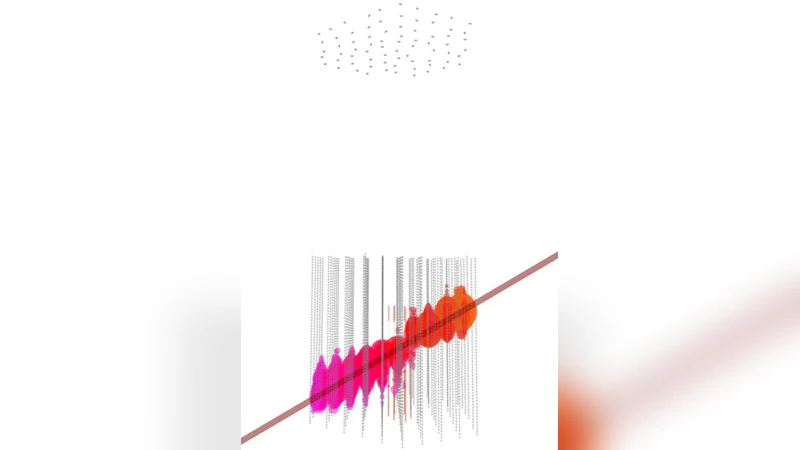
IceCube as a three-dimensional air-shower array covers an energy range of the cosmic-ray spectrum from below 1 PeV to approximately 1 EeV. This talk is a brief review of the function and goals of IceTop, the surface component of the IceCube neutrino telescope. An overview of different and complementary ways that IceCube is sensitive to the primary cosmic-ray composition up to the EeV range is presented. Plans to obtain composition information in the threshold region of the detector in order to overlap with direct measurements of the primary composition in the 100-300 TeV range are also described.
💡 Research Summary
The paper provides a comprehensive overview of how the IceCube neutrino observatory, together with its surface component IceTop, can be employed as a powerful cosmic‑ray detector covering the energy range from below 1 PeV up to roughly 1 EeV. IceCube consists of an array of 86 strings of digital optical modules (DOMs) embedded in the Antarctic ice, forming a cubic‑kilometer volume that records the Cherenkov light from high‑energy muon bundles generated in extensive air showers. IceTop, located on the surface directly above the deep array, comprises 81 stations, each with two water‑filled Cherenkov tanks instrumented with two DOMs, providing a measurement of the electromagnetic component and low‑energy muons of the same air shower.
The authors describe several complementary techniques for extracting the primary cosmic‑ray composition from the combined data. First, the ratio of the shower size measured at the surface to the energy deposited by the muon bundle in the deep ice is sensitive to mass because heavy nuclei produce proportionally more high‑energy muons than protons of the same shower size. By reconstructing both the surface signal (in units of vertical equivalent muons, VEM) and the total light yield in the deep array, one can infer the muon‑to‑shower ratio and thus the average mass of the primaries.
Second, the angular dependence of the shower size provides an independent composition handle. At large zenith angles, proton‑induced showers are more attenuated than those initiated by heavy nuclei; consequently, the observed spectrum at different zenith bins requires a mixed composition to be consistent. Preliminary analyses using data from an early configuration (26 IceTop stations, zenith ≤ 46°) already show this effect, and the authors anticipate a ten‑fold increase in acceptance when all stations and inclined events (up to 60°) are included.
Third, the authors discuss efforts to extract the muon component directly from IceTop signals. Although each tank records only the integrated charge, the spatial distribution of signals across the array can be used to identify isolated muons at large core distances, providing a low‑energy muon sample that complements the high‑energy muon bundle measured in ice.
Fourth, measurements that rely solely on the deep detector are presented. The atmospheric muon spectrum has been measured up to several hundred TeV with the 22‑string configuration, probing the “knee” region of the cosmic‑ray spectrum. The same data set also yields the atmospheric neutrino spectrum up to > 100 TeV, allowing studies of the prompt (charm‑decay) component and searches for an astrophysical neutrino flux. The different energy and angular dependencies of conventional (π/K) and prompt contributions enable their separation.
Finally, the paper addresses the important goal of overlapping the indirect IceCube measurements with direct composition measurements from balloon‑borne experiments (ATIC, CREAM, JACEE, RUNJOB) in the 100–300 TeV range. By selecting low‑multiplicity events that trigger only three or four IceTop stations—especially those in the densely instrumented central region—the effective area can be lowered to a few × 10⁴ m² at energies as low as 300 TeV for protons and just below 1 PeV for iron. This strategy creates a bridge between the indirect air‑shower technique and direct charge‑measurement experiments, facilitating cross‑calibration of spectral slopes and composition models.
Overall, the authors argue that IceCube, through its dual‑component design, offers multiple, largely independent observables (surface shower size, muon bundle light yield, angular dependence, low‑energy muon fraction, and deep‑only muon/neutrino spectra) that together can constrain the energy‑dependent composition of cosmic rays from the PeV knee up to the EeV transition region. The combination of high statistics, large geometric acceptance, and the ability to probe both muons and neutrinos makes IceCube a uniquely versatile instrument for advancing our understanding of the Galactic‑to‑extragalactic cosmic‑ray transition.
Comments & Academic Discussion
Loading comments...
Leave a Comment