Five and a half roads to form a millisecond pulsar
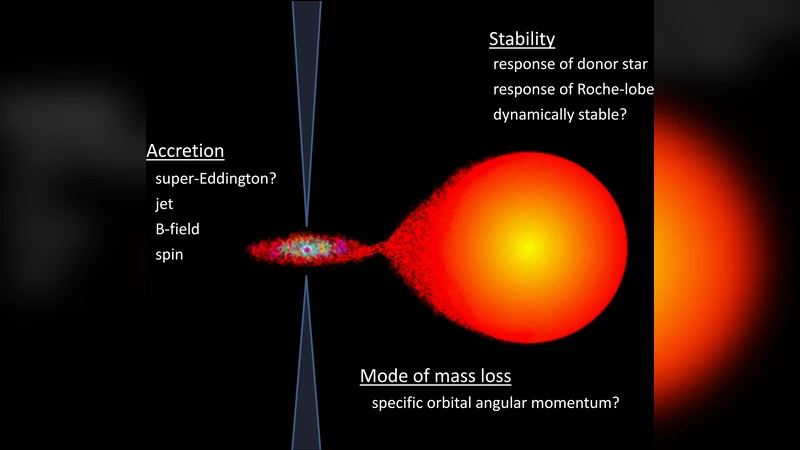
In this review I discuss the characteristics and the formation of all classes of millisecond pulsars (MSPs). The main focus is on the stellar astrophysics of X-ray binaries leading to the production of fully recycled MSPs with white dwarf (WD) or substellar semi-degenerate companions. Depending on the nature of the companion star MSPs are believed to form from either low-mass X-ray binaries (LMXBs) or intermediate-mass X-ray binaries (IMXBs). For each of these two classes of X-ray binaries the evolutionary status of the donor star – or equivalently, the orbital period – at the onset of the Roche-lobe overflow (RLO) is the determining factor for the outcome of the mass-transfer phase and thus the nature of the MSP formed. Furthermore, the formation of binary MSPs is discussed in context of the (P,P_dot)-diagram, as well as new interpretations of the Corbet diagram. Finally, I present new models of Case A RLO of IMXBs in order to reproduce the two solar mass pulsar PSR J1614-2230.
💡 Research Summary
This review paper provides a comprehensive synthesis of the formation pathways of millisecond pulsars (MSPs), focusing on the stellar astrophysics of X‑ray binaries that lead to fully recycled neutron stars with white‑dwarf (WD) or sub‑stellar semi‑degenerate companions. The author divides MSP progenitors into two broad classes of X‑ray binaries: low‑mass X‑ray binaries (LMXBs) and intermediate‑mass X‑ray binaries (IMXBs). In both cases, the evolutionary state of the donor at the onset of Roche‑lobe overflow (RLO) – effectively the orbital period at that moment – is identified as the single most decisive parameter governing the subsequent mass‑transfer episode, the amount of angular momentum transferred to the neutron star, and ultimately the nature of the resulting MSP and its companion.
For LMXBs, donors of ≤1 M⊙ typically fill their Roche lobes early in their evolution (Case B or Case C RLO). The mass‑transfer rate is modest (10⁻⁹–10⁻⁸ M⊙ yr⁻¹) but persists for 10⁸–10⁹ yr, allowing the neutron star to be spun up to periods of a few milliseconds while the donor evolves into a helium‑WD (short initial periods) or a carbon‑oxygen WD (longer initial periods). The paper emphasizes that the final orbital period of the binary is directly linked to the donor’s evolutionary stage at RLO onset, producing the well‑known correlation between MSP spin period and companion type observed in the (P, Ṗ) diagram.
In contrast, IMXBs (donor masses 2–5 M⊙) have traditionally been modeled with unstable mass transfer leading to a common‑envelope phase, which dramatically shrinks the orbit and yields short‑period MSPs with low‑mass He‑WD companions or isolated MSPs. The author challenges this view by presenting detailed Case A RLO models, in which the donor initiates Roche‑lobe overflow while still on the main sequence. In these scenarios the mass transfer can remain stable, with rates of 10⁻⁸–10⁻⁷ M⊙ yr⁻¹, allowing the neutron star to accrete up to ~0.9 M⊙ and reach masses close to 2 M⊙. The donor, stripped of most of its envelope, ends its life as a CO‑WD or a sub‑stellar semi‑degenerate object, and the final orbital period lies in the range of several to tens of days. This pathway naturally explains the existence of massive MSPs and those with relatively wide orbits that cannot be produced by the common‑envelope route.
The review maps these evolutionary tracks onto the (P, Ṗ) diagram, showing that LMXB‑derived MSPs occupy the low‑Ṗ, short‑P corner, whereas IMXB‑derived systems populate a region of slightly higher Ṗ and intermediate P. A novel reinterpretation of the Corbet diagram (spin period versus orbital period) is offered: instead of a single “spin‑up line,” the diagram should display two distinct tracks corresponding to the two RLO regimes (Case B/C for LMXBs and Case A for IMXBs). This dual‑track picture accounts for the observed scatter and the presence of outliers.
A central case study is the 2‑M⊙ pulsar PSR J1614‑2230 (P = 3.15 ms, orbital period = 8.7 d). Traditional common‑envelope models struggle to reproduce its high neutron‑star mass and relatively wide orbit. The author’s Case A IMXB simulations start with a 3.5 M⊙ donor and an initial orbital period of ~2 days. Over ~200 Myr the donor transfers ~0.9 M⊙ to the neutron star, spinning it up to the observed period while the donor is reduced to a ~0.5 M⊙ CO‑WD. The final orbital period matches the observed 8.7 days, and the neutron‑star mass reaches 1.97 M⊙, in excellent agreement with measurements. This model incorporates realistic angular‑momentum loss mechanisms (magnetic braking, gravitational‑wave radiation) and demonstrates that stable Case A RLO in IMXBs can produce the most massive known MSPs.
In conclusion, the paper argues that the orbital period at the onset of Roche‑lobe overflow is the key “control knob” that determines whether a binary will evolve through an LMXB or IMXB channel, the type of companion that survives, and the final spin characteristics of the pulsar. The author calls for more precise timing and optical spectroscopy of MSP companions to test these predictions, especially as new surveys uncover additional high‑mass MSPs and systems with atypical orbital configurations. The presented Case A IMXB models thus provide a robust framework for interpreting the growing diversity of the millisecond pulsar population.
Comments & Academic Discussion
Loading comments...
Leave a Comment