Trans-Canada Slimeways: Slime mould imitates the Canadian transport network
Slime mould Physarum polycephalum builds up sophisticated networks to transport nutrients between distant part of its extended body. The slime mould’s protoplasmic network is optimised for maximum coverage of nutrients yet minimum energy spent on transportation of the intra-cellular material. In laboratory experiments with P. polycephalum we represent Canadian major urban areas with rolled oats and inoculated slime mould in the Toronto area. The plasmodium spans the urban areas with its network of protoplasmic tubes. We uncover similarities and differences between the protoplasmic network and the Canadian national highway network, analyse the networks in terms of proximity graphs and evaluate slime mould’s network response to contamination.
💡 Research Summary
The paper investigates how the foraging behavior of the slime mould Physarum polycephalum can be used to approximate the Canadian national highway network. The authors cultivated the plasmodium on 2 % agar plates cut in the shape of Canada and placed rolled oat flakes at the locations of sixteen major urban areas and five additional transport nodes, thereby creating a spatial representation of the country’s most populated regions. A piece of plasmodium was inoculated in the Toronto area, and the organism was allowed to grow in darkness at 22‑25 °C. Over 2–5 days the slime mould extended protoplasmic tubes to connect all oat flakes; the process was repeated in twenty‑three independent experiments.
From the experimental data the authors built a “Physarum graph” P = ⟨U, E, w⟩, where U is the set of urban nodes, E the set of observed connections, and w(e) the frequency (out of 23 trials) with which a particular tube appeared. By applying a threshold θ and discarding edges with w ≤ θ they obtained a family of threshold graphs P(θ). Various thresholds (θ = 0, 8/23, 9/23, 17/23, 18/23, 19/23) were examined to distinguish robust, repeatedly formed links from occasional, possibly stochastic connections.
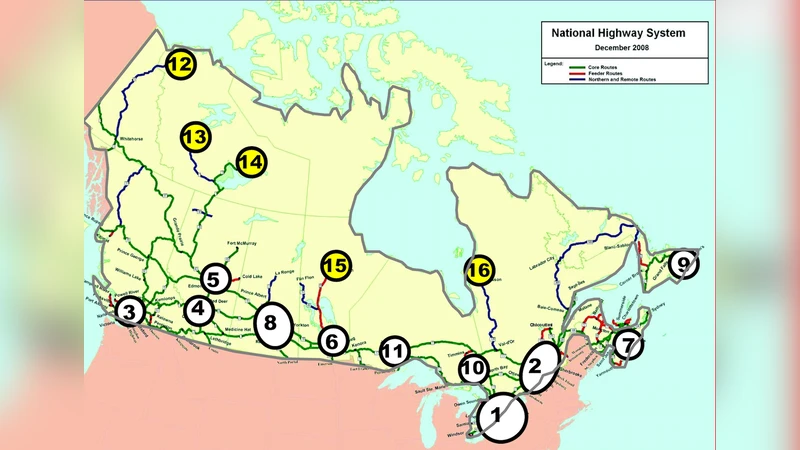
The Canadian highway graph H was constructed by linking two urban nodes whenever a motor‑way passes near both without intersecting any other node. Comparison of P(θ) with H revealed a striking correspondence: the raw graph P(0) contains 21 of the 22 highway edges; with θ = 8/23 the correspondence remains at 18 of 22 edges. The only consistently missing highway link is the Vancouver‑Calgary segment. The most stable component of P(θ) (for θ ≥ 17/23) forms a chain along the southern border from Halifax‑Moncton to Edmonton, with a fork at Edmonton that extends northward to Yellowknife‑Wrigley and southward to Calgary‑Vancouver. This structure mirrors the actual highway backbone.
To place the slime‑mould network in a broader geometric context, the authors computed three classic proximity graphs on the same node set: the Gabriel Graph (GG), the Relative Neighborhood Graph (RNG), and the Euclidean Minimum Spanning Tree (MST). They confirmed the known inclusion hierarchy MST ⊆ RNG ⊆ GG. Remarkably, RNG coincides exactly with MST for the Canadian node configuration, indicating that the cities are “spanning‑friendly”. Moreover, the MST is almost a subgraph of the highway network (MST ⊂ H), showing that the real Canadian system is close to the length‑minimising optimum. Intersections of P(θ) with GG and MST demonstrate that even at higher thresholds the slime mould retains the core MST branches rooted at Toronto, while discarding peripheral, less reliable links.
The authors also explored the slime mould’s response to a simulated contamination event. A crystal of coarse sea salt (≈20 mg) was placed at the location of the Bruce Nuclear Power Station, creating a NaCl diffusion front that acts as a chemo‑repellent. After 24 h the plasmodium retreated from the contaminated zone, extending its network westward toward Winnipeg‑Thompson and eastward toward St. John’s. New connections formed around the contaminated area, illustrating the organism’s capacity for dynamic re‑routing in response to environmental stress.
Key findings are summarized as follows:
1. Physarum approximates the Canadian highway network with >95 % edge overlap; the only missing link is Vancouver‑Calgary.
2. The most persistent slime‑mould component reproduces the southern backbone and the Edmonton fork observed in the real road system.
3. The MST of the urban nodes is essentially contained in the highway graph, confirming that Canada’s highway layout is near‑optimal in terms of total length.
4. Threshold graphs reveal that the slime mould’s core network aligns with the MST, while peripheral, low‑frequency links disappear under stricter thresholds.
5. When faced with a repellent (salt) the organism automatically restructures, forming alternative routes that bypass the contaminated region, a behavior that could inspire resilient transport‑network designs.
Overall, the study demonstrates that a simple unicellular organism can generate transport networks that are both topologically similar to human‑engineered highways and geometrically efficient. The results suggest that bio‑inspired algorithms derived from Physarum dynamics may be valuable for designing cost‑effective, fault‑tolerant, and adaptable transportation or logistics networks, especially in geographically large and sparsely populated regions such as Canada.
Comments & Academic Discussion
Loading comments...
Leave a Comment