All-at-once Optimization for Coupled Matrix and Tensor Factorizations
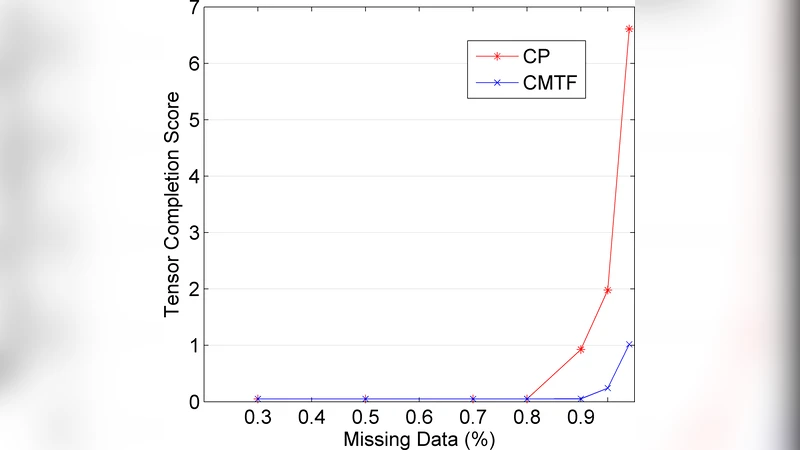
Joint analysis of data from multiple sources has the potential to improve our understanding of the underlying structures in complex data sets. For instance, in restaurant recommendation systems, recommendations can be based on rating histories of customers. In addition to rating histories, customers’ social networks (e.g., Facebook friendships) and restaurant categories information (e.g., Thai or Italian) can also be used to make better recommendations. The task of fusing data, however, is challenging since data sets can be incomplete and heterogeneous, i.e., data consist of both matrices, e.g., the person by person social network matrix or the restaurant by category matrix, and higher-order tensors, e.g., the “ratings” tensor of the form restaurant by meal by person. In this paper, we are particularly interested in fusing data sets with the goal of capturing their underlying latent structures. We formulate this problem as a coupled matrix and tensor factorization (CMTF) problem where heterogeneous data sets are modeled by fitting outer-product models to higher-order tensors and matrices in a coupled manner. Unlike traditional approaches solving this problem using alternating algorithms, we propose an all-at-once optimization approach called CMTF-OPT (CMTF-OPTimization), which is a gradient-based optimization approach for joint analysis of matrices and higher-order tensors. We also extend the algorithm to handle coupled incomplete data sets. Using numerical experiments, we demonstrate that the proposed all-at-once approach is more accurate than the alternating least squares approach.
💡 Research Summary
The paper addresses the problem of jointly analyzing heterogeneous data sources that consist of both matrices and higher‑order tensors, a setting commonly encountered in applications such as restaurant recommendation systems, multimodal medical diagnostics, and social network analysis. Traditional approaches to coupled matrix‑and‑tensor factorization (CMTF) rely on alternating least squares (ALS), updating one factor matrix at a time while keeping the others fixed. Although ALS is simple and computationally cheap per iteration, it suffers from several drawbacks: it can become trapped in poor local minima when the number of components is misspecified, it converges slowly in the presence of missing data, and it does not scale well to large‑scale problems.
The authors propose a fundamentally different strategy called CMTF‑OPT (CMTF‑OPTimization). The key idea is to treat the entire set of factor matrices—(A, B, C) for the tensor and (V) for the coupled matrix—as a single optimization variable and to minimize the global least‑squares objective \
Comments & Academic Discussion
Loading comments...
Leave a Comment