Fluctuation-driven Turing patterns
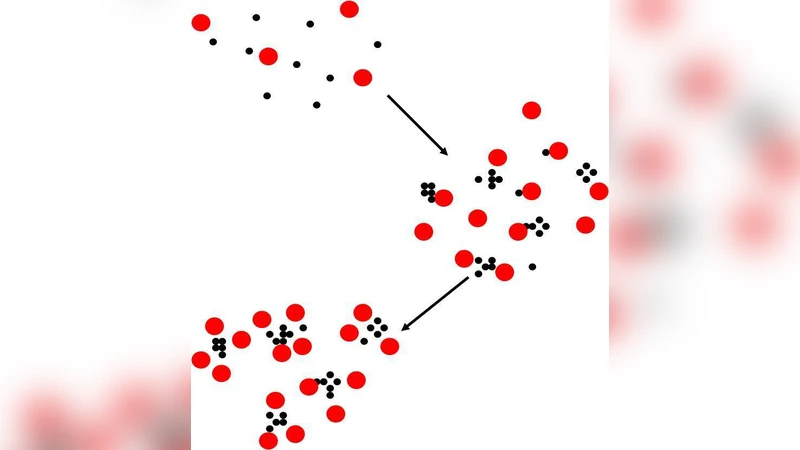
Models of diffusion driven pattern formation that rely on the Turing mechanism are utilized in many areas of science. However, many such models suffer from the defect of requiring fine tuning of parameters or an unrealistic separation of scales in the diffusivities of the constituents of the system in order to predict the formation of spatial patterns. In the context of a very generic model of ecological pattern formation, we show that the inclusion of intrinsic noise in Turing models leads to the formation of “quasi-patterns” that form in generic regions of parameter space and are experimentally distinguishable from standard Turing patterns. The existence of quasi-patterns removes the need for unphysical fine tuning or separation of scales in the application of Turing models to real systems.
💡 Research Summary
The paper revisits the classic Turing mechanism of diffusion‑driven instability, which has long been invoked to explain spatial patterns in chemistry, biology, and ecology. Traditional Turing models suffer from two severe constraints: (i) the reaction‑diffusion parameters must lie within a very narrow region of parameter space, so that even slight variations suppress pattern formation; and (ii) the inhibitor must diffuse orders of magnitude faster than the activator (a large diffusion‑coefficient ratio). In real biological or ecological systems these conditions are rarely met, limiting the practical applicability of the theory.
To address these limitations, the authors introduce intrinsic stochasticity—fluctuations that arise from the finite number of interacting individuals—directly into a generic two‑species reaction‑diffusion model. Starting from the master equation, they perform a system‑size expansion (van Kampen’s expansion) to separate the deterministic mean‑field dynamics from the stochastic Langevin terms. The resulting linearized stochastic partial differential equations contain additive noise whose amplitude scales as the inverse square root of the system size.
A linear stability analysis of the deterministic part reproduces the usual Turing instability condition, but the stochastic terms generate non‑zero power in modes that would be damped in the deterministic limit. Crucially, for a broad range of diffusion coefficients (including cases where the activator and inhibitor diffuse at comparable rates) the noise excites a specific wavenumber k* and produces a pronounced peak in the steady‑state structure factor (power spectrum). This noise‑driven amplification yields spatial structures that the authors term “quasi‑patterns.” Unlike classical Turing patterns, quasi‑patterns do not possess a fixed phase or a permanent amplitude; they continually fluctuate, yet their statistical signature—a narrow spectral peak at k*—remains robust.
Extensive numerical simulations confirm the analytical predictions. By scanning the reaction‑diffusion parameter space, the authors demonstrate that the region supporting quasi‑patterns is dramatically larger than the classical Turing region. Moreover, the requirement for a large diffusion‑coefficient ratio disappears: even when D_inhibitor/D_activator ≈ 1, intrinsic noise can sustain patterned fluctuations. The simulations also reveal that the amplitude of the quasi‑pattern scales with the square root of the inverse system size, providing a clear experimental handle: smaller populations (or smaller spatial domains) should exhibit stronger noise‑driven patterns.
The paper further discusses how to distinguish quasi‑patterns from genuine Turing patterns experimentally. While both exhibit a dominant wavelength, only deterministic Turing patterns maintain a coherent phase over time; quasi‑patterns show rapid phase decorrelation. Time‑averaged power spectra, autocorrelation functions, and phase‑diffusion measurements can therefore be used to identify the underlying mechanism.
In summary, the study shows that intrinsic demographic noise can replace the stringent diffusion‑rate disparity traditionally required for Turing pattern formation. By doing so, it expands the applicability of reaction‑diffusion models to realistic ecological and biological contexts where species numbers are finite and diffusion coefficients are comparable. The concept of quasi‑patterns provides a unifying framework that reconciles observed irregular spatial structures with underlying reaction‑diffusion dynamics, opening new avenues for both theoretical investigation and experimental validation in the study of pattern formation.
Comments & Academic Discussion
Loading comments...
Leave a Comment