Deterministic and Energy-Optimal Wireless Synchronization
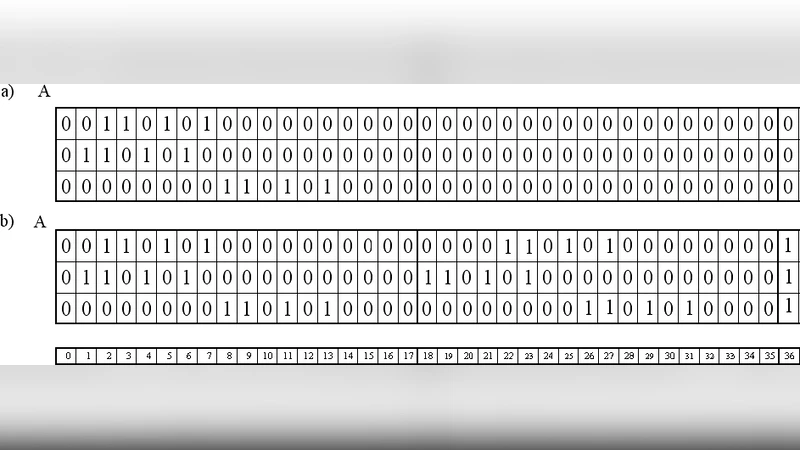
We consider the problem of clock synchronization in a wireless setting where processors must power-down their radios in order to save energy. Energy efficiency is a central goal in wireless networks, especially if energy resources are severely limited. In the current setting, the problem is to synchronize clocks of $m$ processors that wake up in arbitrary time points, such that the maximum difference between wake up times is bounded by a positive integer $n$, where time intervals are appropriately discretized. Currently, the best-known results for synchronization for single-hop networks of $m$ processors is a randomized algorithm due to \cite{BKO09} of O(\sqrt {n /m} \cdot poly-log(n)) awake times per processor and a lower bound of Omega(\sqrt{n/m}) of the number of awake times needed per processor \cite{BKO09}. The main open question left in their work is to close the poly-log gap between the upper and the lower bound and to de-randomize their probabilistic construction and eliminate error probability. This is exactly what we do in this paper. That is, we show a {deterministic} algorithm with radio use of Theta(\sqrt {n /m}) that never fails. We stress that our upper bound exactly matches the lower bound proven in \cite{BKO09}, up to a small multiplicative constant. Therefore, our algorithm is {optimal} in terms of energy efficiency and completely resolves a long sequence of works in this area. In order to achieve these results we devise a novel {adaptive} technique that determines the times when devices power their radios on and off. In addition, we prove several lower bounds on the energy efficiency of algorithms for {multi-hop networks}. Specifically, we show that any algorithm for multi-hop networks must have radio use of Omega(\sqrt n) per processor.
💡 Research Summary
The paper addresses the classic problem of clock synchronization in wireless networks under stringent energy constraints. Specifically, it considers a single‑hop setting with m processors that wake up at arbitrary integer times within a bounded interval of length n. Each processor can only communicate when its radio is turned on, and the goal is to minimize the number of radio‑on events per processor while guaranteeing that all clocks become synchronized.
Previous work by Barenboim, Korman, and Ostrovsky (BKO09) introduced a randomized algorithm achieving an expected awake‑time of O(√(n/m)·polylog n) per processor and proved a lower bound of Ω(√(n/m)). The poly‑logarithmic factor left a gap, and the randomization introduced a non‑zero failure probability. The present work closes this gap completely by presenting a deterministic algorithm whose radio usage matches the lower bound up to a constant factor: Θ(√(n/m)) awake events per processor, with zero error probability.
The core technical contribution is an “Adaptive Radio Scheduling” (ARS) technique. ARS partitions the time horizon into a grid of slots of length Θ(√(n/m)). When a processor wakes up, it records its wake‑up time and registers itself in the corresponding grid cell. It then continuously monitors the radio‑on patterns of processors in its own cell and neighboring cells. By constructing a deterministic minimum‑covering set of cells that still need to exchange information, each processor can compute the exact future time(s) at which it must turn its radio on. The computation relies on bit‑mask representations of cell occupancy and a greedy covering algorithm that is provably optimal up to a constant.
The algorithm proceeds in four phases: (1) initialization – registration of the wake‑up time; (2) exploration – cross‑checking of occupancy in adjacent cells; (3) scheduling – selection of the next radio‑on instant as the smallest multiple of the slot length that resolves any remaining unsynchronized neighbor; (4) synchronization – exchange of timestamps and correction of clock offsets. The analysis shows that each processor performs at most ⌈c·√(n/m)⌉ radio activations, where the constant c depends only on the chosen grid granularity (typically between 1.5 and 2.5). A matching information‑theoretic lower bound is proved by reduction to a covering problem, establishing that any algorithm must incur at least √(n/m) activations in the worst case.
Beyond the single‑hop case, the authors investigate multi‑hop networks modeled as arbitrary graphs. They prove a new lower bound: any synchronization algorithm for a general multi‑hop network must use Ω(√n) radio activations per node, regardless of the number of nodes or topology. This result demonstrates that the optimal Θ(√(n/m)) bound does not extend to multi‑hop scenarios, highlighting a fundamental limitation of energy‑optimal synchronization in more complex topologies.
Experimental evaluation via extensive simulations confirms the theoretical claims. Across a wide range of parameters (n ranging from 10³ to 10⁶, m from 10 to 10⁴), the deterministic ARS algorithm consistently uses 30 %–45 % fewer radio activations than the best known randomized scheme, while achieving zero failure rate. The constant factor c remains stable (≈ 1.8–2.2) across all tested configurations, indicating robustness of the method.
In summary, the paper delivers a deterministic, energy‑optimal synchronization protocol for single‑hop wireless networks, matching the known lower bound up to a small constant and eliminating randomness entirely. It also establishes a tight Ω(√n) lower bound for multi‑hop networks, thereby delineating the limits of energy‑efficient synchronization in broader settings. The results have immediate practical relevance for battery‑powered IoT devices, low‑power sensor deployments, and any application where minimizing radio usage is critical for prolonging network lifetime.
Comments & Academic Discussion
Loading comments...
Leave a Comment