Accelerated Stochastic Sampling of Discrete Statistical Systems
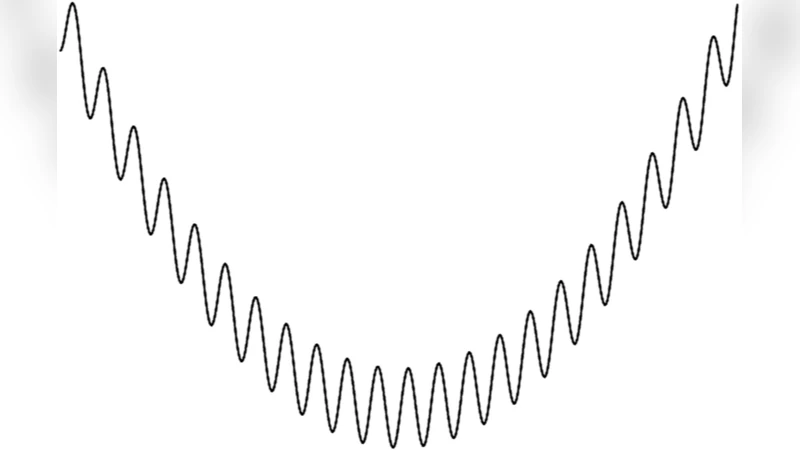
We propose a method to reduce the relaxation time towards equilibrium in stochastic sampling of complex energy landscapes in statistical systems with discrete degrees of freedom by generalizing the platform previously developed for continuous systems. The method starts from a master equation, in contrast to the Fokker-Planck equation for the continuous case. The master equation is transformed into an imaginary-time Schr"odinger equation. The Hamiltonian of the Schr"odinger equation is modified by adding a projector to its known ground state. We show how this transformation decreases the relaxation time and propose a way to use it to accelerate simulated annealing for optimization problems. We implement our method in a simplified kinetic Monte Carlo scheme and show an acceleration by an order of magnitude in simulated annealing of the symmetric traveling salesman problem. Comparisons of simulated annealing are made with the exchange Monte Carlo algorithm for the three-dimensional Ising spin glass. Our implementation can be seen as a step toward accelerating the stochastic sampling of generic systems with complex landscapes and long equilibration times.
💡 Research Summary
The paper introduces a general method for accelerating stochastic sampling in discrete statistical systems with rugged energy landscapes. Starting from the master equation that governs the time evolution of the probability distribution over a finite set of configurations, the authors perform a similarity transformation using the equilibrium distribution to obtain a symmetric operator (H). This operator plays the role of a Hamiltonian in an imaginary‑time Schrödinger equation, (\partial_t\psi = -H\psi), where the eigenvalues of (H) correspond to the relaxation modes of the original Markov process.
The key innovation is to modify (H) by adding a projector onto its known ground‑state wavefunction (|\psi_0\rangle):
(H’ = H + \lambda P_0,\quad P_0 = |\psi_0\rangle\langle\psi_0|,)
with a positive scalar (\lambda). This term lifts the ground‑state eigenvalue by (\lambda) while leaving the rest of the spectrum unchanged, thereby enlarging the spectral gap (\Delta = E_1 - E_0). Because the inverse gap controls the slowest relaxation time, the modified dynamics converge to equilibrium substantially faster.
To translate this theoretical construction into a practical algorithm, the authors embed the projector into a kinetic Monte Carlo (KMC) scheme. In ordinary KMC the transition rate from state (i) to (j) is (k_{ij}=W_{ji}), where (W) is the transition matrix of the master equation. The accelerated version multiplies each rate by a factor (\exp
Comments & Academic Discussion
Loading comments...
Leave a Comment