Towards Physarum Binary Adders
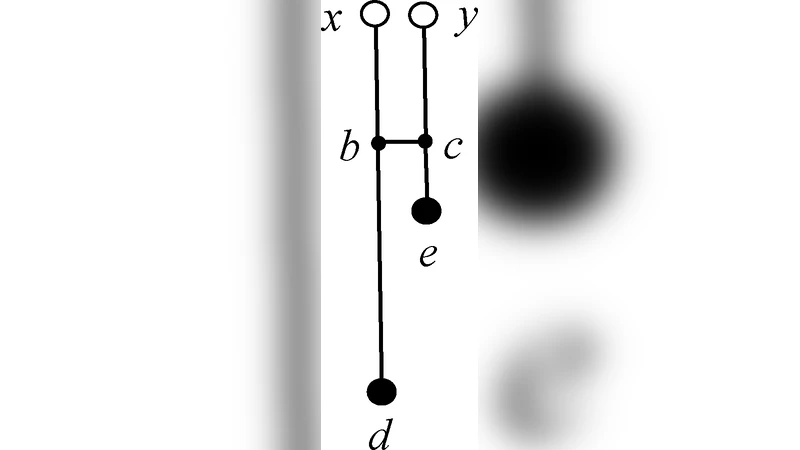
Plasmodium of \emph{Physarum polycephalum} is a single cell visible by unaided eye. The plasmodium’s foraging behaviour is interpreted in terms of computation. Input data is a configuration of nutrients, result of computation is a network of plasmodium’s cytoplasmic tubes spanning sources of nutrients. Tsuda et al (2004) experimentally demonstrated that basic logical gates can be implemented in foraging behaviour of the plasmodium. We simplify the original designs of the gates and show — in computer models — that the plasmodium is capable for computation of two-input two-output gate $<x, y> \to <xy, x+y>$ and three-input two-output $<x, y, z> \to < \bar{x}yz, x+y+z>$. We assemble the gates in a binary one-bit adder and demonstrate validity of the design using computer simulation.
💡 Research Summary
The paper investigates the use of the slime mould Physarum polycephalum as a substrate for unconventional computing, focusing on the implementation of binary arithmetic. Building on earlier work by Tsuda et al. (2004), which demonstrated that the foraging behavior of the plasmodium can realize basic logical gates, the authors simplify the original gate geometries and test the designs in a computational model. Two elementary gates are introduced: a two‑input, two‑output gate that simultaneously produces the logical AND and OR of its inputs, denoted <x, y> → <xy, x + y>, and a three‑input, two‑output gate that yields the product ¬x y z together with the sum x + y + z, denoted <x, y, z> → <¬x y z, x + y + z>.
The underlying principle is that the plasmodium expands toward nutrient sources (representing logical “1”) while avoiding empty sites (“0”). Growth fronts that meet and fuse are interpreted as an AND operation, whereas a front that reaches a target without meeting another front corresponds to an OR. The authors implement these ideas in a modified version of the well‑known “Physarum Solver” (Tero et al., 2006). The simulation uses a two‑dimensional lattice where each cell stores the concentration of plasmodium and nutrients. The plasmodium moves according to a diffusion‑contraction dynamics that seeks paths of minimal hydraulic resistance. Input patterns are encoded by placing nutrients at specific lattice sites; the system is then evolved for thousands of time steps until a steady‑state network forms. The presence or absence of plasmodium at designated output sites is read as binary results.
Extensive simulation runs confirm that both gates produce the correct truth tables for all possible input combinations. In particular, the three‑input gate correctly outputs a “1” on the ¬x y z line only when x = 0, y = 1, and z = 1, demonstrating that the plasmodium can implement a non‑trivial conjunction involving a negated input. Using these gates as building blocks, the authors construct a one‑bit half‑adder and a full‑adder. The adder architecture mirrors conventional digital designs: the sum output is obtained by an XOR‑like combination of the two‑input gate’s OR and AND results, while the carry output is directly taken from the AND line. Simulations of all four possible input pairs (00, 01, 10, 11) produce the expected sum and carry bits, confirming functional correctness.
The discussion acknowledges several practical challenges. The growth rate of Physarum in the model is orders of magnitude faster than in laboratory conditions, and real‑world experiments would be highly sensitive to temperature, humidity, and illumination. Precise placement of nutrients and control of the initial plasmodial mass are non‑trivial tasks that could affect reliability. Moreover, parameter tuning (diffusion coefficient, contraction strength, nutrient consumption rate) influences the stability of the resulting network, raising concerns about scalability to larger circuits.
Despite these limitations, the study demonstrates that the intrinsic self‑organizing behavior of Physarum can be harnessed to perform elementary arithmetic without any electronic components. The authors suggest future work on microfluidic implementations of the gate geometries, extension to multi‑bit adders, and exploration of more complex logical functions (e.g., multiplexers, flip‑flops) using cascaded plasmodial networks. In sum, the paper provides a compelling proof‑of‑concept that biological foraging dynamics can be mapped onto logical operations, opening a pathway toward biologically based computing architectures.
Comments & Academic Discussion
Loading comments...
Leave a Comment