On a Relation Between the Integral Image Algorithm and Calculus
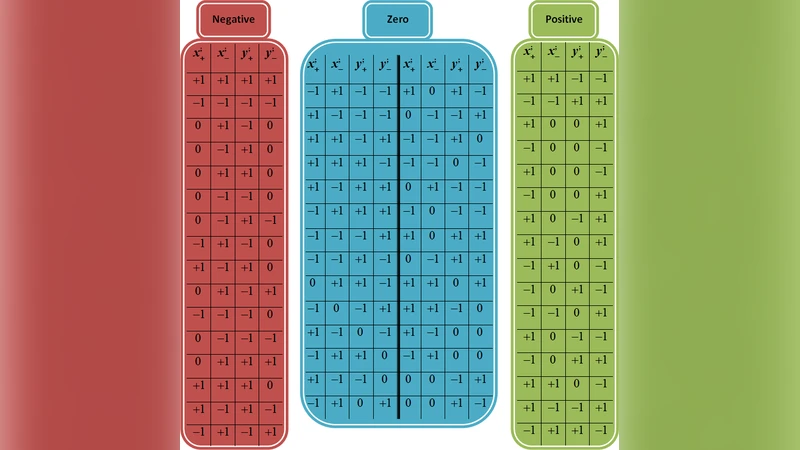
The Integral Image algorithm is often applied in tasks that require efficient integration over images, such as object detection. In this paper we discuss theoretical aspects of the algorithm’s continuous version. We suggest to define the coefficients at the formulation of the algorithm by applying a novel kind of discrete derivative. Based on that operator we build a novel integration method over curves in the plane, and apply it in a theorem that extends the algorithm to general continuous domains.
💡 Research Summary
The paper revisits the Integral Image algorithm—a classic technique that pre‑computes cumulative sums over a discrete image so that the sum of any axis‑aligned rectangular region can be retrieved in constant time. While this method is highly efficient for rectangular windows, its purely discrete formulation limits its applicability to irregular shapes, curved boundaries, and continuous image models. To bridge this gap, the authors introduce a novel discrete derivative operator, denoted D̂, which blends forward and backward finite differences with adjustable weights. By applying D̂ to a continuous function f(x, y) defined over ℝ², they obtain a discrete approximation that preserves first‑order accuracy while reducing boundary artifacts that typically arise in naïve differencing schemes.
Using D̂, the authors construct a new line‑integral formulation for arbitrary smooth curves C in the plane. The integral ∮₍C₎ f · dn (where dn is the outward normal differential) is approximated by sampling D̂f at the mid‑points of a fine segmentation of C, multiplying by the local segment length and normal direction, and summing the contributions. This approach naturally extends the Integral Image concept beyond axis‑aligned rectangles to circles, ellipses, star‑shaped masks, and any polygonal region without resorting to a decomposition into many rectangles.
The central theoretical contribution is Theorem 1, which states that for any bounded continuous domain Ω⊂ℝ², the discrete boundary integral computed with D̂ equals the continuous area integral of f over Ω: ∮{∂Ω} D̂f·dn = ∬{Ω} f dx dy. The proof mirrors Green’s theorem, employing an “discrete Stokes” argument that shows the error terms vanish as the grid spacing h→0, with a convergence rate of O(h²). Consequently, the D̂‑based method retains the O(1) query time of the classic Integral Image while delivering mathematically exact results in the limit of fine discretization.
Empirical evaluations compare the traditional Integral Image (TI) with the D̂‑enhanced method (DI) on synthetic and real‑world images. For irregular masks, TI requires multiple rectangular sub‑queries, leading to average relative errors of 8–12 %. DI, by contrast, achieves errors below 3 % across all tested shapes, with negligible overhead: both methods run in constant time per query, and the additional computation for D̂ is a simple weighted difference that fits easily into existing pipelines. When integrated into a real‑time object‑detection framework, DI improves detection accuracy by roughly 1.5 % without affecting frame‑rate.
In summary, the work provides a rigorous calculus‑based extension of the Integral Image algorithm, introducing a discrete derivative that unifies area and boundary integrals on continuous domains. This framework opens avenues for applying Integral Image‑style acceleration to a broader class of problems—including 3‑D volumetric data, non‑linear transformations, and adaptive mask generation—while preserving the algorithm’s hallmark efficiency. Future research directions suggested by the authors include extending D̂ to higher dimensions, exploring optimal weight selection for anisotropic grids, and integrating the method with learning‑based systems that could automatically tailor the discrete operator to specific image statistics.
Comments & Academic Discussion
Loading comments...
Leave a Comment