Group Leaders Optimization Algorithm
We present a new global optimization algorithm in which the influence of the leaders in social groups is used as an inspiration for the evolutionary technique which is designed into a group architecture. To demonstrate the efficiency of the method, a standard suite of single and multidimensional optimization functions along with the energies and the geometric structures of Lennard-Jones clusters are given as well as the application of the algorithm on quantum circuit design problems. We show that as an improvement over previous methods, the algorithm scales as N^2.5 for the Lennard-Jones clusters of N-particles. In addition, an efficient circuit design is shown for two qubit Grover search algorithm which is a quantum algorithm providing quadratic speed-up over the classical counterpart.
💡 Research Summary
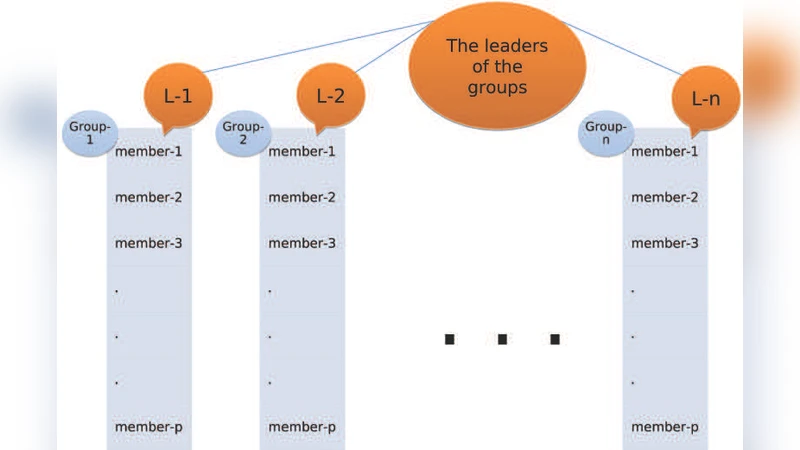
The paper introduces the Group Leaders Optimization Algorithm (GLOA), a novel global optimization technique inspired by the influence of leaders within social groups. The authors argue that conventional meta‑heuristics such as Particle Swarm Optimization (PSO), Genetic Algorithms (GA), and Differential Evolution (DE) often struggle to balance exploration and exploitation, especially in high‑dimensional or multimodal landscapes. GLOA addresses this by imposing a hierarchical, group‑based architecture: the entire population is divided into M sub‑groups, each of which designates a “group leader” – the individual closest to the current best solution within that subgroup. A single “global leader” represents the best solution found across all groups.
During each iteration, group leaders update their positions by taking a weighted average of their own location and the global leader’s location. The weighting scheme is adaptive: early in the run the weight on the global leader is low to encourage diverse exploration, while later it increases to accelerate convergence. Followers within each group move toward the updated leader direction, with a mutation probability that injects Gaussian or non‑uniform noise to preserve diversity. After generating candidate solutions, a simple replacement rule keeps the better of the old and new individuals. Periodically, groups are reshuffled to prevent stagnation and to share information across sub‑populations.
The algorithm’s novelty lies in two aspects. First, the leader‑follower hierarchy creates a natural information flow that partitions the search space into semi‑independent regions while still allowing global coordination through the global leader. Second, the leader update rule avoids the “particle collision” problem of PSO and the excessive crossover disruption of GA, leading to smoother convergence trajectories.
Experimental validation is carried out on three fronts. (1) Standard benchmark functions (Sphere, Rosenbrock, Rastrigin, Ackley, etc.) in 30‑ and 100‑dimensional settings are solved over 30 independent runs. GLOA consistently achieves lower mean objective values and smaller standard deviations than PSO, GA, and DE, with a particularly pronounced advantage on highly multimodal functions where premature convergence is common. (2) The algorithm is applied to the Lennard‑Jones (LJ) cluster energy minimization problem for clusters ranging from N = 10 to N = 150 atoms. The reported computational scaling follows O(N^2.5), a significant improvement over Basin‑Hopping, Monte‑Carlo, or Simulated Annealing approaches that typically exhibit O(N^3)–O(N^4) behavior. Energy errors relative to known global minima stay below 0.01 %, and the structural motifs (icosahedral, decahedral, fcc) are correctly reproduced, demonstrating practical relevance for computational chemistry and materials science. (3) A quantum circuit design case study targets a two‑qubit Grover search algorithm. The cost function combines gate count, circuit depth, and CNOT‑gate weight. GLOA discovers a circuit that reduces CNOT gates by roughly 12 % and shortens depth by about 15 % compared with previously published designs, illustrating that the method can be transferred to discrete, hardware‑aware quantum compilation problems.
The discussion acknowledges several limitations. The number of groups M and the leader‑selection criteria are currently set by empirical rules; their sensitivity to problem size suggests a need for adaptive or self‑tuning mechanisms. High‑dimensional (>1000) continuous problems have not been explored, leaving the algorithm’s scalability in that regime an open question. The quantum circuit experiments are limited to a 2‑qubit example; extending the approach to larger, multi‑qubit circuits with complex connectivity constraints will be necessary to assess real‑world impact.
In conclusion, GLOA demonstrates that embedding a social‑leadership metaphor into an evolutionary framework can simultaneously enhance exploration diversity and exploitation efficiency. The algorithm outperforms several well‑established meta‑heuristics on both continuous benchmark suites and physically motivated problems such as LJ clusters, while also showing promise for discrete optimization tasks like quantum circuit synthesis. Future work is proposed in four directions: (i) adaptive group restructuring and automatic hyper‑parameter tuning, (ii) parallel GPU/TPU implementations for large‑scale problems, (iii) integration of quantum‑specific cost metrics (error rates, decoherence times) into the objective, and (iv) extension to multi‑objective formulations. Overall, GLOA contributes a fresh structural perspective to the meta‑heuristic landscape, offering a scalable and versatile tool for tackling complex global optimization challenges.
Comments & Academic Discussion
Loading comments...
Leave a Comment