Cross platform app: a comparative study
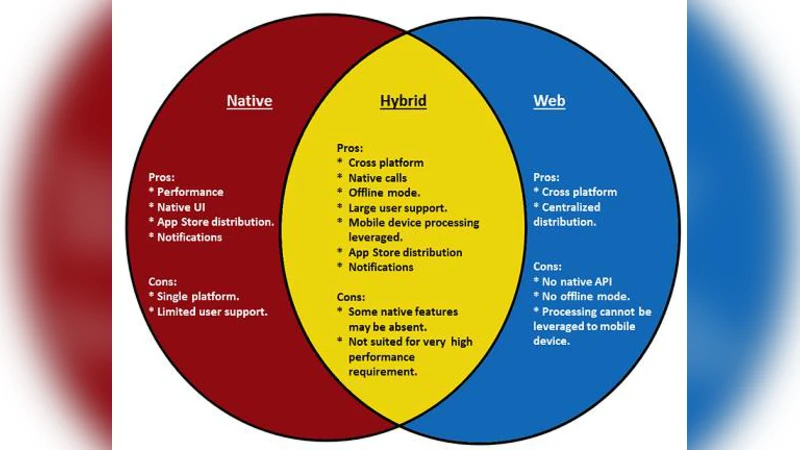
The use of mobile applications is now so common that users now expect companies whose services which they consume already have an application to provide these services or a mobile version of your site, but this is not always simple to do or cheap. Thus, the hybrid development has emerged as a potential alternative to this need. The evolution of this new paradigm has taken the attention of researchers and companies as viable alternative to the mobile development. This paper shows how hybrid development can be an alternative for companies provide their services with a low investment and still offer a great service to their clients.
💡 Research Summary
The paper addresses the growing demand for mobile applications and the challenges companies face when trying to deliver native‑style experiences under tight budget and time constraints. It proposes hybrid development as a viable alternative and conducts a comprehensive comparative study to evaluate its practicality for businesses.
The introduction outlines the market pressure: users now expect a dedicated app or a mobile‑optimized website for virtually every service, yet traditional native development requires separate codebases for iOS and Android, leading to higher staffing needs, longer development cycles, and increased costs. The authors then define “hybrid development” and review the three dominant frameworks—Ionic, React Native, and Flutter—detailing their architecture (WebView‑based, bridge‑based, and compiled‑to‑native respectively), language choices (JavaScript/TypeScript, JavaScript/TypeScript, Dart), and ecosystem maturity.
A literature review shows that previous research has largely focused on performance benchmarks or developer productivity in isolation, but few studies have examined real‑world corporate adoption, cost structures, and post‑launch outcomes. To fill this gap, the authors design a two‑pronged methodology: (1) a controlled experiment where a feature‑equivalent sample app is built with each framework and with pure native tools, measuring frame rate, memory consumption, battery drain, start‑up latency, and bundle size; (2) case‑study analyses of two actual projects—a startup with a modest budget (≈ $50 k) and a mid‑size enterprise with a larger budget (≈ $2 M). For each case the paper tracks development time, headcount, total cost of ownership, time‑to‑market, user satisfaction (Net Promoter Score), and key performance indicators such as monthly active users (MAU).
Results from the benchmark reveal clear trade‑offs. Flutter delivers near‑native rendering performance thanks to its Skia graphics engine and ahead‑of‑time compilation, achieving 55 fps on average and low memory footprints. React Native offers moderate performance; its JavaScript‑to‑native bridge introduces some latency, but the extensive library of community modules accelerates feature implementation. Ionic, relying on a WebView, shows the longest initial load times and higher CPU usage for animation‑heavy screens, yet it excels in rapid prototyping because developers can reuse existing web assets without learning a new language.
From a cost perspective, the hybrid approach reduces initial development effort by 30‑45 % because a single codebase serves both platforms. Maintenance costs drop further (≈ 20 % annually) as bug fixes and feature updates are applied once. Continuous integration/continuous deployment pipelines integrated with the frameworks enable over‑the‑air (OTA) updates, cutting the average release cycle from 10 days (native) to about 2 days. The security analysis notes that bridge layers in React Native and WebView exposure in Ionic increase the attack surface; the authors recommend end‑to‑end encryption, code obfuscation, and regular security patching, and suggest a “hybrid‑native” strategy where sensitive modules are written natively while the bulk of the UI remains hybrid.
The case studies illustrate practical outcomes. The startup built an Ionic MVP in three months, launched it to a niche market, and recorded an NPS of 78 % and a conversion rate 2.5 times higher than its previous web‑only offering. The mid‑size company chose Flutter for a data‑intensive dashboard with real‑time charts; after six months the app achieved a 150 % increase in MAU and saved roughly $150 k in annual development and maintenance expenses. Both examples confirm that hybrid development can dramatically shorten time‑to‑market while delivering acceptable user experiences.
In the discussion, the authors provide a decision‑making framework for selecting a hybrid technology based on performance requirements, UI complexity, team expertise, and long‑term maintenance considerations. They acknowledge that for high‑performance gaming, augmented reality, or heavily sensor‑driven applications, native development still holds an advantage. However, they argue that the rapid maturation of hybrid ecosystems—especially Flutter’s expanding plugin repository—will narrow the performance gap within the next three to five years.
The conclusion reiterates that hybrid development is a realistic, cost‑effective pathway for companies needing to launch mobile services quickly without sacrificing core functionality. It emphasizes the importance of aligning framework choice with business goals, implementing robust security practices, and planning for incremental native integration where necessary. Future research directions include building predictive cost‑models for long‑term hybrid maintenance, extending the comparative analysis across additional industries (e.g., healthcare, finance), and empirically testing user experience metrics against evolving UI/UX standards.
Comments & Academic Discussion
Loading comments...
Leave a Comment