Interchange reconnection in a turbulent Corona
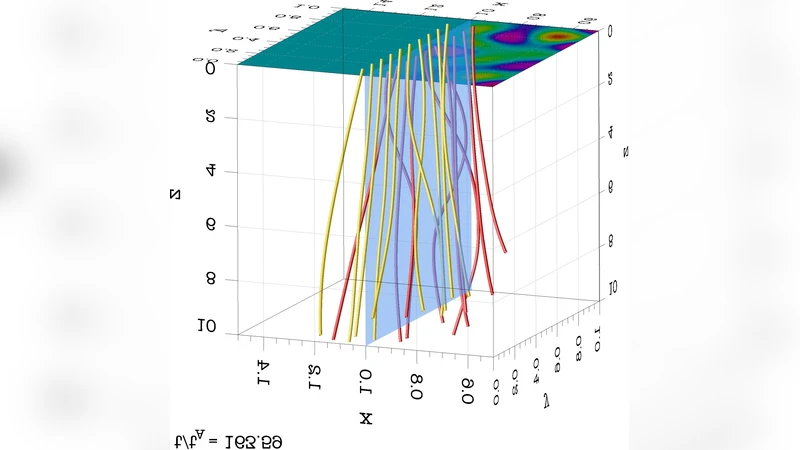
Magnetic reconnection at the interface between coronal holes and loops, so-called interchange reconnection, can release the hotter, denser plasma from magnetically confined regions into the heliosphere, contributing to the formation of the highly variable slow solar wind. The interchange process is often thought to develop at the apex of streamers or pseudo-streamers, near Y and X-type neutral points, but slow streams with loop composition have been recently observed along fanlike open field lines adjacent to closed regions, far from the apex. However, coronal heating models, with magnetic field lines shuffled by convective motions, show that reconnection can occur continuously in unipolar magnetic field regions with no neutral points: photospheric motions induce a magnetohydrodynamic turbulent cascade in the coronal field that creates the necessary small scales, where a sheared magnetic field component orthogonal to the strong axial field is created locally and can reconnect. We propose that a similar mechanism operates near and around boundaries between open and closed regions inducing a continual stochastic rearrangement of connectivity. We examine a reduced magnetohydrodynamic model of a simplified interface region between open and closed corona threaded by a strong unipolar magnetic field. This boundary is not stationary, becomes fractal, and field lines change connectivity continuously, becoming alternatively open and closed. This model suggests that slow wind may originate everywhere along loop-coronal hole boundary regions, and can account naturally and simply for outflows at and adjacent to such boundaries and for the observed diffusion of slow wind around the heliospheric current sheet.
💡 Research Summary
The paper revisits the origin of the slow solar wind by proposing a fundamentally different picture of interchange reconnection that does not rely on isolated neutral points at streamer tops or pseudo‑streamer cusps. Instead, the authors argue that in regions dominated by a strong unipolar magnetic field—such as the open‑closed boundary between coronal holes and closed loops—photospheric convective motions continuously drive a magnetohydrodynamic turbulent cascade. Within this cascade, a transverse (sheared) magnetic component is generated at ever‑smaller scales. When the transverse field becomes sufficiently intense relative to the background axial field, local current sheets form and reconnection proceeds without the need for a pre‑existing X‑ or Y‑type null.
To test this idea, the authors employ a reduced magnetohydrodynamic (RMHD) model that captures the essential dynamics of a strong guide field (B₀) plus a small perpendicular perturbation (b⊥). The computational domain is a two‑dimensional slab representing the interface between an open coronal‑hole region and a closed loop region. Random velocity perturbations are imposed at the lower boundary to mimic granular motions. These perturbations cascade to smaller perpendicular scales, amplifying b⊥ and producing intermittent, thin current sheets throughout the interface. Crucially, the reconnection sites are distributed statistically across the entire boundary rather than being confined to a single topological singularity.
Simulation results reveal several key behaviors. First, the open‑closed boundary is not static; it becomes highly irregular and fractal‑like as the turbulence evolves. Second, individual magnetic field lines repeatedly switch connectivity, alternating between open and closed states in a stochastic manner. Third, reconnection events locally heat and accelerate plasma, allowing dense, hot loop material to be injected onto newly opened field lines. Fourth, the outflows generated at the boundary are not confined to a narrow channel but spread laterally, producing a diffuse wind that can diffuse around the heliospheric current sheet (HCS). This naturally accounts for the observed broadening of the slow wind and its compositional signatures that resemble closed‑field plasma.
The authors discuss how this “continuous stochastic interchange reconnection” framework resolves several long‑standing observational puzzles. It explains why slow‑wind streams with loop‑like composition are frequently observed along fan‑shaped open field lines far from streamer apices, and why the slow wind exhibits large temporal and spatial variability. Moreover, the fractal nature of the boundary enhances effective diffusion coefficients, providing a simple mechanism for the mixing of slow‑wind plasma around the HCS.
In the concluding section, the paper emphasizes that the proposed mechanism is rooted in well‑established turbulence theory and does not require fine‑tuned magnetic topologies. It suggests that future high‑resolution EUV imaging, spectroscopic diagnostics, and in‑situ composition measurements could directly test the predicted intermittent reconnection and the associated small‑scale current sheets. Overall, the study offers a compelling, physically motivated alternative to traditional point‑reconnection models and positions turbulent‑driven interchange reconnection as a central driver of the slow solar wind’s origin and variability.
Comments & Academic Discussion
Loading comments...
Leave a Comment