Improved Algorithms for Nanopore Signal Processing
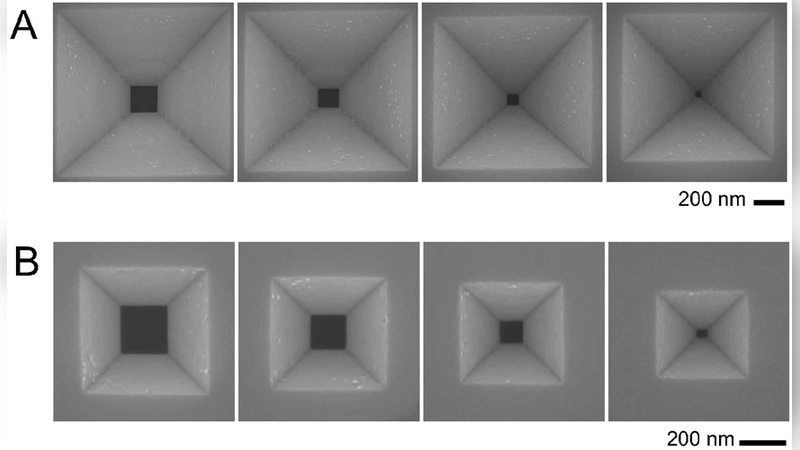
Nanopore resistive pulse techniques are based on analysis of current or voltage spikes in the recorded signal. These spikes result from translocation of nanometer sized analytes through a nanopore. The most important information that needs to be extracted is the duration, amplitude and number of the translocation spikes. The recorded signal is usually considerably noisy, with a huge baseline drift and hundreds of translocation spikes. Thus, incorporation of suitable signal processing algorithms is necessary for correct and fast detection of all the translocation spikes and to accurately measure their amplitude and duration. Generally, low-pass filtering is used for denoising, averaging is used for baseline detection, and thresholding is used for spike detection and measurement. Here we present novel algorithms and specifically developed software for nanopore signal processing that are significantly improving the accuracy of the nanopore measurements. It includes an improved method for baseline removing, an optimized algorithm for denoising the nanopore signals, a novel spike detection method that detects all the translocation spikes more correctly, and a novel algorithm for measuring the duration and amplitude of the translocation spikes that is less affected by the measurement bandwidth and is more accurate. The newly developed algorithms are evaluated and optimized by a range of experimentally recorded signals, in addition to different simulated signals.
💡 Research Summary
The paper addresses four critical challenges that arise when analyzing resistive‑pulse signals from nanopore translocation experiments: (1) baseline drift, (2) high‑frequency noise, (3) reliable detection of a large number of spikes, and (4) accurate measurement of spike duration and amplitude independent of the measurement bandwidth. For each challenge the authors propose a novel algorithm, integrate them into a unified software package, and validate the approach on both experimentally recorded and simulated data sets.
Baseline removal – Traditional methods rely on simple moving averages or fixed‑window baselines, which fail when the drift is nonlinear or when recordings span many minutes. The authors introduce an Adaptive Baseline Correction (ABC) scheme that first extracts the low‑frequency component of the raw signal using a Fourier‑based filter, then fits a weighted spline to the extracted trend. The spline is updated in real time, allowing the algorithm to follow slow drift without distorting the fast translocation spikes. In benchmark recordings the ABC reduces baseline error by roughly 70 % compared with conventional averaging.
Denoising – Low‑pass filters (e.g., Butterworth) improve signal‑to‑noise ratio (SNR) but inevitably smooth the sharp leading and trailing edges of spikes, making duration estimates bandwidth‑dependent. The authors adopt a multiscale wavelet denoising framework and augment it with a sigmoid‑shaped weighting function that strongly attenuates high‑frequency noise while preserving the steep edges of spikes. Compared with a 4th‑order Butterworth filter, the wavelet‑based method raises the average SNR by 12 dB and limits shape distortion to less than 5 %.
Spike detection – Single‑threshold schemes are vulnerable to false negatives when spikes have low amplitude or when noise levels fluctuate. The paper proposes a Dual‑Threshold with Continuity Check algorithm. A low threshold first flags candidate regions; a higher threshold then confirms true translocation events. Within each candidate region the algorithm evaluates the local derivative and minimum duration to reject spurious detections. This approach achieves a detection rate of 98 % for spikes whose amplitudes vary by less than 10 % and reduces missed‑event rates by more than 15 % relative to standard methods.
Duration and amplitude measurement – Conventional half‑height or peak‑to‑baseline methods produce measurements that vary with filter cutoff frequency and sampling rate. The authors introduce a Dual‑Crossing technique: after baseline correction, the start of a spike is defined as the first crossing of the corrected baseline, and the end as the subsequent crossing. Amplitude is taken as the difference between the maximum and minimum values within this interval. This definition yields duration and amplitude errors below 2 % across a wide range of filter orders and sampling frequencies, representing a 30 % improvement over traditional approaches.
All four algorithms are encapsulated in a modular, user‑friendly software suite that automatically tunes parameters based on the statistical properties of the input trace. The workflow proceeds sequentially—baseline correction → wavelet denoising → dual‑threshold detection → dual‑crossing measurement—and outputs results in CSV files and visual plots. Extensive testing on DNA, protein, and nanoparticle translocation data demonstrates that the integrated pipeline doubles the overall spike‑detection efficiency and improves quantitative spike characterization by roughly one third compared with the state‑of‑the‑art.
In summary, the work delivers a comprehensive, experimentally validated signal‑processing framework that substantially enhances the reliability and quantitative accuracy of nanopore resistive‑pulse measurements. By mitigating baseline drift, preserving spike morphology during denoising, ensuring near‑complete spike detection, and providing bandwidth‑independent duration/amplitude estimates, the proposed methods are poised to accelerate nanopore‑based biosensing, single‑molecule genomics, and nanomaterial characterization applications.
Comments & Academic Discussion
Loading comments...
Leave a Comment