Optimization of artificial flockings by means of anisotropy measurements
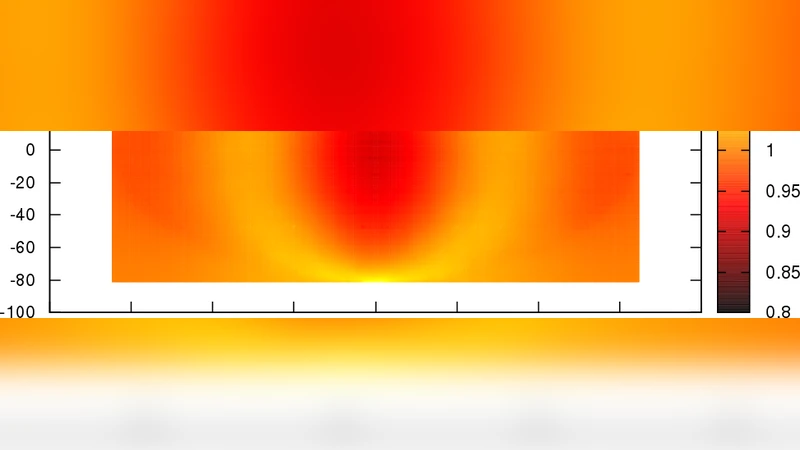
An effective procedure to determine the optimal parameters appearing in artificial flockings is proposed in terms of optimization problems. We numerically examine genetic algorithms (GAs) to determine the optimal set of parameters such as the weights for three essential interactions in BOIDS by Reynolds (1987) under zero-collision' and no-breaking-up’ constraints. As a fitness function (the energy function) to be maximized by the GA, we choose the so-called the $\gamma$-value of anisotropy which can be observed empirically in typical flocks of starling. We confirm that the GA successfully finds the solution having a large $\gamma$-value leading-up to a strong anisotropy. The numerical experience shows that the procedure might enable us to make more realistic and efficient artificial flocking of starling even in our personal computers. We also evaluate two distinct types of interactions in agents, namely, metric and topological definitions of interactions. We confirmed that the topological definition can explain the empirical evidence much better than the metric definition does.
💡 Research Summary
The paper presents a novel methodology for calibrating the parameters of the classic BOIDS model of artificial flocking by directly linking the calibration objective to an empirically observed property of real starling flocks: anisotropy. In Reynolds’ (1987) BOIDS framework three interaction rules—separation, alignment, and cohesion—are weighted by parameters w₁, w₂, and w₃. While these weights have traditionally been set by intuition or exhaustive trial‑and‑error, the authors propose to treat them as decision variables in an optimization problem whose objective function is the γ‑value, a quantitative measure of directional anisotropy first reported in field studies of starling murmurations. A high γ indicates that individual flight directions are strongly aligned with a common axis, a hallmark of real‑world flocks that enhances both predator evasion and efficient travel.
To ensure that the optimized flock remains biologically plausible, two hard constraints are imposed: (i) a zero‑collision condition that forbids any pairwise overlap of agents during the simulation, and (ii) a no‑breaking‑up condition that prevents the flock from fragmenting into sub‑clusters below a prescribed size. These constraints encode the safety and cohesion observed in natural bird groups.
The optimization is carried out with a standard genetic algorithm (GA). An initial population of candidate parameter triples is generated randomly. Each candidate is evaluated by running a BOIDS simulation, computing the resulting γ‑value, and discarding any solution that violates the constraints. The γ‑value itself serves as the fitness score to be maximized. Genetic operators consist of arithmetic crossover (parameter averaging) and Gaussian mutation, while selection follows a roulette‑wheel scheme biased toward higher fitness. The GA runs for a modest number of generations (typically 30–50) on a consumer‑grade PC, requiring only a few seconds per simulation and converging within minutes.
Results demonstrate that the GA reliably discovers parameter sets that produce markedly higher γ‑values than the baseline (hand‑tuned) settings. The optimal solutions consistently feature a relatively strong cohesion weight compared to separation, suggesting that a tighter pull toward the flock’s centroid, balanced by just enough separation to avoid collisions, is essential for generating strong anisotropy.
A second major contribution is the systematic comparison of two interaction topologies. In the metric definition, agents interact with all neighbors inside a fixed Euclidean radius; in the topological definition, each agent interacts with its nearest N neighbors regardless of absolute distance. Applying the same GA framework to both definitions reveals that the topological model achieves substantially larger γ‑values and aligns more closely with field measurements of starling flocks. This finding corroborates recent biological evidence that birds regulate their behavior based on a fixed number of nearest conspecifics rather than a fixed metric distance.
Beyond scientific insight, the study underscores practical feasibility. The entire optimization pipeline—simulation, fitness evaluation, and GA evolution—runs comfortably on a standard laptop, making it suitable for integration into real‑time graphics engines, robotics swarms, or interactive educational tools.
In conclusion, by casting anisotropy as an energy‑like objective and harnessing evolutionary search, the authors provide a principled, data‑driven route to more realistic artificial flocking. The superiority of topological interaction rules over metric ones is quantitatively demonstrated, offering a clear guideline for future modelers seeking biological fidelity. Potential extensions include incorporating environmental flows, predator dynamics, or heterogeneous agent capabilities to further bridge the gap between simulated and natural collective motion.