The Spectrum of Electromagnetic Jets from Kerr Black Holes and Naked Singularities in the Teukolsky Perturbation Theory
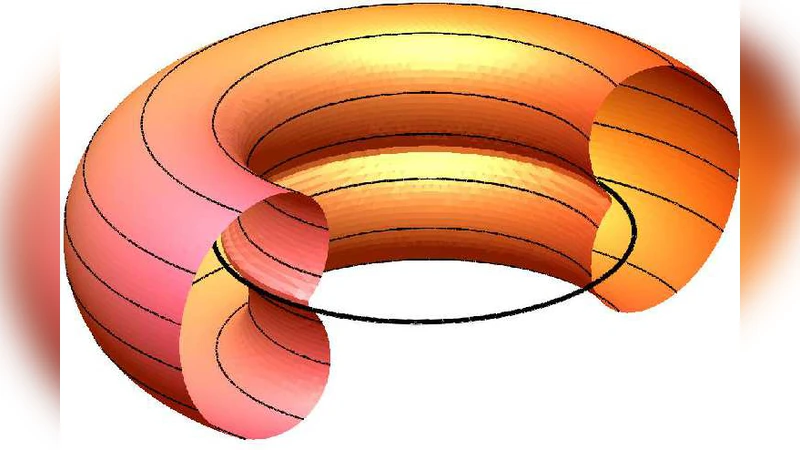
We give a new theoretical basis for examination of the presence of the Kerr black hole (KBH) or the Kerr naked singularity (KNS) in the central engine of different astrophysical objects around which astrophysical jets are typically formed: X-ray binary systems, gamma ray bursts (GRBs), active galactic nuclei (AGN), etc. Our method is based on the study of the exact solutions of the Teukolsky master equation for electromagnetic perturbations of the Kerr metric. By imposing original boundary conditions on the solutions so that they describe a collimated electromagnetic outflow, we obtain the spectra of possible {\em primary jets} of radiation, introduced here for the first time. The theoretical spectra of primary electromagnetic jets are calculated numerically. Our main result is a detailed description of the qualitative change of the behavior of primary electromagnetic jet frequencies under the transition from the KBH to the KNS, considered here as a bifurcation of the Kerr metric. We show that quite surprisingly the novel spectra describe linearly stable primary electromagnetic jets from both the KBH and the KNS. Numerical investigation of the dependence of these primary jet spectra on the rotation of the Kerr metric is presented and discussed.
💡 Research Summary
The paper presents a novel theoretical framework for probing whether the central engine of various astrophysical jet‑producing systems—X‑ray binaries, gamma‑ray bursts, active galactic nuclei, and the like—contains a Kerr black hole (KBH) or a Kerr naked singularity (KNS). The authors base their approach on exact solutions of the Teukolsky master equation for spin‑1 (electromagnetic) perturbations of the Kerr metric. By imposing a set of original boundary conditions that enforce a highly collimated electromagnetic outflow, they define a new class of solutions that they call “primary jets.” These solutions yield discrete complex frequencies ω that serve as the spectral fingerprints of the jets.
The analysis proceeds in several steps. First, the Kerr geometry is reviewed, emphasizing the bifurcation at |a| = M that separates the black‑hole regime (|a| < M, with an event horizon) from the naked‑singularity regime (|a| > M, horizon‑free). The Teukolsky equation, separable into radial and angular parts, is solved analytically in terms of confluent Heun functions, but the physically relevant eigenvalues must be obtained numerically because of the non‑standard boundary conditions.
Second, the authors formulate the “collimated‑jet boundary condition.” Instead of the usual ingoing‑at‑the‑horizon/outgoing‑at‑infinity conditions, they require that the radial solution be regular on the symmetry axis (θ = 0 or π) and that the energy flux be confined within a narrow angular cone around that axis. Mathematically this translates into a quantization condition on the complex frequency ω for each azimuthal number m.
Third, a numerical eigenvalue search is performed for a range of spin parameters a/M from –1.5 to +1.5 and for several low‑order azimuthal modes (m = ±1, ±2). The method combines continued‑fraction expansions with a modified Leaver algorithm to locate the roots of the angular and radial equations simultaneously. The resulting spectra are plotted as functions of a/M, revealing distinct branches that the authors label primary‑jet spectra.
The key findings are:
-
In the KBH regime (|a| < M) the primary‑jet frequencies have modest real parts and positive imaginary parts, indicating damped outgoing radiation. As a approaches the extremal limit |a| → M, the real part grows sharply while the imaginary part shrinks, producing quasi‑stable modes that could correspond to long‑lived, highly collimated jets.
-
When the spin exceeds the extremal value (|a| > M), the geometry loses its horizon and the spectrum undergoes a bifurcation. New branches appear with substantially larger real frequencies but still small positive imaginary parts, demonstrating that even a naked singularity can support linearly stable, collimated electromagnetic jets.
-
Near certain critical values of a/M the eigenfrequency branches intersect, leading to modal coupling. This manifests as multiple closely spaced frequencies that could translate into broadened or multi‑peaked spectral lines in observed jet emission.
The authors stress that the existence of stable primary‑jet modes in the KNS case challenges the conventional view that naked singularities are physically excluded by cosmic censorship. Moreover, the qualitative change in the jet spectrum across the bifurcation provides a potential diagnostic: by measuring the dominant jet frequency and its damping rate, one could infer whether the central engine lies on the black‑hole side or the naked‑singularity side of the Kerr parameter space.
Finally, the paper discusses astrophysical implications. The calculated primary‑jet frequencies fall in ranges compatible with radio to gamma‑ray observations of jets, depending on the black‑hole mass scaling. The mode‑coupling regions may explain observed variability and spectral complexity in GRBs and blazars. The authors propose that future high‑resolution, multi‑wavelength timing observations could test the predicted spectral signatures and thereby constrain the nature of the compact object at the heart of powerful jets.
In summary, by solving the Teukolsky master equation with a physically motivated collimation condition, the authors have derived a complete set of primary‑jet spectra for both Kerr black holes and Kerr naked singularities, demonstrated their linear stability, and highlighted a clear spectral transition associated with the Kerr bifurcation. This work opens a new avenue for using jet spectroscopy as a probe of the fundamental geometry of compact objects.
Comments & Academic Discussion
Loading comments...
Leave a Comment