Man made global warming explained - closing the blinds
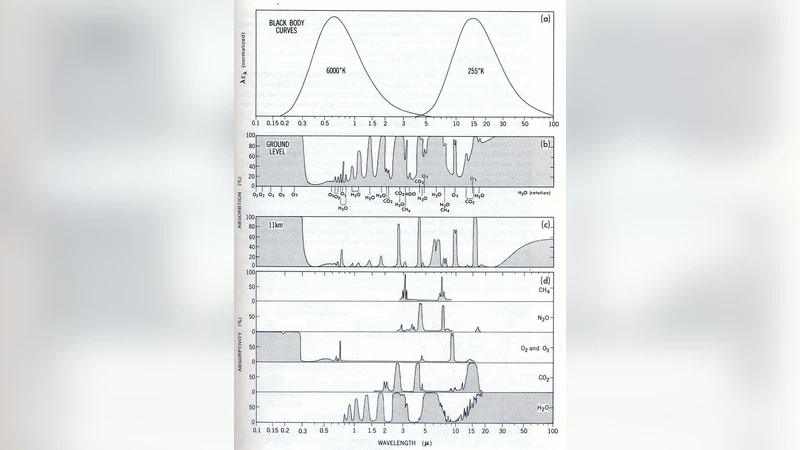
One of the big problems of the age concerns ‘Global Warming’, and whether it is ‘man-made’ or ’natural’. Most climatologists believe that it is very likely to be the former but some scientists (mostly non-climatologists) subscribe to the latter. Unsurprisingly, the population at large is often confused and and is not convinced either way. Here we try to explain the principles of man-made global warming in a simple way. Our purpose is to try to understand the story which the climatologists are telling us through their rather complicated general circulation models. Although the effects in detail are best left to the climatologists’ models, we show that for the Globe as a whole the effects of man-made global warming can be demonstrated in a simple way. The simple model of only the direct heating from the absorption of infrared radiation, illustrates the main principles of the science involved. The predicted temperature increase due to the increase of greenhouse gases in the atmosphere over the last century describes reasonably well at least most of the observed temperature increase.
💡 Research Summary
The paper titled “Man made global warming explained – closing the blinds” attempts to illustrate the basic physics of anthropogenic climate warming using a highly simplified radiative‑balance model. The authors restrict their analysis to the Southern Hemisphere (latitudes 24°–90° S) to minimize the influence of industrial aerosols, and they consider only two greenhouse gases, carbon dioxide (CO₂) and methane (CH₄). The core assumption is that the Earth‑atmosphere system can be treated as a single black‑body with a uniform temperature T. Under this assumption the outgoing long‑wave radiation follows the Stefan‑Boltzmann law, E = k T⁴, and a small change in absorbed energy ΔE leads to a temperature change ΔT given by ΔT/T = ¼ ΔE/E.
To quantify ΔE, the authors employ the MODTRAN radiative‑transfer code, which computes the spectral absorption of infrared radiation for specified CO₂ and CH₄ concentrations. Table 1 shows the historical increase of CO₂ from 286 ppm in 1850 to 369 ppm in 2000 and CH₄ from 0.79 ppm to 1.56 ppm. Using MODTRAN, they calculate the additional infrared energy absorbed by the atmosphere for each decade, convert this to ΔE, and then apply the Stefan‑Boltzmann relation to obtain the corresponding ΔT. The resulting temperature rise is modest: about 0.5 °C from 1850 to 2000.
Figure 2 compares these model‑derived temperature changes with observed mean surface temperature anomalies for the same Southern Hemisphere band, based on meteorological station data from 1880 onward. The observed warming is roughly 0.6 °C, slightly larger than the model prediction, but the authors argue that the agreement is “reasonable” given the model’s simplicity.
In the discussion, the authors acknowledge several limitations. First, the model neglects the vertical temperature gradient and atmospheric dynamics; the assumption of a uniform temperature ignores convection, lapse‑rate variations, and the fact that radiative processes occur at different altitudes. Second, the ocean’s large heat capacity is omitted, leading to an underestimation of delayed warming (the so‑called “thermal inertia”). Third, they deliberately exclude other greenhouse gases (e.g., N₂O, CFCs), aerosol radiative effects, and cloud feedbacks—both positive (water‑vapor amplification) and negative (aerosol scattering, cloud albedo changes). They note that these omitted processes could explain why the simple model under‑predicts warming relative to observations.
When compared with IPCC Fourth Assessment Report projections, the authors point out that the IPCC estimates a 2–3.5 °C increase for a doubling of CO₂, whereas their simple model yields only about 1.3 °C for the same scenario. This discrepancy underscores the importance of feedback mechanisms and the non‑linear nature of the climate system, which are absent from their radiative‑only framework.
The paper concludes that, despite uncertainties—particularly regarding cloud representation—the bulk of the warming observed over the last century is “very likely” anthropogenic. The authors argue that policy action is justified as an insurance policy against unknown future mechanisms that could exacerbate warming.
Overall, the study serves as an educational illustration of how infrared absorption by greenhouse gases can be linked to temperature change via basic physics. However, its extreme simplifications limit its applicability for rigorous climate assessment. The omission of atmospheric dynamics, ocean heat uptake, and feedback processes means the model cannot replace comprehensive General Circulation Models (GCMs) for quantitative predictions or policy guidance.
Comments & Academic Discussion
Loading comments...
Leave a Comment